
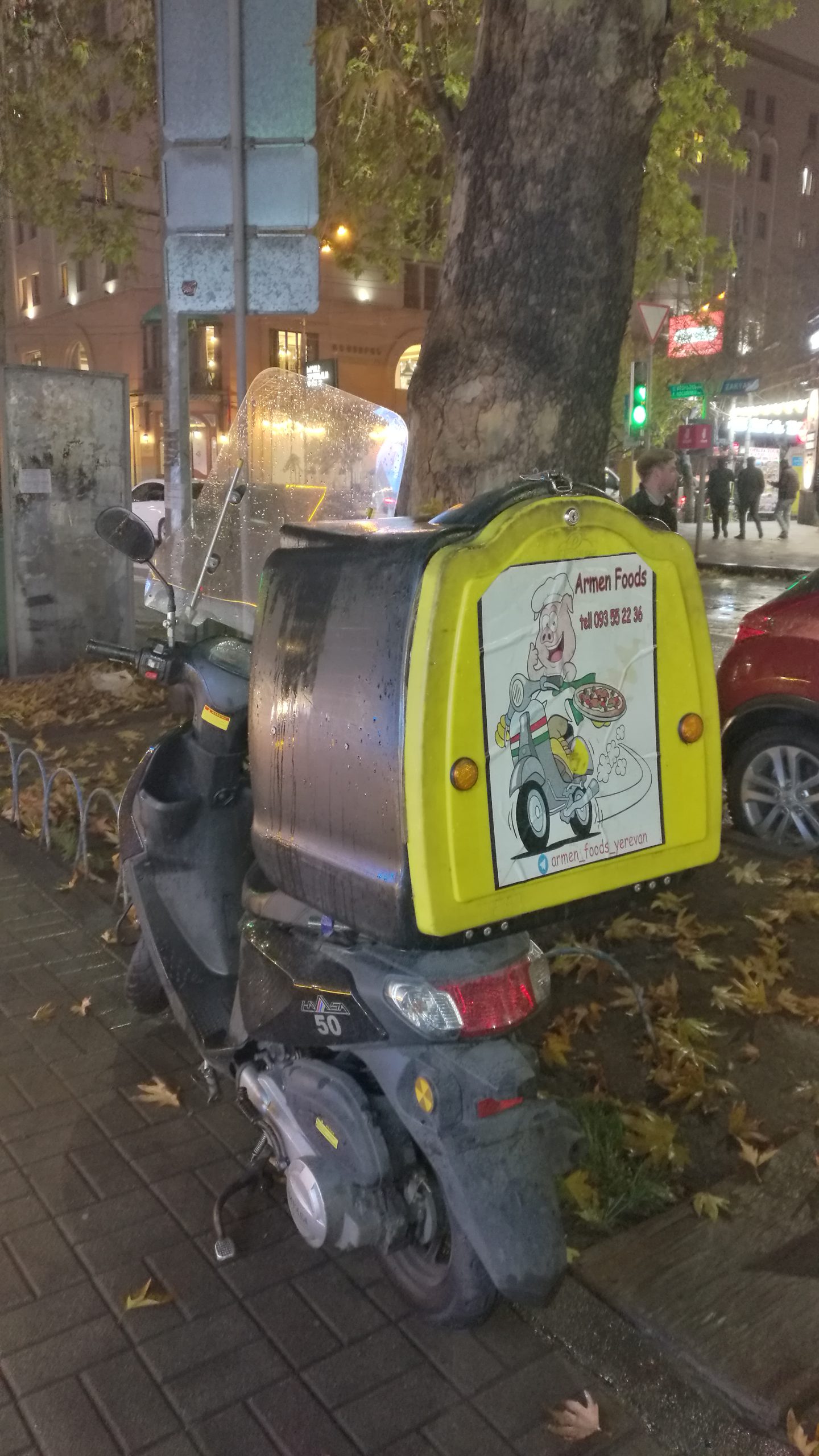
The food delivery ecosystem in the USA has transformed significantly, fueled by AI innovations, user behavior shifts, and evolving business models. For entrepreneurs and businesses exploring how to start a food delivery business, it’s vital to understand the revenue streams, tech stack, app monetization strategies, and user expectations aligned with the latest digital and mobile technology trends.
How the Food Delivery Business Model Actually Works in 2026
The food delivery business looks deceptively simple — connect hungry users to restaurants, take a cut. In reality, the unit economics are some of the most complex in tech, and the path to profitability has been famously long for DoorDash, Uber Eats, and Deliveroo. By 2026, the major platforms are finally consistently profitable, but the model has matured into a multi-revenue-stream business that goes far beyond simple delivery commissions.
The food delivery business model in 2026 has five revenue layers: commission from restaurants (typically 15-30% of order subtotal), delivery fees from customers ($1-$10 per order), service fees (5-15% on top of delivery fee), subscription revenue (DashPass, Uber One, Grubhub+ at ~$10/month each), and advertising (sponsored restaurant placements, the fastest-growing segment in 2024-2026).
This guide breaks down the food delivery business model in 2026 — revenue streams, unit economics, what it costs to operate, and what it teaches founders building marketplaces or on-demand businesses. If you’re building a food delivery or on-demand app, see our food delivery app development services.
Understanding the Modern Food Delivery Business Model
13 min read · Last updated: May 2026
In this article
- 1. How Does Food Delivery App Development Benefits A Business?
- 2. What Are The Pros and Cons of Food Delivery Business?
- 3. Why Are Users More Inclined To Use A Mobile App?
- 4. What Are Different Types of Food Delivery Business Model?
- 5. How Does An Online Food Delivery Application Work?
- 6. How To Make Money With Food Delivery Apps?
- 7. Wrapping It Up
Today’s food delivery models go beyond just restaurant-to-customer services. Businesses now operate in multiple formats such as order-only platforms, order-and-delivery platforms, multi-delivery apps, and direct-to-consumer models. Market leaders like Uber Eats, DoorDash, and Grubhub use a hybrid model that combines order logistics with marketplace listings, while emerging startups are focusing on commission-free, restaurant-branded apps to reduce overhead and improve customer retention.
Key Revenue Channels for Food Delivery Apps
In the current landscape, food delivery apps generate revenue through various models:
Delivery Charges: Fees paid by customers for logistics.
Commissions: A percentage cut from restaurants per order (commonly 15-30%).
Subscription Plans: DashPass, Uber One, and Grubhub+ offer savings for regular users.
Advertising: Featured listings and promoted placements for restaurants.
Third-Party Logistics (3PL): Offering delivery-as-a-service to restaurants and grocery stores.
White-label app development: Some platforms license their tech to smaller brands or restaurants wanting custom apps on Android and iOS.
Multi-vertical delivery apps that offer not just food but also groceries, alcohol, and prescriptions are gaining traction. These models increase Average Order Value (AOV) and customer lifetime value.
Tech Stack and Features That Power Food Delivery Apps
Building a successful food delivery business in the USA requires a scalable and secure tech infrastructure. Key components include:
Mobile-first UX design for iOS and Android apps
AI-based recommendation engines
Real-time GPS tracking
In-app chat support and feedback collection
Multiple payment gateway integration
Cloud-based order and delivery management system
Using modern frameworks like Flutter and React Native, developers are creating cross-platform apps faster with lower cost and high performance. Progressive Web Apps (PWAs) are also being adopted for customers who don’t want to download a full app. Related: food delivery app development.
How Restaurants and Startups Are Adapting
U.S. consumers demand fast, transparent, and personalized experiences. Restaurants are investing in custom mobile apps, integrating loyalty programs, and leveraging AI to send targeted push notifications. On the B2B front, white-label delivery platforms are helping brands cut aggregator fees and own their customer data.
How Does Food Delivery App Development Benefits A Business?
The food delivery app like Ubereats will help you to fuel your business and better reach out to your food delivery business on completion. To get the best output on your online food ordering platforms, it should be developed by the best food delivery app development company. Here are some reasons why users are more interested to use a mobile app for ordering meals.
Decision Convenience
Convenience offers a better customer experience. Using the business model like DoorDash, the online food delivery marketplace can achieve success. The primary objective is to keep the user’s experience that helps to improve your business. Besides, users can easily view the ratings and reviews of any restaurant. They can decide where to order from. Thus, this makes choosing the best restaurant fast and easy.
Access Convenience
The food delivery mobile app solution is easily reachable and allows users to order food instantly. The dedicated app for the customers made it easy to access from anywhere. As a result, they get hot meals as fast as possible. Fast food deliveries are available where the order can be tracked easily. Hence, many of them use food ordering apps.
Transaction Convenience
It is easy to pay where there are multiple payment options. The users can pay cash on delivery or with a card or digital wallets.
Benefit Convenience
It is convenient to order for teammates or family members from different restaurants at the same time and get it straight to your home or office. It makes it fast and easy to enjoy.
Post-Benefit Convenience
Once your order, you can save your address and payment details, so that you can re-order in seconds. It is a fast option to repurchase.
By adopting a full-cycle approach, the on-demand online food delivery industry & market has disrupted traditional markets. You can experience a meal at a restaurant by three basic components: ordering, cooking, and delivering.
Ordering
Once the customer orders, the restaurant makes sure to prepare and deliver food. All on-demand online food delivery solutions connect the users via an app. Once the order is received they also need to check the order is for their own kitchen or another meal provider with who they partnered.
What Are The Pros and Cons of Food Delivery Business?
Pros of Delivery Business
Product Stickiness
Once customers become acquainted with a platform, they rarely switch to a new app.
Network Effects
Since food delivery platforms are, in a bigger sense, marketplaces that connect buyers with suppliers, they end up benefiting from network effects once sufficient scale is hit.
While networks are hard to build, they are even harder to replicate. This yields substantial benefits for those who can build a big enough business.
Supply Prioritization
As a food marketplace, your business can decide which restaurants and suppliers it would like to promote. This allows you to push products with higher margins and good customer ratings.
Pricing Monopoly
Next to prioritizing supply, food delivery businesses can also set prices and commission at will once they’ve hit sufficient scale.
No Legal Commitment to Drivers
While ethically questionable, drivers are generally not employed by food delivery businesses, but rather work on a contractual basis. This greatly minimizes operational costs as they only get paid when executing jobs.
Furthermore, there is no requirement to pay medical insurance or allow for paid vacation.
Cons of Delivery Business
High Operating Cost
DoorDash supposedly lost $400 million in 2019 while Postmates had to lay off dozens of employees and close some offices.
Those are just two examples of food delivery businesses that had to pay the price for their massive operating cost and thin margins. Companies that operate under the full-stack model suffer from this especially since everything is kept in-house.
Operational Complexity
Developing the app, finding suitable restaurants and drivers, equipping them with the necessary equipment, or optimizing delivery routes are just some of the many problems food delivery businesses have to invest in.
Perfectively running such a business is not only extremely costly but a highly complex task involving many parts to be running perfectly.
Why Are Users More Inclined To Use A Mobile App?
Apart from the major factors like convenience, time-saving, and easy accessibility. Some factors ensure the importance of an application. Those are:
- Interface
- Payment systems
- Faster performance
- Easy visibility
- Can be downloaded
What Are Different Types of Food Delivery Business Model?
Generally, in today’s market, there are three types of food delivery marketplace models present. If you want to succeed follow the marketplace business model. Let us see these three models one by one.
- Interface
- Payment systems
- Faster performance
- Easy visibility
- Can be downloaded
The Order Only Model
At first, this order only model was used by food delivery services like JustEat, FoodPanda, and more. It is one of the impressive food delivery models. Between the users and the local restaurants, your online platform should act as a bridge.
By following this order only food delivery model you can allow the customers and restaurants to connect to place and deliver orders. By making use of the software you can bring a lot of new orders that integrate with the kitchen workflow. The goal of the good delivery business model is to reach out to the maximum number of customers.
This model, let users order their food conveniently from their favorite restaurant. This food app business model works in two-phase,
For Order allocation
The innovation of technology has made the companies easy to receive and communicate orders to restaurants conveniently. The process tends to work like this:
- Consumers can place an order on the website anytime
- Restaurants can receive the order through fax, email, etc.
- Once the order is received, the restaurant notifies the customers by sending a message
- Companies start sending orders into a Smartphone app or web app
- In some cases, the companies print the order directly into the kitchen using the restaurant’s POS system.
For Delivery
- A restaurant employs the delivery boy
- A restaurant delivery service employs the delivery boy to deliver the order to the customer’s doorstep
Advantages
- Firstly, in this type of business model, you don’t have to face any issues that are related to food delivery.
- Secondly, it’s purely a software business. Hence, for every order placed you can charge a flat commission fee from the restaurants.
Challenges
At first, attracting customers to your platform is a challenging task but this delivery model has paved the way for your business opportunity. However, you need to do some research on what exactly you need to offer to the customers. Therefore, know that your success depends on the services that restaurants give to their customers.
The Order and Delivery Model
This model handles restaurants, customers, and delivery where it is one of the marketplace solutions that is used by businesses. With this type of food delivery apps, most of the eateries are engaged where they don’t have to deal with the delivery thing.
For Order Allocation
- The restaurant should register on your online platform
- Using your platform customers can easily place an order from the restaurant
- The restaurants receive an order through website or app notifications
- As per the convenience, the customers can pay online or cash on delivery
For Delivery
- To deliver the order to the customer place, the nearest delivery boy receives the notification
- A delivery fee is fixed based on the customer’s distance
- Customers can add instructions like place an order outside, don’t ring the doorbell, and more
Advantages
This model’s success highly relies upon the user’s experience that they get from the restaurants and delivery boys. If the order is below a certain amount or far from the customer’s delivery location, you can charge a flat commission to the restaurants on every order. Also, you can charge a delivery fee to the customers. By delivering quality food on time, you can get higher ratings of your food delivery business. As a result, you can achieve success.
Challenges
The challenge of this food delivery business model is to deliver the food on time where most customers expect on-time delivery. Therefore, you must improve the ways to deliver food on time. The other challenge is to manage all your business resources.
The Fully Integrated Model
The third category of food delivery business has revolved around meal delivery startups. This model differs from the above two. If you like to start your own venture, this model completely integrates the process by limiting the number of meals and as fresh as possible within a stipulated time. This model serves only the particular area and the meal service usually partners with the chefs.
Scheduled Delivery
This model receives orders for a particular duration and delivery is scheduled later in the day. After the order is received, the food preparation starts. To avoid waste, this model accepts pre-orders, predicts demand accurately, and schedules delivery on time. The delivery man delivers the packed food instantly hot on time. Related: hire cross-platform developers.
Allocation
- Automatically the order is allocated to the nearest delivery boy.
- Automatically allocate the order to the delivery boy whose zone lies near the customer.
Delivery
- The delivery is based on the first-come, first-serve basis
- For customers who are near to the delivery boy’s location, the delivery boy serves them first.
How Does An Online Food Delivery Application Work?
Sign Up
When a user opens your food ordering app on his/her mobile for the first time after downloading, a sign-up/sign-in page appears on the screen. Keep the process easy with third-party (Social media platforms and Google) integration.
Profile Page
Once the user signs in, he/she must be directed to the profile page. Here the user can add more details to his/her profile such as office address, number of employees, favorite food item, etc. Also, let the user save his/her bank details or other preferred payment methods.
Food Search/ Restaurant Locator Page
It is the very first thing that the user sees on his/her mobile screen after logging in to your food delivery mobile app. It has a search bar that allows the user to search for his favorite food or restaurant or both. Also, it displays “meal of the day” for breakfast, lunch, and dinner.
Easy Order Placement
After selecting their choice of food, make it easy for the user to order the food. Let them edit the order by adding or deleting food items before choosing the payment method and confirming the office address.
Multiple Payment Method
Ensure your users that the payment processing is secure and fast. Let your user leverage the facility of multiple payment methods via Paytm, Amazon Wallet, PayPal, Credit/Debit card, or Cash on delivery.
Real-Time Tracking
Send food order confirmation notification to the user. Also, provide details about the predicted arrival of the ordered food at his/her office. Real-time tracking keeps the user updated about the location of the delivery boy.
Communication Capabilities
There should be an easy way to communicate for users and the delivery team. The user can inquire about the food to be delivered and the delivery boy can contact the user when he arrives at the office address.
How To Make Money With Food Delivery Apps?
For those who want to start an online office food delivery platform, the margins on food are always a concern, which is why it is always advised to have multiple streams of revenue.
Moreover, the delivery charges should not make the value of the food rise to a level where the consumers do not consider it value for money.
One aspect that falls in favor of such a business idea is that you have to deliver all the orders in a single time. This reduces the delivery logistics as well as cost. Related: custom software development.
The following are the main revenue models that such a startup can incorporate:
Online Advertisements
Google AdSense can be one of the primary sources of generating revenue through advertisements.
Offline Advertisements
Advertisements can be displayed on the company’s Food packages. In addition to this, more advertising can be made by sending printed pamphlets along with the meal.
Strategic Partnership
People willing to open a restaurant or small kitchen can sign up by paying a small fee to the platform.
Commission Of Selling
Online office food delivery businesses can collaborate with restaurants on pre-decided commission rates based on the number of food orders.
Wrapping It Up
Consider these reasons and develop food delivery app with the technology experts in your area. Also, choose the right business model and make the customers engage to reach success. Optimize success by not only choosing the right business model but also integrating The Online Takeaway Business Model, ensuring customer engagement and long-term prosperity.
Conclusion
The food delivery business model lessons for founders in 2026:
- Multi-revenue-stream is required: Pure commission-based delivery rarely makes money. DoorDash, Uber Eats, and Deliveroo all rely on subscription + advertising for >40% of margin.
- Subscriptions transformed unit economics: DashPass + Uber One + Grubhub+ shifted unit economics from negative to positive. Subscription users order 3-4× more than non-subscribers.
- Advertising is the high-growth bet: Sponsored restaurant placements were ~$3B for the major platforms in 2025 and growing 30%+/year — much higher margins than delivery itself.
- Geographic density matters more than total user count: Profitability is per-zip-code. Dense urban areas reach profitable density quickly; suburban expansion was painful for years.
- Driver economics are existentially important: Driver labor is the largest variable cost. Apps that can’t retain drivers face higher acquisition costs and longer delivery times — both kill conversion.
Building your own food delivery, marketplace, or on-demand app? EchoInnovate IT has built food delivery, ghost kitchen, and on-demand platforms with multi-tenant architecture, restaurant onboarding, dynamic pricing, and dispatcher operations for over 17 years through our food delivery app development and on-demand app development services. Get a free architecture roadmap below.
Frequently Asked Questions
If I want to develop a business app for my delivery business, how can I contact Echoinnovate IT to develop an app?
Echoinnovate IT is one of the top web and mobile app development companies in India, the USA, the UK, and Canada. We have a proficient team of developers and programmers holding years of expertise delivering the most complex web and mobile apps on time without compromising quality.
Outsourcing development services can offer many benefits:
- Low development cost
- Flexible time zones
- Access to experienced developers globally
- On-time project completion surety
How much does it cost to develop a delivery app like doordash?
The cost of food delivery development varies depending on the size, complexity, nature, and characteristics of the project. Development costs to make a delivery app like DoorDash depends on the features and many-sided quality of the application. You can also use an app cost calculator to know the exact cost of the DoorDash app.
What is the best food delivery business model in 2025?
The best model depends on your goals. Aggregator models are great for reach, while D2C apps offer better margins and customer control. In 2025, hybrid models combining logistics and subscriptions are gaining popularity.
How do food delivery apps make money?
Apps earn through delivery charges, commissions from restaurants, advertising, and subscriptions like Uber One or DashPass.
What’s the cost to build a food delivery app in 2025?
A basic app starts at $20,000–$50,000. Advanced apps with AI features, real-time tracking, and custom UI can go beyond $100,000, depending on iOS/Android development needs.
Is it profitable to start a food delivery app in the USA?
Yes, if you choose the right model and invest in UX, SEO, and logistics. With niche targeting and a strong mobile presence, profitability is achievable in under 12–18 months.
Which platform is best for food delivery apps: Android or iOS?
Both are essential in the USA. Android has more users, but iOS users typically spend more per order. Use cross-platform tools like Flutter for best reach.
Are food delivery apps profitable in 2026?
Yes — finally. DoorDash reached consistent quarterly profitability in 2024 and reported $640M net income in 2025. Uber Eats profitability is folded into Uber’s overall delivery segment, which is now profitable. Deliveroo in Europe reached profitability in 2024. The path took 10+ years and required scale + subscription growth + advertising rollout. New entrants face an extremely difficult path to those economics without massive capital.
Why do food delivery apps charge so many fees?
Pure economics. A typical $20 order generates roughly: $5-$6 to the restaurant (after their commission), $5-$8 to the driver (delivery fee + tip), $1-$2 in payment processing + customer support, leaving $2-$5 for the platform’s operating costs and margin. Service fees, delivery fees, and tips all need to add up to fund the driver, the platform, and (eventually) profit. The 15-30% restaurant commission alone doesn’t cover delivery cost.
How much commission does DoorDash take from restaurants?
DoorDash uses tiered pricing in 2026: Basic (15% commission), Plus (25% with broader delivery zone and DashPass eligibility), and Premier (30% with full DashPass benefits and broader marketing). Most restaurants pick Plus. New York and California capped delivery commissions at 15-20% for some periods during 2020-2023; those caps mostly expired. Restaurants increasingly negotiate or use multi-platform listing to manage costs.
Build Your Own Delivery App
Need a Roadie/DoorDash/Instacart-style delivery platform? We build full-stack rider, driver, and admin apps with live tracking, payouts, and KYC built in.
