Fintech is going through a big shift, and AI is driving most of it. AI tools are making real progress in banking. They speed up everyday processes, improve accuracy, and make services more personal.
AI is opening up business models that were not possible before. It powers everything from personal banking to strong fraud detection. This lets fintech firms move faster and try new ideas.
This is about more than saving time and money. It changes how financial services are built, offered, and seen.
By 2025 and beyond, AI is changing how we manage, invest, and spend money. Related: fintech app development services.
Role of AI In Fintech Industry
8 min read · Last updated: May 2026
AI does more than add convenience. It helps banks serve customers in a safe, useful way. It also helps them keep up with what people want, which builds loyalty in a crowded market. Machine learning in finance covers key areas: security, investing, productivity, and support.
These wins show how central AI has become in fintech. It boosts efficiency and security. It also changes how firms engage with customers.
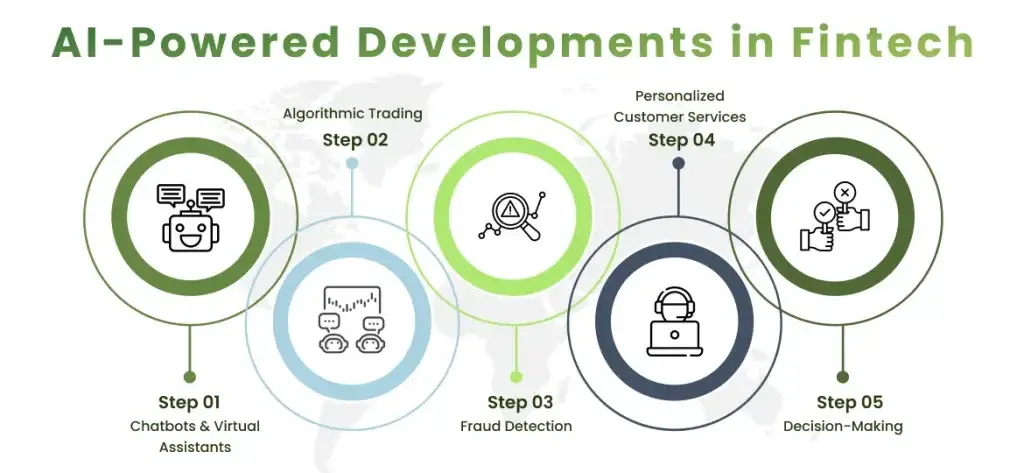
Chatbots & Virtual Assistants
AI chatbots and virtual assistants have changed customer service. They give quick, personal help. They handle routine requests well and keep customers engaged.
By reading customer data, these assistants give tailored tips. That improves the experience and builds loyalty.
AI chatbots work around the clock. They answer basic questions and help with accounts. They can even check balances and move payments.
Algorithmic Trading
Algorithmic trading, or algo-trading, places trades automatically using set rules. AI makes these rules smarter. It reads huge amounts of market data in real time and acts fast.
AI has changed credit scoring. It judges risk in a deeper, more flexible way. Unlike old models, it can weigh a wider range of data to predict how likely someone is to repay.
Fraud Detection
AI makes fraud detection much stronger. Banks can spot and stop risks far faster than before. Machine learning finds patterns that point to fraud. This matters most in real-time payments, where speed and accuracy prevent losses. Related: mobile app development services.
Machine learning checks transactions in real time. It flags unusual activity that may signal fraud. Catching it early protects both customers and banks.
Personalized Customer Services
One of AI’s biggest effects is personal service. AI reads large amounts of data to learn each customer’s habits and needs. That lets firms tailor advice and products.
These systems do more than answer questions. They can handle transactions and give specific financial advice. That turns support from a cost into real value.
Decision-Making
AI supports data-driven decisions. Firms can use large data sets to plan better and run leaner. AI pulls clear insights from messy data, so choices get sharper.
This speeds up work and drives new growth. Big data is another major advance. AI can process huge data sets far faster and more accurately than people can.
Benefits of AI In Fintech
AI has become a major force in finance. It brings clear gains for both operations and customers. These range from deep data analysis to tailored service.
AI brings many clear benefits to fintech. It changes how services are built and used. Here is a closer look. Related: hire cross-platform developers.
Provides Personalized Customer Experience
AI helps firms learn each client’s habits and likes. That leads to more personal service: better product tips, sharper marketing, and offers that fit.
With that insight, firms can offer the right pre-approved products and advice. Every interaction feels more useful and focused.
Protects Sensitive Financial Information
AI can spot and stop fraud, including card fraud, identity theft, and cyberattacks. It reads transaction patterns in real time and flags anything odd.
AI watches network activity all the time. It flags odd behavior, like strange logins or risky data requests. This helps firms prevent breaches and protect customer data.
Data Analytics
Data analytics makes operations more efficient. Banks can answer regulators faster and with more accuracy. It also helps manage cash at ATMs and branches.
AI can predict trends and customer behavior. Firms can plan ahead and fix problems early. That leads to better planning and an edge over rivals.
Enable Sales & Digital Transformation
AI studies customer data to predict what people want and what to build next. Firms use this to manage stock, place resources well, and hit sales goals. Related: custom software development.
AI speeds up going digital. Its insights help shape new products and services. It also automates back-office tasks, which cuts effort and cost.
24/7 Availability
AI systems run every hour of the day. Customers can get help any time, with no downtime. Firms can respond fast, and teams get more done.
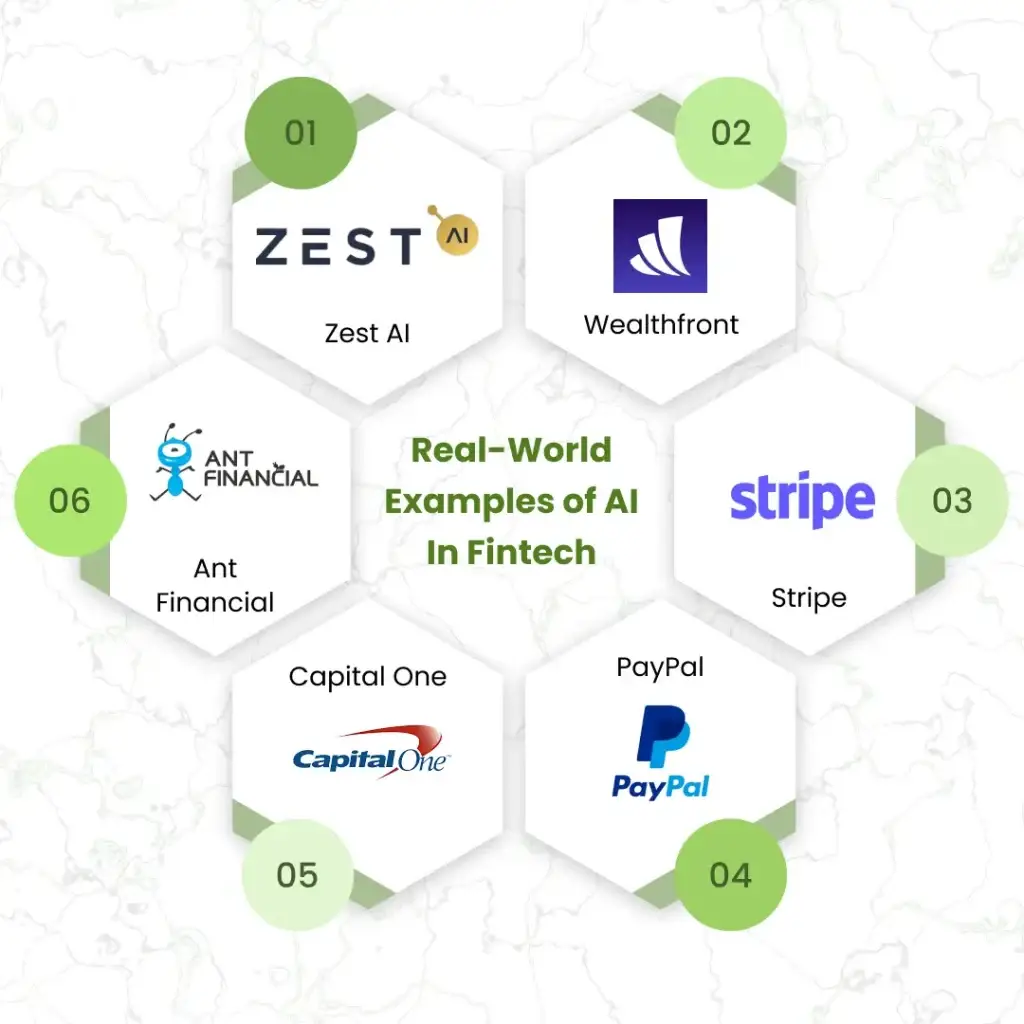
Zest AI
Zest AI focuses on credit risk. It uses machine learning to weigh many data types. These include credit bureau data plus rent, utility, and online records.
Wealthfront
Wealthfront is a robo-advisor. It manages portfolios and suggests investments automatically. Its models adjust each portfolio to the person’s risk level, goals, and the market.
Stripe
Stripe builds payment infrastructure for the internet. Its AI checks billions of transactions in real time. This helps it catch and stop fraud.
PayPal
PayPal is a widely used payment platform. It uses machine learning to stop fraud, such as account theft and fake payments. AI also helps it judge and manage transaction risk.
Capital One
Capital One is a broad bank and finance provider. It uses AI to build sharper credit-risk models. That helps it make better loan decisions.
Ant Financial
Ant Financial is one of China’s largest fintech firms. Its credit system, Sesame Credit, uses AI to rate credit. It looks at online behavior, social ties, and financial history. Related: AI-powered app development.
Conclusion - The Future of AI In Fintech
The future of fintech with AI looks strong. It should keep improving how services reach people. For most banks, AI is a long-term shift in how they run, analyze, and serve.
AI lets fintech firms offer faster, safer, and more flexible tools. These span personal advice, strong fraud checks, and smoother support. As AI grows, its impact will only widen.
Want to put AI to work? Echoinnovate IT builds and ships AI solutions that show what AI can really do for your business.
Frequently Asked Questions
How is AI transforming the financial industry?
AI is transforming finance by enabling automated trading, personalized financial advice, fraud detection, and improved customer service through chatbots and virtual assistants.
What are some common applications of AI in Fintech?
AI is used for risk assessment, credit scoring, robo-advisors for investment, predictive analytics, and enhancing security in digital transactions.
How does AI improve fraud detection in finance?
AI uses machine learning algorithms to detect unusual patterns in transactions, flagging potential fraudulent activities in real time.
Ship your eWallet before your competitors do.
Card-on-file, P2P transfers, NFC tap-to-pay, KYC/AML, multi-currency, crypto rails — we’ve shipped it all. Whether you’re launching an MVP or replatforming a stored-value wallet, our fintech engineers know the compliance gotchas, the BaaS integrations (Synapse, Unit, Treasury Prime), and the PCI scope tricks that save you months of pain. Get a real engineer on a call in 24 hours — not a sales rep.