
Procurement is changing fast. Once an administrative function focused on manual tasks, it now faces growing complexity and a flood of data. Companies need smarter ways to manage suppliers, analyze spending, and reduce risk. That is where AI in procurement helps. Using machine learning, natural language processing (NLP), and advanced algorithms, AI automates routine work, surfaces deeper insights, and supports data-driven decisions that manual methods cannot match.
AI can transform procurement. It moves teams from reactive buying to proactive, strategic sourcing. AI predicts market trends, automates supplier evaluations, and supports negotiations. That saves money, reduces errors, and builds stronger supplier relationships. It also frees teams to focus on higher-value work.
Why AI in Procurement Is a Top CIO Priority in 2026
Procurement is one of the most measurable ROI areas for AI in 2026. Companies that have deployed AI across sourcing, contract management, and spend analytics report 8-15% reduction in procurement costs and 30-50% faster supplier onboarding. The category crossed the multi-billion-dollar mark in software revenue in 2025 and continues growing as supply chain volatility, ESG reporting requirements, and Modern factory-automation demands push procurement teams to do more with less headcount.
If you’re tracking AI in procurement in 2026, the technology has split into clear use cases: spend analytics + classification (Spend.AI, Sievo), contract intelligence (Icertis, Sirion), sourcing automation (Globality, Keelvar), supplier risk management (Riskmethods, EcoVadis), and generative-AI assistants for procurement teams (the new wave from 2024-2026 — copilot-style tools embedded in Coupa, Ariba, and Workday).
This guide covers AI in procurement in 2026 — concrete use cases, leading vendors, ROI benchmarks, and what to evaluate before buying or building. If you’re looking to build a custom AI-procurement product or integrate AI into your existing procurement workflow, see our AI development and custom software development services.
Types of AI in Procurement
17 min read · Last updated: May 2026
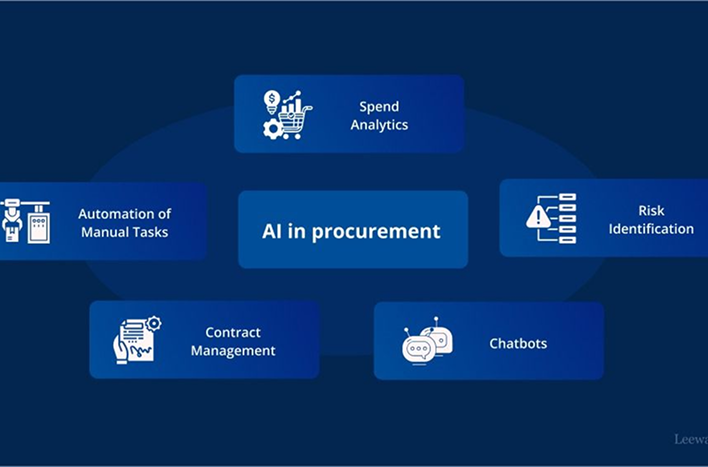
Artificial Intelligence, or AI, isn’t one technology; rather, it comprises several powerful tools designed to assist procurement in unique ways. Here we explore some primary types of AI used within this sector.
Machine Learning (ML)
Machine learning is a key AI technology. It lets computers learn from data without explicit programming, much like teaching a child a new subject. In procurement, ML studies past purchases, supplier performance, and market prices. It learns from that data to make accurate predictions and to categorize spending automatically.
Natural Language Processing (NLP)
Natural Language Processing (NLP) allows computers to interpret human speech. Procurement professionals can utilize NLP by reading contracts, emails and supplier communications written in text format; NLP then extracts key data points before summarizing or sentiment analyzing these responses for easier reading or sentiment analysis of supplier responses. Furthermore, chatbots powered by NLP provide answers quickly for routine supplier enquiries thus speeding up communications processes. Related: EdTech app development.
Robotic Process Automation (RPA)
Robotic Process Automation (RPA) uses software robots that automate repetitive, rule-based tasks by simulating human interactions with digital systems. RPA has numerous uses such as automating purchase orders; processing invoices swiftly and accurately while freeing procurement teams up for more strategic activities that increase overall efficiency; automatically creating purchase orders when appropriate, etc.
Generative AI
Generative AI is an exciting form of AI. It creates new content, like text, images, or code, in minutes. In procurement, it can draft first versions of contracts from templates, summarize market research, and help build tailored requests for proposals (RFPs). It speeds up document creation and keeps content consistent.
Top Use Cases of AI in Procurement
AI is transforming procurement in many practical ways, helping businesses gain an advantage, reduce expenses and make smarter decisions. Below are a few impactful use cases of this powerful technology.
Spend Analysis and Optimization
Knowing where money goes matters, and AI is strong at spend analysis. It classifies large volumes of spend data and groups purchases by category, supplier, or department in seconds. Unlike manual methods, it quickly finds cost-saving opportunities and flags purchases made outside approved contracts. That gives you an accurate view of spending, better compliance, and real savings.
Supplier Relationship and Risk Management
AI gives you real-time monitoring of supplier performance. It tracks delivery times, quality, and compliance. It can also assess each supplier’s financial health and scan the news for signs of trouble. That way, you spot risks, like a key supplier in financial distress, before they disrupt your supply chain.
Automated Contract Management
Contracts are the backbone of procurement, and AI improves how you manage them. It quickly extracts key terms and clauses from complex legal documents, which supports compliance and cuts review time. Generative AI can also draft first versions of contracts and suggest terms based on past data. That reduces errors and speeds up contract cycles.
Demand Forecasting and Inventory Optimization
Good inventory management is a balancing act, and AI makes it easier with predictive procurement. AI forecasts demand accurately by studying past sales, market trends, and outside factors like weather. Based on those forecasts, it optimizes inventory levels. That helps you avoid stockouts, protect cash flow, and keep customers happy.
Automated Purchase Order (PO) and Invoice Processing
Procure-to-pay work often involves tedious manual steps. AI automates purchase order and invoice processing. It extracts invoice data and matches it against POs and goods receipts. That cuts errors and processing time, raises accuracy, and frees finance teams for more complex work.
Strategic Sourcing and Negotiation Support
Finding the right suppliers can be hard, and AI helps with sourcing and negotiation. It identifies strong suppliers based on price, quality, reliability, and market trends. It can also simulate negotiation outcomes, giving your team data-backed insight for better deals.
Fraud Detection
Procurement fraud can be costly. AI technology helps by flagging unusual invoices and payments: duplicate invoices, odd payment patterns, and anomalies a human reviewer might miss.
Catching these early means losses get minimized before they add up. Related: mobile app development services.
Benefits of AI in Procurement

AI procurement brings many benefits that lead to enhanced operations and significant competitive gains, so let’s examine how AI transforms procurement function.
Increased Efficiency and Speed
AI technology’s most significant benefits lie in increased efficiency and speed. AI automates many time-consuming, repetitive tasks – like processing invoices or purchasing orders – quickly, 24/7 – saving cycle times dramatically while giving your team more freedom for strategic work like negotiating complex contracts or forging supplier relationships.
Enhanced Decision-Making
AI can enhance procurement professionals’ decision-making abilities. It quickly and thoroughly analyses vast amounts of data faster and more comprehensively than humans could, such as internal spend data, market trends and supplier performance reports. AI’s advanced pattern recognition capability equips procurement professionals to make data-driven choices with greater assurance for themselves and their organizations alike, leading to positive outcomes both personally and organizationally.
Cost Reduction and Savings
Cost reduction may be AI’s most tangible benefit. It spots spending patterns and suggests better negotiation tactics. It optimizes supplier selection and contract terms. Together, these lead to better deals, lower procurement costs, and higher profit.
Improved Risk Mitigation
Supply chains are complex and full of risk. AI improves risk management by monitoring supplier performance and financial health. It scans news for geopolitical events or natural disasters that could cause disruption. That helps you spot risks early and act before they interrupt your supply chain.
Greater Accuracy and Reduced Errors
Manual processes can be susceptible to human errors; AI offers greater accuracy and reduced errors during procurement processes. When automating tasks like data entry, invoice matching or contract review using AI solutions, its precision ensures there are no costly financial losses or compliance violations as a result resulting in cleaner data for more dependable operations and operations with reduced downtime.
Stronger Supplier Relationships
Artificial intelligence can also bolster supplier relationships. By automating routine communications and providing clear performance data, AI makes these relationships more transparent for procurement teams who use this tool objectively evaluate suppliers with constructive feedback based on hard numbers – leading to stronger partnerships for mutual gain in the long run.
Enhanced Compliance and Governance
Compliance matters, and AI helps here too. It reviews contracts against your policies and regulations, then flags anything that falls outside them. It notifies you of non-compliant actions right away. That reduces legal risk and creates a more auditable, transparent procurement process.
Challenges of AI Implementation in Procurement
Implementation of AI procurement may bring several challenges; therefore, organizations need to understand them so they can plan effectively for its adoption.
Data Quality and Availability
Data quality and availability are a major concern. AI depends on clean, consistent, complete data, which many organizations do not have. Incomplete records, inconsistent formats, and out-of-date information all weaken AI insights. To fix this, standardize data across your sources so AI models can learn and predict reliably. Related: cross-platform app development.
Integration with Existing Systems
Integrating AI solutions can be hard, especially with legacy procurement or ERP systems. Compatibility issues and disconnected systems that don’t share data block the smooth flow of information and make it hard for AI tools to reach the data they need. A successful rollout often needs a solid integration plan, or even a system redesign.
Change Management and Adoption
Technology adoption involves more than software: it involves people. Change management and adoption play an essential role. Employees may resist new AI tools due to fears about job displacement or an absence of understanding, or simply preferring old ways of working. Proper training and upskilling for procurement professionals who must learn how to utilize AI tools correctly as well as interpret their insights is paramount; otherwise, resistance could slow or derail AI initiatives altogether.
Ethical Considerations and Bias
Ethical considerations and bias are significant concerns when using AI procurement solutions. AI models learn from historical data, so if any biases remain, these could continue to manifest. If past supplier selection was discriminatory against certain businesses, this pattern might continue unfairly through AI algorithms. Ensuring fairness, transparency, and accountability in AI algorithms requires close oversight from monitoring teams as well as regular audits in order to avoid discriminatory results and build trust within their system.
Lack of Skilled Talent
One major hurdle associated with AI implementation and management lies in finding qualified talent. Implementation and administration require experts from different areas, including data scientists, machine learning engineers and AI specialists – an area in which many organizations lack internal experts due to high demand and costs associated with recruitment of outside specialists.
Companies have two options instead:
- Train existing staff
- Collaborate with external AI specialists
Security and Data Privacy Concerns
Procurement handles sensitive commercial data, which raises real security and privacy concerns. AI systems process large amounts of confidential information: pricing, contracts, and supplier financials. That creates cybersecurity and privacy challenges you must manage to stay compliant with rules like GDPR. Put strong safeguards in place, such as data anonymization and access controls. A breach can bring heavy fines and serious reputational damage.
Cost of Implementation
Implementing AI technology involves more than purchasing licenses; its implementation requires data infrastructure, integration efforts and ongoing maintenance responsibilities as well as employee training costs and professional talent acquisition expenses. Although AI in procurement promises significant returns over time, initial investments may present barriers. A return-on-investment (ROI) plan must be put in place in order to justify these expenses.
Challenges of AI Implementation in Procurement
Data Quality and Availability
Integration with Existing Systems
Change Management and Adoption
Ethical Considerations and Bias
Lack of Skilled Talent
Security and Data Privacy Concerns
Cost of Implementation
How to Implement AI in Procurement: A Step-by-Step Guide

1. Define Clear Objectives and Use Cases
First, be clear about the outcomes you want from AI. Do not adopt it just because others are. Identify pain points where AI can add real value, like reducing spend made outside approved suppliers or contracts, improving supplier risk assessment, or speeding up invoice processing. Then set clear, measurable goals. That clarity guides your tool choice and lets you track progress.
2. Assess Data Readiness
AI thrives on data. Before diving in too deeply, you must assess your data readiness by considering its quality, consistency and completeness in procurement systems such as SAP or your ERP platform; is your existing procurement data fragmented between systems? Does it need cleaning up, standardization or integration efforts? Bad quality will result in inefficient AI performance – having an in-place data foundation is paramount for its successful deployment.
3. Choose the Right AI Solution/Partner
The AI procurement market offers everything from point tools to full platforms. Pick a partner that fits your objectives and data readiness, based on three things: how well it scales, how easily it integrates with your current systems, and how deep its vendor expertise is.
This decision shapes your whole AI procurement roadmap, so don’t rush it. Do the research first.
4. Foster Cross-Functional Collaboration
An AI implementation project doesn’t happen overnight – it requires strong cross-functional collaboration from teams from procurement, IT, finance and legal. Each department brings different insights that contribute to its successful rollout – IT will manage technical aspects, procurement teams bring domain expertise, and finance will handle budgeting and ROI calculations. Collaborating ensures the AI solution will meet everyone’s requirements while being widely adopted across your organisation.
5. Develop a Change Management Strategy
Technology adoption relies heavily on people. Therefore, you need a solid plan for handling the change. When communicating the implementation of AI to employees, it is important to emphasize its benefits for them directly. Address any job security worries directly; provide extensive training programs for team members; help them learn how to work alongside AI tools – this all counts towards successful procurement implementation of the new technology! Encouraging staff to embrace it is paramount for a successful procurement implementation project of this nature.
6. Start Small and Iterate
Don’t try to implement everything at once. Start with one pilot, such as invoice automation or basic spend analysis, and test it under controlled conditions.
A pilot lets you:
- Identify issues early
- Gather feedback from stakeholders
- Refine your approach before scaling
- Build trust and reduce risk before a full rollout
7. Ensure Ethical and Secure Deployment
Finalize an ethical and secure AI deployment. Procurement deals with sensitive information; therefore, procurement businesses must protect this data while assuring fair AI operations.
- Protect data privacy with strong cybersecurity measures.
- Audit AI algorithms regularly to detect or mitigate biases.
- Make it transparent to stakeholders how AI systems make decisions.
This ensures long-term success as well as responsible implementation of AI procurement systems.
AI in procurement is more than a trend. It is a major force for change. It increases efficiency, cuts costs, and reduces risk, while strengthening decisions. From automating routine tasks to giving deep insight into spend and suppliers, AI gives procurement teams new power. It helps them move from tactical work to more strategic roles. Implementation has its challenges, but the benefits far outweigh them.
Now is the time to explore AI. Businesses that adopt it gain a real competitive edge and build more agile supply chains. Do not get left behind. Start your AI procurement journey with an expert like EchoInnovate IT to guide you and improve your purchasing process.
AI in Procurement Guide: Types, Top Use Cases, Benefits, Challenges, and How to Implement
Conclusion
The biggest AI-in-procurement opportunities in 2026:
- Spend classification + analytics: AI can categorize 95%+ of historical spend automatically, exposing tail-spend leakage and consolidation opportunities most teams miss.
- Contract intelligence: AI extracts terms, risk clauses, renewal dates, and obligations from contract PDFs — cutting legal review time by 60-80%.
- Supplier risk monitoring: Real-time alerts on supplier financial health, ESG ratings, geopolitical risk, and cyber incidents — replacing periodic manual reviews.
- Sourcing automation: Generative AI drafting RFPs, scoring supplier responses, and recommending negotiation tactics — used as augmentation, not replacement.
- Procurement copilots: Chat-based assistants that pull data from ERP, contract repos, and supplier databases to answer “what did we spend with X last quarter” in seconds.
Building AI into your procurement function or a custom procurement product? EchoInnovate IT has built AI-powered enterprise tools — spend analytics platforms, contract-intelligence systems, supplier risk dashboards, and procurement copilots — through our AI development and custom software development services. Get a free architecture roadmap below.
Frequently Asked Questions
. What is AI in procurement?
AI in procurement refers to the use of artificial intelligence technologies—such as machine learning, natural language processing, and predictive analytics—to automate, optimize, and enhance procurement processes. This includes supplier selection, spend analysis, contract management, and risk assessment.
How can AI improve procurement efficiency?
AI streamlines procurement by automating repetitive tasks like invoice processing, vendor onboarding, and purchase order management. It also provides real-time insights, enabling faster decision-making, improved supplier negotiations, and reduced operational costs.
What are the main use cases of AI in procurement?
Some of the most impactful use cases include:
Spend analytics for cost reduction
Supplier risk assessment and fraud detection
Predictive demand forecasting
Automated contract management
Intelligent sourcing and supplier recommendations
What are the benefits of implementing AI in procurement?
Key benefits include:
Improved cost savings through better spend visibility
Faster and more accurate decision-making
Reduced manual errors and compliance risks
Enhanced supplier relationships and collaboration
Greater agility in responding to market changes
What challenges do companies face when adopting AI in procurement?
Common challenges include:
Data quality and integration issues across systems
High upfront costs for AI implementation
Resistance to change from procurement teams
Lack of skilled AI talent and expertise
Ensuring compliance and ethical use of AI
How much does AI in procurement actually save?
Industry benchmarks in 2026: spend analytics + classification typically returns 3-7% in identified savings in year one (consolidating duplicate suppliers, catching maverick spend); contract intelligence saves 15-25% of contract-management labor; supplier risk AI prevents an estimated 0.5-2% of spend from going to high-risk suppliers. Combined ROI typically pays back the AI tooling cost within 12-18 months for mid-to-large enterprises.
Should I buy a procurement AI platform or build my own?
For most companies, buy. Specialized vendors (Coupa, Ariba, Sievo, Icertis) have years of head start on data models, supplier databases, and contract templates. Build only when you have highly specific procurement workflows not served by off-the-shelf, or you’re a tech vendor selling AI procurement as a product. A hybrid approach — buy a base platform, build custom AI extensions on top using its APIs — is increasingly common for large enterprises.
How much does it cost to build a custom procurement AI tool?
A spend-classification or contract-intelligence MVP needs a mid-range budget (LLM-based extraction + simple dashboard). A full enterprise procurement AI platform with multi-tenant architecture, ERP integration, supplier-data ingestion, and audit trails is enterprise-scale. Operating cost is dominated by LLM API spend and data storage — typically a small fee per processed document, scaling with document volume. For our own builds, we provide a fixed quote after a short scoping call.
Build an EdTech App
Build a Khan/Coursera-class learning platform — gamification, video pipeline, assessments, real-time tutoring, and analytics.
