
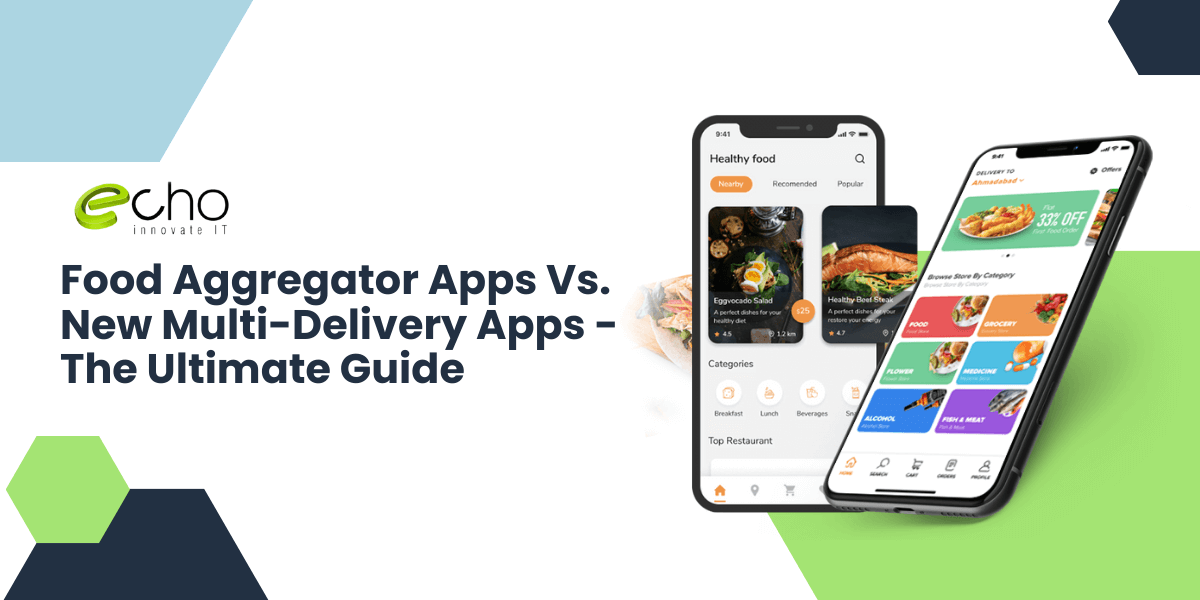
As the U.S. food delivery market continues to boom—businesses face a key strategic choice between partnering with food aggregator apps or launching their own multi‑delivery app or white‑label delivery platform. Iet us explore how these models differ, highlight their pros and cons, and offer expert advice to help B2B and B2C audiences make an informed mobile‑first decision.
What Is a Food Aggregator App?
10 min read · Last updated: May 2026
Popular platforms like Uber Eats, DoorDash, Grubhub, and similar third‑party services act as food aggregator apps that allow customers to browse and order from local restaurants within one mobile interface. The aggregator handles payments, delivery logistics, and customer support, while earning significant commission fees—typically 15–30% per order. This model is ideal for vendors seeking instant visibility and high order volume without marketing spend.
What Is a Multi‑Delivery App or White‑Label Delivery Platform?
In contrast, a multi‑delivery app (also known as Delivery‑as‑a‑Service or white‑label delivery solution) integrates with a company’s own branded Android and iOS apps or website to dispatch orders via multiple delivery networks (e.g. DoorDash Drive, Uber Direct, local couriers). This approach gives businesses full control over their customer experience, data ownership, branding, and profitability, although it requires marketing investment and technical integration.
Key Differences: Aggregator vs. Multi‑Delivery
Business Model & Commission
Aggregator apps take a percentage of revenue, reducing margins. Multi‑delivery platforms charge lower flat fees per delivery, allowing merchants to retain most of the order value. Related: mobile app development services.
Customer Data & Brand Control
Aggregators own customer data and the end-to-end experience. Multi‑delivery models enable merchants to control the entire brand journey and build direct relationships for loyalty, retargeting, and repeat sales.
Marketing & Reach
Aggregators offer massive reach to millions of users immediately. Multi‑delivery demands proactive marketing—but rewards with sustainable growth and customer retention.
Integration & Technology
Aggregator onboarding is simple but limits customization. Multi-delivery solutions require integration with POS and ordering systems but result in richer, more personalized mobile app experiences.
Mobile‑App Trends Impacting Delivery Models
AI‑powered personalization is now essential. Apps use machine learning to offer suggestions based on order history, dietary preferences, and time of day.
Real‑time tracking and predictive ETA driven by traffic, weather, and kitchen time have become table stakes for user trust.
Voice ordering via Siri, Alexa, or Google Assistant supports convenient reorders, especially for repeat or subscription customers.
The rise of super apps integrating food, grocery, pharmacy, and ride services means aggregators and multi‑delivery platforms evolve toward bundled ecosystems.
Adoption in suburban and smaller U.S. markets is growing rapidly, making localized delivery solutions increasingly viable.
Which Model Should You Choose?
Choose a Food Aggregator App if you need:
Immediate visibility, volume, and exposure on Android and iOS without upfront marketing
Quick access to a large user base with minimal setup
Acceptable margins in exchange for reach and convenience
Choose a Multi‑Delivery or White‑Label App if you want:
Full control of your mobile app brand on Android and iOS
Ownership of your customer data for retention and loyalty programs
Higher profit margins and long-term brand equity
Flexibility to integrate custom features, loyalty, subscription, or delivery preferences
What Are Multi-Delivery Apps?
A food aggregator or food delivery app is a mobile app that allows users to make orders from any restaurant within a certain area using their phones or tablets. The following tools are often included in an online food delivery app:
- The software allows users to order and pay for meals to be delivered to their door
- A mobile application for parcels
- An application for taking and monitoring orders of food in restaurants
- Back-end processing, support, and other features for a meal delivery service
Features of A Food delivery App
- Food delivery apps develop partnerships with various restaurants to offer restaurant menus on their platforms. Customers can review the menus and make orders straight via the mobile app
- Food delivery apps may have their delivery fleet or collaborate with third-party logistics companies to deliver customers’ food orders
- Customers who use food delivery applications can monitor their orders’ progress in real-time and get status updates about their deliveries
What Is a Food Aggregator App?
Top food aggregator apps, in layperson’s terms, are utilized by eateries as a means of building communities and connecting with both existing and potential patrons. An external website hosts the participation of the dining establishments. The shipping and logistics costs are also profitable for the companies.
However, prices have risen owing to the popularity of the cuisine’s online advertising and publicity. An aggregator’s role is to perform tasks and boost sales output, aiming to increase the commission paid for each purchase.
Features of A Food Aggregator App
- Food aggregator apps compile, on their platforms, the menus of various establishments located within a certain geographical area. Customers using the app can see the menus of various restaurants and make orders directly from the app.
- Consumers using food aggregator applications can rate and evaluate the restaurants they have ordered from, assisting other consumers in making more educated purchasing selections.
- Table reservations are an additional service that certain food aggregator apps provide for their users to reserve tables at restaurants directly via the app.
- Food aggregator applications provide in-app chat assistance to clients to answer their questions and address their concerns.
- Food aggregator apps record clients’ past meal orders, making it simpler for consumers to repurchase their favorite items.
How Food Aggregator Apps And Multi-Delivery Apps Are Different?
The following are some of the most important distinctions about food aggregator vs multi-delivery apps:
Business approach
Meal delivery apps offer a direct delivery approach, in which they collaborate with restaurants and supply their delivery fleet or engage with third-party logistics companies to bring meals to clients. Alternatively, these apps may also partner with third-party logistics providers. On the other hand, food aggregator apps use an aggregator model. This means that they compile the menus of a number of different restaurants onto their platform and serve as a go-between for the restaurants and their clients.
Number of Restaurants
Most food delivery apps only include a certain number of restaurants on their platform, and these businesses are often in some business relationship with the service. However, food aggregator apps have a far bigger restaurant on their site, giving clients access to a greater variety of dining choices and cuisines.
Time of Delivery
Food delivery apps typically deliver customers’ orders within a certain amount of time; however, this window of time might shift based on the restaurant’s location and the customer’s proximity to the restaurant. Meal aggregator apps, on the other hand, do not have a predetermined delivery time since they depend on the restaurants themselves to deliver the meal.
Cost
In addition to the cost of the meal itself, food delivery apps will charge customers a delivery fee for bringing the food to the customer’s location. On the other hand, food aggregator apps do not demand a delivery fee since they do not physically deliver the meal.
User Experience
Meal delivery apps create a smooth user experience end-to-end since they take care of the whole meal ordering and delivery procedure. This results in a better overall experience for the user. Conversely, food aggregator apps provide users access to a wider variety of selections, but they must deliver a different degree of experience from beginning to finish.
Food Aggregator Apps Vs. Multi-Delivery Apps: Which One Is Better For You?
Let’s Get into Some specifics regarding which type of business model is best for your business: food aggregator vs multi-delivery apps
According to Second Measure, in April 2026, top food delivery apps in the United States were dominated by large delivery aggregators. Doordash had 45% of the market share, Grubhub 23%, Uber Eats 22%, and Postmates 8%, leaving smaller firms only 2% of sales. There have been partnerships between independent companies, third-party platforms, and huge national firms. Many restaurants believed the only way to do business with them was to enhance their overall sales volume.
These companies execute their operations differently in many respects, but generally, they are organized and managed comparably. They make it possible for restaurants to display their menus on their platform, and delivery contractors who use the platform are the ones that complete orders when customers place them.
Hungry customers exploring the app in their area may see an advertisement for a restaurant on a third-party site. However, they charge a large fee for each order placed via their platform. This is the case even if the consumer often visits the restaurant and does not use the app to find it. Related: hire cross-platform developers.
Restaurants desire convenience, and traffic aggregators offer to attract customers who use mobile applications, but customers who use mobile apps dislike it when the app takes a shortcut and gives them nothing in exchange.
Some restaurants that use delivery aggregators are now overtly urging customers to make purchases straight from their websites/apps and phone numbers by offering unique discounts or limiting the options available to them on the relevant apps.
Why Restaurants Build Their Own Delivery Apps
To get around the limitations imposed by third-party systems, restaurants are increasingly turning to the development of food delivery apps as a solution. Hybrid delivery, which is growing in popularity among chain restaurants, refers to restaurants that manage their online ordering platform but outsource delivery to a third-party firm.
Hybrid delivery is gaining popularity among chain restaurants. As a result, the issue of aggregators charging exorbitant fees is alleviated, and they have to make significant investments in full-time delivery employees.
Wrapping It Up!!
A food delivery app can beat aggregator apps in many different locations. By using the best food delivery apps, restaurants can modernize their appearance and make menu changes with more consistency.
Additionally, the program may handle communication between restaurants, customers, and suppliers while giving the owner full control. In addition, you may run promotions and provide customers with push notifications. This will make communicating and maintaining ties with customers easier.
Before offering their opinions on mobile ordering apps, owners of restaurants should first make sure they have a solid understanding of the industry’s expanding variety, which extends beyond aggregators with a big public presence. Restaurants are becoming dissatisfied with their dependence on third parties to sell their food online. As a result, they would benefit financially by investigating alternate ordering and delivery alternatives over which they have complete control.
Echoinnovate IT is the top on-demand food delivery app solutions company in India. We develop custom food delivery apps, food aggregator apps, and multi-delivery applications. If you need assistance in choosing the right food delivery model for your business, call us now to book a free consultation. Related: custom software development.
FAQs
What Sets The New Multi-Delivery Apps Different From Food Aggregator Apps?
Food aggregator applications enable users to search and place orders from various local eateries in one convenient location. However, new multi-delivery applications collaborate with restaurants and host their menus and delivery services on a single platform.
Which Model, I.E., Food Aggregator Apps Or The New Multi-Delivery Apps, Is More Affordable For Consumers?
Food aggregator apps save users money since they don’t tack on any extra expenses for delivery. However, the newer multi-delivery applications cost money since they provide full-service delivery.
Food Aggregator Apps Vs. New Multi-Delivery Applications: Which Method Provides More Dining Options?
Since these applications compile menus from many eateries, they provide users with more dining alternatives. However, new multi-delivery apps may have fewer dining establishments available via their network.
Which Model, Food Aggregator Apps Or New Multi-Delivery Applications, Offers Superior Delivery Services?
Regarding delivery, the new multi-delivery apps are superior since they provide comprehensive services from beginning to finish. These services include delivery tracking and assurances. The food is delivered by the restaurants, not the food aggregator applications.
How Much Do Restaurant Operators Benefit From Food Aggregator Apps And New Multi-Delivery App Models?
While running a business, there are pros and cons to using food aggregator apps and new multi-delivery apps. Apps that bring together many food vendors for one client might increase sales but take a cut of each transaction. However, new multi-delivery applications provide comprehensive delivery capabilities that may need to be more practical for many eateries. Ultimately, everything comes down to the individual wants and demands of the restaurant’s proprietor.
What is a food aggregator app in 2025?
A food aggregator app is a mobile or web platform that lists menus from many restaurants in a single location. Users can compare restaurants, read reviews, and place orders, while the aggregator handles order processing and delivery.
What are new multi‑delivery apps?
Multi‑delivery apps serve as Delivery-as‑a‑Service (DaaS) solutions: restaurants take direct orders from their own website or app, while the multi‑delivery app automatically dispatches delivery through fleets like DoorDash Drive, Uber Direct, or local couriers.
What’s the key difference between aggregator apps and multi‑delivery apps?
Aggregator apps control both orders and delivery, with high commissions (15–30%) but access to large user bases. Multi‑delivery apps let you own your customer data, brand, and marketing while coordinating delivery through multiple fleets at lower flat fees. Related: AI-powered app development.
How much do restaurants pay in commission for aggregator apps?
Typical aggregator fees range between 15% to 30% per order, significantly reducing margins for restaurants. Multi‑delivery services usually offer a flat delivery rate per order, which is much more cost-effective.
Which model allows restaurants to own customer data?
Only direct ordering models with multi‑delivery apps give restaurants full access to customer emails, phone numbers, and order history. Aggregator platforms retain most customer data, limiting marketing opportunities.
Which model gives better brand control?
Multi-delivery apps enable full brand control—from the ordering interface to notifications and loyalty programs. Aggregator apps prioritize their own brand experience, not the restaurant’s identity.
Frequently Asked Questions
What's the difference between food aggregator apps and multi-delivery apps?
Food aggregators (DoorDash, Uber Eats, Grubhub) connect users to multiple restaurants but typically focus on one category (food). Multi-delivery apps (Uber One, Grab, Gojek, Rappi) bundle food, groceries, pharmacy, packages, and even ride-hailing in a single super-app experience. Multi-delivery / super-app models dominate Asia and Latin America; aggregator-only models still dominate the US, though DoorDash and Uber Eats have added grocery and convenience.
Are super-apps the future of delivery in 2026?
In Asia and Latin America: yes — Grab, Gojek, Rappi, KakaoTalk-T, Paytm have already won super-app dominance. In the US and Europe: less clear. DoorDash and Uber Eats have added grocery, alcohol, and pharmacy, but adoption is still mostly food-led. Cultural and regulatory differences (US dispensary rules, EU privacy laws) make full super-apps harder to scale outside Asia/LATAM.
Which model is more profitable in 2026?
Multi-category platforms (super-apps) typically have better unit economics due to higher order frequency per user (grocery + food + pharmacy = more orders), shared driver supply, and cross-category subscription pricing. However, execution complexity is much higher. In the US, both models can be profitable at scale — DoorDash profitable as food-focused, Walmart+ profitable as multi-category retailer.
How much does it cost to build a multi-delivery / super-app?
A basic single-vertical food aggregator: $200K-$500K. A multi-vertical super-app (food + grocery + pharmacy + parcels): $800K-$3M+. The complexity scales non-linearly — managing multiple vendor types, payment splits across categories, and dispatcher operations across verticals is significantly harder than single-vertical. Most successful super-apps started single-vertical (Grab as ride-hailing, Gojek as motorbike taxi) and expanded after scale.
Should new entrants compete with DoorDash or build a different model?
Direct head-on competition with DoorDash, Uber Eats, or Grubhub is extremely hard in 2026 — they have entrenched supply (drivers, restaurants) and demand (consumers). Successful new entrants typically pick: (1) Vertical specialty (kosher, halal, plant-based, alcohol-only). (2) Geographic niche (smaller cities, college towns). (3) Different business model (Toast and BentoBox sell tools to restaurants instead of competing as marketplace). Pure DoorDash-clones rarely succeed.
Build the App You're Reading About
Echo Innovate IT builds web, mobile, and AI products end-to-end — 25+ years, 100+ engineers, fixed-cost or hourly engagement models.
