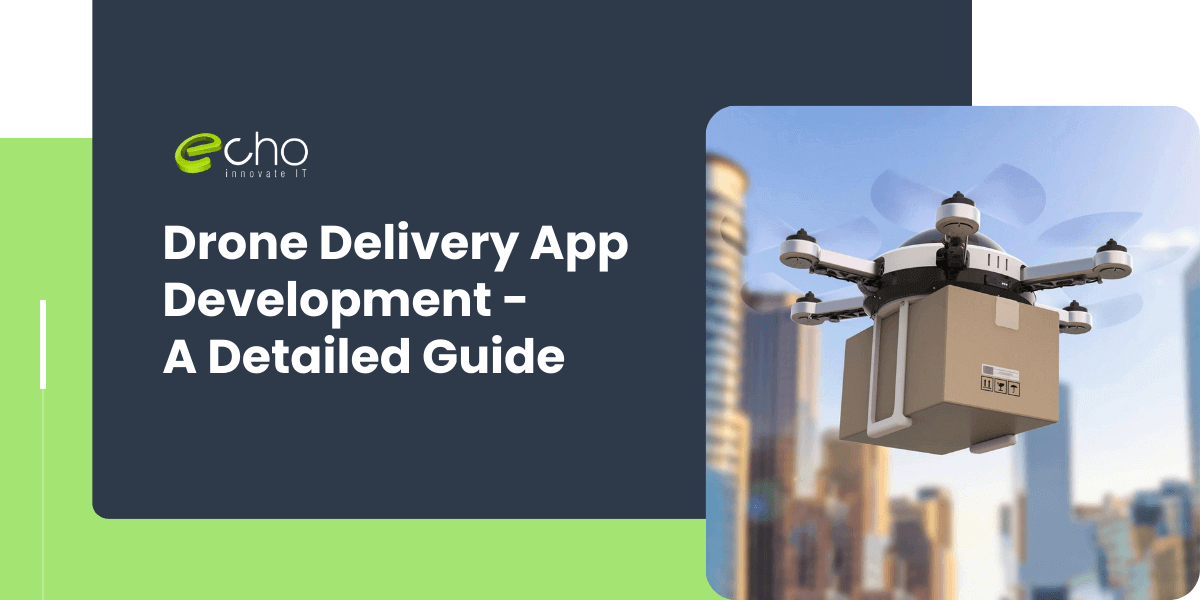
Drone delivery technology has evolved from concept to commercial reality, disrupting the logistics and last-mile delivery industry. With instant delivery becoming a consumer expectation and businesses racing to optimize speed and efficiency, drone delivery apps are helping companies deliver packages faster, cheaper, and more sustainably than ever before. From food and retail to healthcare and emergency supplies, industries are rapidly adopting drone delivery mobile apps on both Android and iOS platforms.
Why Drone Delivery Is Finally Real in 2026
Drone delivery moved from “lab demo” to “actually in production” between 2023 and 2026. Amazon Prime Air, Wing (Alphabet), Zipline, Walmart’s drone partnerships, and DroneUp now collectively complete over 200,000 commercial drone deliveries per week in the US — and millions more globally with Zipline’s medical-supply drones in Africa and India. The FAA Part 135 certifications that took 5+ years to secure have finally cleared the regulatory bottleneck for at-scale operations.
If you’re building drone delivery software in 2026, the model has matured into clear architectural patterns: customer-facing apps (similar UX to ride-share — request, track, receive), operator dashboards (fleet management, BVLOS authorization, weather routing), regulatory compliance layers (Part 135 logs, airspace authorization, sUAS reporting), and integration with existing delivery infrastructure (last-mile drone hand-off from trucks, drone-to-locker delivery).
This guide walks through drone delivery app development in 2026 — must-have features, technology stack, regulatory considerations, and cost ranges. If you’re ready to build, see our on-demand app development and custom software development services.
Trends Driving Drone Delivery App Innovation
13 min read · Last updated: May 2026
In this article
- 1. Mobile Tech Stack & Development Cost
- 2. How does Drone Delivery System work for businesses?
- 3. Why Should You Create an On-Demand Drone Delivery App?
- 4. What are the Basic Features of Drone Management Software?
- 5. Advanced Features of Drone Management Software
- 6. Top Industries that use Drone Delivery Apps to generate revenue
- 7. Tech Stack of On-Demand Drone Delivery App Development
- 8. How Much Does It Cost drone package delivery business?
The drone logistics sector is on a steep growth trajectory, driven by advancements in autonomous navigation, real-time data processing, AI integration, and mobile-first user experiences. Key technology trends influencing drone delivery apps include:
AI-powered route optimization for faster, weather-aware flight paths.
Autonomous drone fleets using computer vision and real-time obstacle avoidance.
Wearable and IoT integration for drone health monitoring and predictive maintenance.
Hybrid delivery systems combining drones with ground-based electric vehicles for optimized routing.
Environmentally conscious delivery models using electric drones and sustainable materials.
Micro-fulfillment centers enabling under-15-minute delivery services in urban areas.
These trends highlight the importance of agile, scalable, and secure mobile applications that facilitate seamless interactions between users, drones, and administrators.
Must-Have Features for a Drone Delivery Mobile App
To meet modern delivery standards and consumer expectations, your drone delivery app—whether for Android or iOS—should include the following features:
Intuitive user interface for placing, managing, and tracking orders.
Real-time GPS tracking with map-based drone visuals and live delivery status.
Push notifications for order confirmation, in-flight updates, and successful drop-offs.
AI navigation system with real-time traffic, weather, and obstacle detection.
Geofencing and no-fly zone compliance for legal and safe route enforcement.
In-app payments via Apple Pay, Google Pay, and major credit card integrations.
Drone camera feed for added delivery transparency and security.
Pilot dashboard for licensed operators to monitor flight logs and receive alerts.
Admin panel for fleet management, scheduling, order history, and analytics.
Compliance modules to track FAA certifications, insurance, and airspace usage.
Mobile Tech Stack & Development Cost
A successful drone delivery app requires a robust tech stack that supports real-time data exchange, device communication, and secure transactions:
Frontend: Flutter or React Native for cross-platform mobile apps; Swift and Kotlin for native iOS/Android development.
Backend: Node.js, Python, or Go with cloud hosting on AWS or Google Cloud.
APIs: Drone SDKs, GPS mapping tools, weather services, and payment gateways.
AI/ML Integration: Predictive analytics, obstacle recognition, and route efficiency.
Security: End-to-end encryption, biometric authentication, and CCPA/GDPR compliance.
How does Drone Delivery System work for businesses?
Take off
Once an order has been made, the procedure may begin. The adjacent business immediately begins packaging the desired item in their warehouse using a box designed to be handled by a drone and sending it on its way. Related: food delivery app development.
First, the drone leaves the warehouse and flies to the client, carrying the customer’s purchased item suspended from its undercarriage. Drone delivery systems use a VTOL system (vertical takeoff and landing) to take and drop off packages at consumers’ doorsteps.
Navigation
To get to their consumers, drones must fly across densely populated, obstacle-filled zones. Drones may do this in several different ways. GPS navigation is a frequent function on drones used to pinpoint the end user’s location.
The drones’ cameras on their upper surfaces provide them with a visual field, while SONAR and RADAR technologies allow them to hear their surroundings. Drones can travel over inhabited pathways using various parts and features, allowing them to detect and avoid obstacles like buildings, birds, trees, and even other drones.
Delivery of the purchased package
Once the drone reaches the customer’s home, it has three options for securely delivering the package:
Fly-By
Drones deliver packages by bouncing them off the ceiling as they fly above the customer’s house. However, the contents of the package make this method particularly dangerous. Still quicker than any other drone delivery system.
Packet and Chord System
The drone does not immediately drop off the package when it reaches the customer’s location. Down down, it seeks refuge before making its way out. The consumer would designate that space, and the drone would be able to locate it using a QR code on a mat. Once the drone’s camera reads the QR code, it knows it’s in a secure area and can safely land. The package is brought down to the mat and dropped to the floor with a cord.
Complete landing
With this method, the drone flies to its designated landing spot, drops off the delivery product, and then takes off again.
Back to the company's warehouse
When the drone’s delivery mission is complete, it lifts off and flies back to its home base. After the landing, the company will prepare the drone for next-day delivery services. The organization does a factory reset and new battery tests.
Why Should You Create an On-Demand Drone Delivery App?
Building an app that allows for on-demand drone delivery provides a variety of advantages and potential for both consumers and enterprises. The following is a list of important reasons why developing an app for on-demand drone delivery might be a wise move:
Fast delivery option
Customers may have their items delivered in minutes rather than hours or days using an on-demand drone delivery app. This helps businesses cut down on the amount of time it takes to complete deliveries. This has the potential to result in greater levels of satisfaction and loyalty among customers.
Low cost of delivery
When it comes to delivery costs, drones have the potential to deliver products more quickly and effectively than conventional delivery methods. This can potentially lower delivery costs for both drone development companies and their consumers.
Enhanced Productivity in the Delivery Process
As drones can fly over congested areas and around obstructions in the road, they may make the drone delivery process becomes more effective and lessens the likelihood any delays. Related: on-demand delivery app development.
Provide an ace over the competition
Providing clients with a delivery experience that is both one-of-a-kind and forward-thinking requires companies to differentiate themselves from the competition. One way to do so is by developing drone applications for delivery.
Possibility of Establishing New Sources of Income
An on-demand drone delivery app may open up new potential for companies to provide delivery services to a larger variety of consumers and items.
Greater delivery range or area
Since drones can travel large distances and reach isolated or difficult-to-access regions, this opens up more delivery alternatives for companies and their consumers.
Sustainable and gentle to the environment
Traditional distribution methods are responsible for more carbon emissions than drones, which means that using drone package delivery may be a more sustainable and ecologically friendly alternative.
If you create a drone app, it has the potential to provide a variety of advantages to both companies and their consumers. These advantages include shorter delivery times, reduced costs, enhanced efficiency, a wider delivery range, environmental sustainability, a competitive edge, and new income streams.
What are the Basic Features of Drone Management Software?
You need drone management software if your company uses drones for anything beyond simple aerial photography, such as surveys, inspections, or deliveries. The best drone management app will include these crucial features:
Planning A Flight
Users should be able to define flight characteristics such as flight route, altitude, and speed and schedule flights using the program. This function guarantees the drone can carry out its duties safely and effectively.
Help In Controlling Drones
The drone’s camera angle, heading, and speed should all be adjustable through remote control, a feature the software should make possible. This function helps ensure the drone is flying as planned and gathering relevant information.
Real-Time Data And Videos Feed
The user should be able to track the drone’s location and status in real time via the software and get data and video from the drone itself.
Automatic Data Analysis
Artificial intelligence (AI) and machine learning (ML) algorithms should be able to analyze the data acquired by the drone delivery automatically. This function has the potential to reduce analysis times and improve data quality.
Fleet Administration
Users should be able to control a fleet of drones using this program, keeping tabs on their health and performance as they send them out on missions.
Security Measures
During drone delivery app development, the software should include safety measures, including the automated return to home in case of signal or power failure and geo-fencing to prevent it from entering prohibited airspace.
Data Preservation And Collaboration
Users can safely and conveniently exchange drone data gathered by the program.
Compliance With Laws And Regulations
With drone management software, users can get the required permissions and follow airspace limits.
The drone app development process should prioritize the safe, efficient, and effective use of drones. The capabilities above may assist businesses in optimizing their drone operations in terms of both safety and legality.
Advanced Features of Drone Management Software
The delivery procedure and the user experience may benefit from including many sophisticated features in a drone delivery control app. The following are examples of advanced functions that might be included in a drone delivery app:
Live Monitoring
Thanks to the drone control app’s live updates on the drone’s position and delivery status, customers will be able to see exactly where their shipment is in the delivery process and how long it is expected to take.
Flight Management System
The drone delivery app may automatically control the drone’s flight route and height, allowing it to avoid obstacles and fly more effectively.
Augmented Reality
A drone control app uses augmented reality technology to show the position of the drone and its delivery progress in real-time, making the delivery process more interesting and participatory for clients.
Personalized Delivery Choices
Customers have more control over their delivery experience because of the drone delivery app’s ability to save their preferred delivery address and time.
Processing Orders Mechanically
The program can handle orders mechanically, eliminating the need for human intervention and speeding up delivery.
Compatibility With Other Systems
The on-demand drone delivery app solutions can sync with logistics and e-commerce systems for streamlined data sharing and an enhanced delivery experience.
Support To Clients
Customers with problems may get assistance from chat bots or real-time support via the drone delivery app. Related: hire cross-platform developers.
Back To The Company's Warehouse
When the drone’s delivery mission is complete, it lifts off and flies back to its home base. After the landing, the company will prepare the drone for next-day delivery services. The organization does a factory reset and new battery tests.
Top Industries that use Drone Delivery Apps to generate revenue
The usage of drone delivery systems dates back at least two decades. Drone delivery, however, is likely to grow, prompting drone management software creation.
Drone Delivery For Construction
Benefiting the construction industry, the drone delivery system performs real-time inspections, allowing site owners to assess sites and apply adjustments if problems are discovered. Drones, in particular, can watch for unintentional dangers, preventing widespread devastation. This helps construction sites save money by reducing the time workers need to spend on repetitive tasks.
Drone Delivery For Agriculture
Agriculture drone use includes the Collection of information for purposes of analysis (such as irrigation mapping, soil analysis, soil composition, etc.); carrying out tasks (such as planting and sowing); and assisting with monitoring and checking their whole area from a central location. Commercial drone technology is widely regarded as one of the most promising agricultural developments, with applications ranging from seed bending and pesticide spraying to weed control and beyond.
Drone Delivery System For Real Estate
With the advent of drone delivery systems in the real estate industry and high-quality cameras, firms will have more opportunities to take photographs and films of properties.
Drone Package Delivery In ECommerce
Small and medium-sized firms (SMEs) are just as adept at harnessing the potential of drone management software as their larger counterparts. Drones are being used to deliver goods to clients by a wide range of eCommerce firms, including food delivery applications, on-demand grocery apps, and more. The idea of delivering online purchases by drone is not new, but it has just caught on. It ensures the distribution of products is quick, safe, and easy.
Drone Delivery System For Finance/Insurance
The financial sector and insurance companies were the first to employ drones for inspections in 2015. Recent technological advancements have been crucial to the success of drone delivery systems. By streamlining the claims process, these solutions help businesses see a greater return on their investment in a shorter period.
Drone Delivery Apps For Logistics
Drone delivery excels in the logistics industry’s supply chain and home delivery areas. This kind of distribution mechanism saves money and time for businesses. Customers profit from drones in the same ways that companies do.
Drone Delivery For Oil And Gas Industry
Companies in the oil and gas industry are increasingly turning to uncrewed aerial vehicles (UAVs) for a wide range of tasks, including routine maintenance, leak detection in pipelines, and emergency response.
Drone Delivery In Food Delivery Industry
Drone food delivery is still in its early stages in certain areas, while others have cornered a sizable share of the industry. Drone food delivery would be widely praised since it would let people satisfy their hunger more quickly.
Tech Stack of On-Demand Drone Delivery App Development
Use the following tools and technologies to create drone delivery control applications, mapping software, inspection software, photogrammetry software, delivery apps, and more.
DroneKit SDK/API
Drone delivery app development requires a 3D Robotics platform. It aids in incorporating capabilities like course planning, live telemetry intelligence, and autonomous flying. It’s a free API for creating bespoke drone applications with extra features.
APIs allow applications to store and exchange data logs for seamless connection to construct better real-time drone controller software.
Parrot SDK
Parrot SDK, another drone controller API, enables drone app development companies to use open code repositories and reproduce them into the application framework. Append it to your app to control your drone, obtain live streaming data, submit autopilot plans, update your drone, and store media and other important documents.
DJI SDK/API
DJI is a major drone app SDK. It has several real-time user experience elements. APIs help find obstructions, control life video streams, provide camera monitoring, provide battery support, and more.
FlytBaseSDK API
FlytBase, a popular drone SDK, enables developers to create amazing drone delivery apps they control. Its standalone business of on-demand drone delivery app solution includes cloud services, sensors, security, business administration, sheet management distribution, and more. FlyOS and other SDKs and APIs reduce collisions and optimize video streaming.
How Much Does It Cost drone package delivery business?
Starting a drone delivery service ranges from $10,000 to $25,000. The drone delivery app development company will provide you with exact pricing since it depends on various elements, such as the areas of delivery, the features you want to add, and many more. It would help if you got in touch with a top mobile app development company in order to get fixed pricing.
Conclusion
Building drone delivery software in 2026 comes down to four critical decisions:
- You probably won’t build the drones yourself: Companies like Wing, DroneUp, Zipline, and Skydio sell delivery-as-a-service. Your software typically integrates with their fleets rather than operating your own.
- Plan FAA Part 135 + airspace integration: If you operate drones, Part 135 certification takes 12-24 months and $500K-$2M in legal/compliance work. BVLOS (beyond visual line of sight) authorization adds another year.
- UX must mirror what users expect: Real-time tracking like ride-share, ETA precision, weather-aware routing visible to customers, drop-zone designation. Customers don’t care about your drone tech; they care about reliable delivery.
- Hybrid delivery models scale fastest: Pure drone delivery faces weather and regulatory constraints. Hybrid (truck delivers near, drone last-100m) has proven the most-scalable model at companies like Walmart and Amazon.
Echo Innovate IT has built on-demand and logistics software with drone delivery integration, fleet management, real-time tracking, route optimization, and full Apple/Google compliance for over 17 years through our on-demand app development and custom software development services. Get a free product roadmap and quote below.
Frequently Asked Questions
The cost of developing a drone delivery app depends on various factors and different aspects of the development life cycle. The factors include app size, complexity, type and number of features, UI/UX design complexity, etc. The cost of the development partner also affects the total cost.
The time required to build a drone delivery app depends on its size and complexity. Generally, it takes 4-6 months to develop the app.
We sign a non disclosure agreement to keep your confidential data secure and private.
Yes, we offer complete post launch support and services to keep your app running smoothly and error-free.
A drone delivery app is a mobile platform that allows users to place and track orders fulfilled by unmanned aerial vehicles (drones), offering fast and efficient last-mile delivery.
Users place orders through a mobile app, which assigns a drone based on location and payload. AI-powered systems calculate optimal routes while users receive real-time tracking updates until delivery is complete.
They reduce delivery times, lower logistics costs, increase service coverage, and offer a futuristic, tech-savvy brand experience.
Industries include e-commerce, food delivery, medical and pharmaceutical logistics, agriculture, and emergency response services.
Yes, with FAA approval and compliance with airspace regulations, drone delivery is legal for commercial use in many areas across the United States.
Key features are live tracking, push notifications, secure payment, route optimization, drone camera view, geofencing, and FAA compliance monitoring.
Yes, in specific contexts. Amazon Prime Air, Wing, and DroneUp deliver in select US suburbs (Texas, Arizona, Virginia). Zipline operates extensively in Africa and India for medical supplies. Walmart + Cruise partnerships handle last-mile in some areas. Common limitations: weather (most fleets ground in rain or wind >25 mph), payload (most consumer drones max at 5 lbs), and dense urban areas (regulatory restrictions). Suburban + rural delivery is where economics work best.
A consumer-facing drone delivery app (integrating with a third-party fleet provider like DroneUp or Wing): $120K-$350K for iOS, Android, and backend. A full operator platform (managing your own fleet) with airspace authorization, weather routing, and Part 135 compliance: $500K-$2M+. The drone fleet itself is a separate capital expense — typical commercial delivery drones cost $5K-$50K each.
Suburban drone delivery typically runs 15-45 minutes door-to-door, comparable to or faster than fastest ride-share delivery. Zipline’s medical drones in Rwanda deliver in 15-25 minutes consistently. Urban drone delivery is slower due to airspace restrictions and longer initial flight clearances. Speed advantage is most pronounced in suburban areas where ground delivery would take 30-60+ minutes due to traffic.
Your Uber-for-X needs more than just a map and a button.
Real-time dispatch, geo-fenced pricing, driver supply balancing, surge logic, ETA accuracy, payout splits, KYC for drivers, in-app chat, ratings — we’ve shipped 30+ on-demand apps from taxis to laundry to last-mile delivery. We know why most on-demand startups burn out (broken unit economics, weak driver retention) — and we build to prevent it.