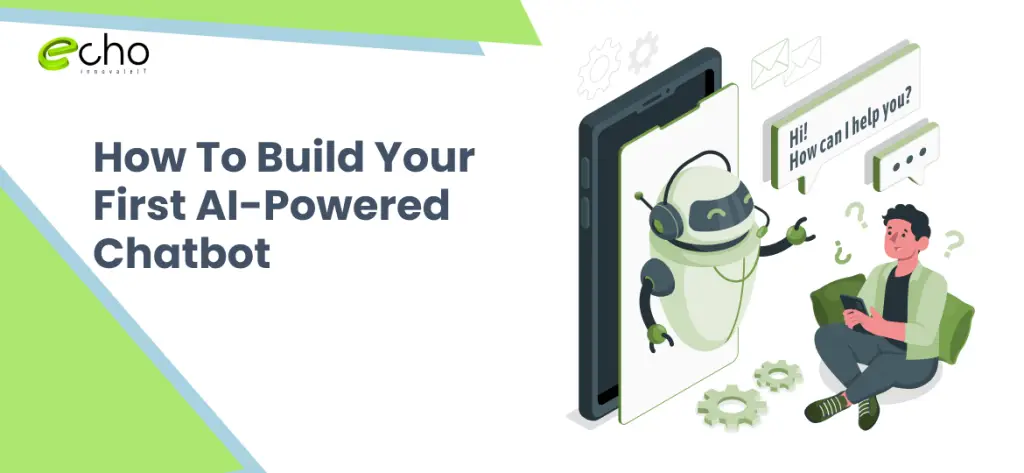
An AI chatbot’s cost in 2026 depends on scope: a focused MVP is the entry-level tier, a growth build with retrieval-augmented generation (RAG) and business integrations sits in the mid-range, and an enterprise agentic system is enterprise-scale. The gap is wide because “AI chatbot” now covers everything from a single support widget to an autonomous agent that reads your systems and takes actions.
The good news is that building your first AI chatbot in 2026 is far more accessible than it was even two years ago. Foundation models from OpenAI, Anthropic, and Google do the heavy lifting; your job is to connect them to your knowledge and your systems safely. This guide covers what an AI chatbot costs in 2026, the features that matter, the tech stack and integrations, how long a build takes, what drives the price, and how we approach AI development services for teams shipping their first chatbot.
Key takeaways
- An AI chatbot MVP is the entry-level tier; a RAG-based growth build sits in the mid-range; an enterprise agentic system is enterprise-scale.
- Most business chatbots today use RAG so the bot answers from your own documents instead of guessing.
- You do not train a model from scratch; you connect a foundation model (GPT, Claude, or Gemini) to your knowledge and tools.
- Expect roughly 3–6 weeks for an MVP and 2–4 months for a production RAG build.
- The real cost is not the model; it is data preparation, integrations, guardrails, and evaluation.
How much does it cost to build an AI chatbot?
The cost of an AI chatbot depends far less on the model and far more on what the bot needs to know and do. A simple FAQ assistant is inexpensive. A chatbot that answers accurately from thousands of your own documents, integrates with your CRM, and takes actions on a user’s behalf is a real software project. The ranges below reflect 2026 market rates for custom builds; they are ranges, not a quote, because scope drives everything. We provide a transparent quote after a short scoping call.
| Tier | Investment level | What it includes |
|---|---|---|
| MVP | Entry-level | Single foundation model, one channel (web or WhatsApp), basic FAQ or scripted flows, light branding |
| Growth | Mid-range | RAG over your documents, CRM/helpdesk integration, multi-channel, analytics, guardrails, human handoff |
| Scale | Enterprise-scale | Agentic actions across systems, multi-model routing, evaluation pipeline, enterprise security and compliance |
On top of the build, budget for ongoing model-usage (API) costs, which scale with conversation volume, plus hosting and maintenance. Those running costs are usually modest for an MVP and become a real line item at enterprise volume. For a deeper breakdown specific to conversational AI, see our AI chatbot development cost guide.
Must-have features of an AI chatbot
A chatbot that ships and a chatbot that gets trusted are different things. The difference is a handful of features that most first-time projects underestimate. Here is what actually matters, roughly in priority order.
Retrieval-augmented generation (RAG). Instead of relying on the model’s general training, RAG retrieves relevant passages from your own documents and feeds them to the model at answer time. This is the single most important technique for a business chatbot, because it keeps answers grounded in your content and dramatically reduces made-up responses.
Grounding and source citations. The bot should be able to show where an answer came from. Citing the source document builds user trust and makes it obvious when the knowledge base needs updating.
Guardrails and safety. Rules that keep the bot on-topic, refuse unsafe requests, and avoid confidently answering questions it cannot support. Without guardrails, a chatbot will eventually say something wrong or off-brand in front of a customer.
Conversation memory. Holding context across a conversation so users do not repeat themselves, and optionally remembering a returning user’s history. This is what makes a bot feel like an assistant rather than a search box.
Human handoff. A clean escalation path to a human agent when the bot is unsure or the user asks. The best chatbots know their limits and hand over gracefully, which protects the customer relationship.
Integrations and actions. Connecting to your CRM, helpdesk, or order system so the bot can look up an order, create a ticket, or update a record. This is where a chatbot shifts from answering questions to getting work done.
Analytics and evaluation. Dashboards showing what users ask, where the bot fails, and how answers score against a test set. You cannot improve a chatbot you are not measuring, and an evaluation loop is what turns a launch into a product that keeps getting better.
For a first build, the strongest starting point is RAG over a clean knowledge base, with guardrails, citations, and human handoff. That combination delivers a genuinely useful assistant without the cost and complexity of full agentic actions.
Tech stack and integrations
The most important thing to understand about the 2026 chatbot stack is what you do not build: you do not train a model from scratch. You choose a foundation model and connect it to your data and systems. That single fact is why chatbots are now weeks of work rather than years.
The foundation model. The reasoning engine, accessed by API. The common choices are OpenAI’s GPT models, Anthropic’s Claude, and Google’s Gemini. Many production systems route between models: a small, cheap model for simple turns and a larger one for hard questions, which controls cost without sacrificing quality.
The RAG layer. Your documents are split into chunks, converted to embeddings, and stored in a vector database such as Pinecone, Weaviate, or pgvector. At answer time the system retrieves the most relevant chunks and passes them to the model. Frameworks like LangChain or LlamaIndex, or a lightweight custom pipeline, orchestrate this.
The application layer. A back end (commonly Python with FastAPI, or Node.js) that manages conversations, applies guardrails, logs everything, and handles authentication. The chat interface itself can be a website widget, a WhatsApp or Slack integration, or a mobile screen.
The integrations are what make a chatbot valuable to a specific business:
- Knowledge sources: your help center, PDFs, Notion or Confluence, and product docs, kept in sync so answers stay current.
- CRM and helpdesk: Salesforce, HubSpot, Zendesk, or Intercom, so the bot can read customer context and create or update tickets.
- Channels: web, WhatsApp, Slack, Messenger, or in-app, depending on where your users already are.
- Observability: logging, tracing, and an evaluation set so you can catch regressions when you change a prompt or model.
The right stack depends on your data, your volume, and your security requirements. A regulated business may need a model deployed in its own cloud tenancy; a small team may be perfectly served by hosted APIs. Matching the stack to the requirement is exactly the kind of decision we scope before building.
How long it takes to build
An AI chatbot MVP usually takes 3 to 6 weeks from kickoff to a working demo, and a production RAG build with integrations, guardrails, and evaluation typically takes 2 to 4 months. Agentic systems that take actions across multiple business systems run longer. Unlike traditional software, most of the timeline is spent not on the model but on data and evaluation.
A realistic sequence begins with knowledge preparation, often the most underestimated phase: gathering, cleaning, and structuring the documents the bot will answer from, because a chatbot is only as good as the content behind it. Next comes the RAG and prompt pipeline, wiring up retrieval, prompts, and guardrails, which for an MVP can produce a usable demo within the first couple of weeks. Integrations with your CRM or helpdesk and the target channels are layered in next. Then comes the phase that separates good from mediocre: evaluation and tuning, where you build a test set of real questions, measure answer quality, and iterate on retrieval and prompts until the bot is reliably right. Finally, launch and monitoring puts it in front of users with logging so you can keep improving.
The fastest route to value is to launch a narrow, well-grounded bot on one channel over one solid knowledge base, prove it answers accurately, then expand channels, integrations, and actions from there.
What drives the cost
When two AI chatbot quotes differ by tens of thousands of dollars, the difference almost always sits in these factors, not in the choice of model.
Knowledge base size and quality. Clean, well-structured documentation makes RAG cheap and accurate. Messy, scattered, or contradictory content requires cleanup and structuring, which is real work and the most common hidden cost in a first chatbot.
Integrations and actions. A bot that only answers is far cheaper than one that reads your CRM, updates records, or triggers workflows. Each system it touches adds development, testing, and security scope.
Guardrails and compliance. Consumer-facing bots in regulated industries (finance, healthcare, legal) need stronger safety, auditing, and data-handling controls, which increase both build and ongoing cost.
Evaluation depth. A quick demo can skip formal evaluation; a chatbot you trust in front of customers needs a test set and a measurement loop. That investment is what prevents embarrassing failures, so it is worth paying for.
Model and usage volume. Larger models and higher conversation volume raise ongoing API costs. Smart model routing and caching keep this in check, but at enterprise scale it becomes a genuine budget line.
Channels and languages. Each additional channel and each supported language adds testing and content work. If ongoing tuning and monitoring capacity is a concern after launch, an IT staff augmentation arrangement can keep an AI engineer available without a full-time hire.
How EchoInnovate IT builds AI chatbots
EchoInnovate IT is an India-based custom and white-label software development company with 12 years of experience and a team of 50+ people. We have shipped 500+ products, most under our clients’ own brands, and hold a 5.0 rating across 6 verified Clutch reviews. For AI work, that means we build chatbots the way you would build any dependable product: grounded in real data, measured against a test set, and shipped with guardrails rather than hype.
Our approach starts with a scoping call to understand what your bot must know, what it must do, and where it will live. We prepare and structure the knowledge base, stand up a RAG pipeline over a foundation model, and wire in guardrails, citations, and human handoff from the start. Crucially, we build an evaluation loop so answer quality is a number you can watch, not a guess. We then integrate your CRM or helpdesk, launch on your chosen channels, and monitor and tune after go-live. Because we run a dedicated-team model, you can scale up for the build and keep a smaller team for ongoing tuning.
Whether you want a first support assistant or an agentic system that acts across your tools, we choose the models and architecture to fit your data and risk profile rather than defaulting to one recipe. Explore our AI development services, see how we operate as a full-stack software development company, or read our AI chatbot cost guide for a deeper look at budgeting.