Building a custom eCommerce mobile app in 2026 depends on the number of features, the level of personalization, and how much backend and integration work connects the app to your store, payments, and logistics. A focused MVP — catalog, cart, checkout, and order tracking — sits at the entry level, while a full retail platform with personalization, loyalty, and multi-channel sync reaches enterprise scale. Timeline follows the same curve: roughly 3 to 5 months for an MVP and 6 to 10 months for a full build.
This guide is written for the eCommerce owner or operator weighing whether a custom app is worth it, not only the engineer building it. You will get a clear cost breakdown, the case for a custom app over a template, the must-have features and integrations, an honest view of what drives the price, and how a dedicated partner like EchoInnovate IT plans, builds, and maintains eCommerce apps. For adjacent numbers, our eCommerce app development cost guide pairs well with this article.
Key takeaways
- A custom eCommerce app typically takes 3 to 10 months to build, with cost driven by features and integrations, not by platform hype.
- Mobile apps convert better and retain customers longer than mobile web, and push notifications plus loyalty features drive repeat purchases.
- A custom app pays off when you have real order volume, a repeat-purchase business, or needs a template cannot meet.
- The biggest cost drivers are personalization, loyalty programs, integrations (payments, ERP, logistics), and custom UI.
- We do not publish fixed prices because scope decides everything; we give a transparent quote after a short scoping call.
How much does a custom eCommerce app cost?
Cost depends on scope, so the useful way to budget is by app maturity. The ranges below reflect 2026 market rates for custom eCommerce app development across agencies and dedicated offshore teams. They assume a professionally designed, tested, store-published app — not a drag-and-drop template wrapper. Use them to size your thinking, then confirm the real figure with a scoping call, because personalization and integrations move retail projects between tiers quickly.
| eCommerce app type | Investment level | Typical timeline |
|---|---|---|
| MVP (catalog, cart, checkout, tracking) | Entry-level | 3–5 months |
| Mid-level (accounts, loyalty, push, search) | Mid-range | 5–7 months |
| Advanced (personalization, multi-channel) | Premium | 6–9 months |
| Enterprise (ERP/OMS, AI recommendations) | Enterprise-scale | 8–10 months+ |
Two things move you between tiers. The first is how personalized and custom the shopping experience is — tailored recommendations, dynamic merchandising, and bespoke UI cost more than a standard catalog-and-cart flow. The second is integration depth: connecting to your ERP, order management, inventory, logistics, and multiple payment providers is where budgets expand fastest. We do not publish a fixed price for your project because these variables are specific to you; we provide a transparent quote after a short scoping call. For a fuller breakdown, see our eCommerce app development cost guide and, for a comparable build, our cost to build a shopping app like Etsy.
Why a custom app over a template
Template and app-builder solutions are cheap to start and fine for testing an idea, but they hit a ceiling fast. A custom mobile app is worth the higher upfront cost once your store has real order volume, a repeat-purchase model, or requirements a template cannot meet. Here is why growing retailers move to custom.
Better conversion and retention. Native mobile apps generally convert browsing into orders at higher rates than mobile web, and they keep customers longer through faster performance and a smoother checkout. For a repeat-purchase business, small improvements in retention compound into meaningful revenue.
Push notifications you own. An app gives you a direct, no-cost channel to reach customers with restock alerts, price drops, and personalized offers — without paying for ads or fighting email deliverability. This alone often justifies the investment for high-frequency retailers.
Personalization and loyalty. Custom apps can tailor the storefront to each shopper, run loyalty and rewards programs, and use purchase history to merchandise intelligently. Templates rarely allow this depth.
Integration with your real systems. A custom app connects directly to your ERP, inventory, order management, and logistics, so stock, pricing, and orders stay in sync across channels. Template apps usually offer only shallow, limited connections.
Ownership and flexibility. You own the code and the roadmap. You are not constrained by a builder’s feature set, pricing changes, or shutdown risk, and you can evolve the app as your business does. If you also sell on the web, our guide to developing an eCommerce website from scratch covers the companion storefront.
Must-have features of an eCommerce app
Whatever you sell, a core set of features appears in almost every serious eCommerce app. Budgeting for them upfront avoids surprise costs later.
Product catalog and rich search. Fast browsing, categories, filters, and a search that tolerates typos and understands intent. Good search and filtering directly affect conversion once the catalog grows.
Accounts, cart, and one-tap checkout. Saved profiles, addresses, and payment methods that make repeat checkout nearly frictionless. Guest checkout matters too, since forcing sign-up costs sales.
Multiple payment options. Cards, digital wallets, and local methods, plus buy-now-pay-later where relevant. Our roundup of best payment gateways for eCommerce stores helps with the choice.
Order tracking and notifications. Real-time order and delivery status plus push notifications for shipping, restocks, and offers. This is a major reason customers keep the app installed.
Personalization and recommendations. Tailored home screens and product suggestions based on behavior and history, which lift average order value when done well.
Loyalty, wishlists, and reviews. Rewards programs, saved items, and social proof through ratings and reviews all increase repeat purchases and trust.
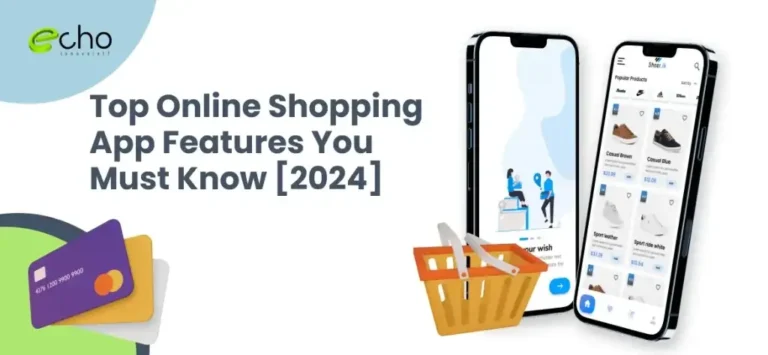
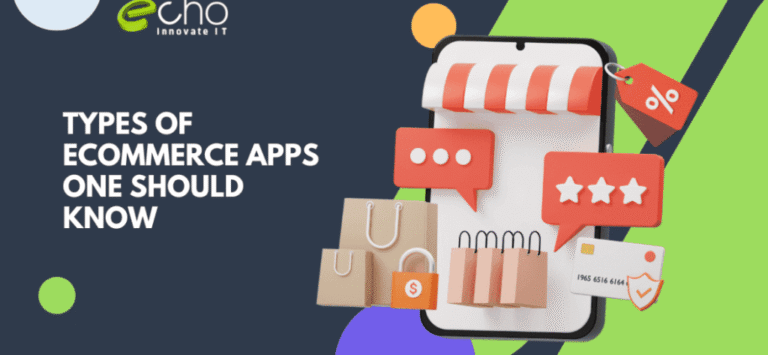
Admin and analytics. A dashboard to manage products, orders, promotions, and customers, plus analytics to see what is working. For a fuller list, see our guide to top online shopping app features and the types of eCommerce apps.
Tech stack and integrations
An eCommerce app runs on a mainstream, well-supported stack, with the integration layer doing most of the heavy lifting. A typical setup looks like this:
- Mobile apps: Flutter or React Native for one codebase across Android and iOS, which lowers cost for retailers who need both stores. Native Kotlin and Swift are used where performance or platform features demand it.
- Back end: Node.js, Laravel, or .NET for the API, catalog, cart, and order logic — or a headless commerce layer that connects to your existing store platform.
- Commerce platform: A headless connection to Shopify, WooCommerce, Magento, or a custom store, so the app and web share one source of truth for products, pricing, and orders.
- Database and hosting: PostgreSQL or MySQL on a cloud platform such as AWS or Google Cloud, with a CDN for fast product images and monitoring and backups.
Integrations are where an eCommerce app gains most of its value and its scope. Common ones include payment gateways, ERP and inventory systems, order management, shipping and logistics, tax and fraud services, email and push platforms, and analytics. Each adds build and testing time, so list every one during scoping. If you already run a Shopify store, a headless app that reuses it is a fast path — our overview of Shopify apps covers the ecosystem. When your team lacks a specific commerce-engineering skill, IT staff augmentation can add it without a permanent hire.
How long does it take to build?
Timeline tracks scope closely. A focused MVP with catalog, cart, checkout, and order tracking usually takes 3 to 5 months from kickoff to a live store listing. A mid-level app with accounts, loyalty, search, and push more often runs 5 to 7 months, and an advanced or enterprise platform with personalization and deep ERP/OMS integration can take 8 to 10 months or more.
Those numbers assume a dedicated team working in parallel: while designers finalize later screens, engineers build the back end and integrations, and testing runs alongside development. In eCommerce specifically, integration testing against payment, inventory, and logistics systems is a large part of the timeline, and it is worth doing thoroughly because checkout bugs cost real revenue.
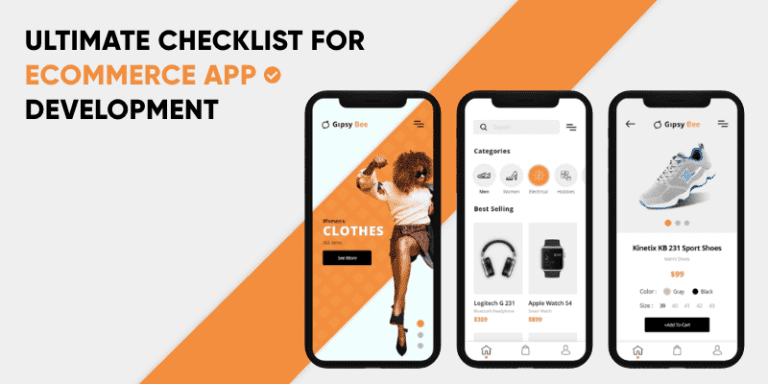
The most reliable way to compress the timeline without cutting corners is to launch an MVP first — the core shopping and checkout flow — then add loyalty, personalization, and deeper integrations in later releases based on real customer behavior. You get an app in customers’ hands sooner and spread the investment over time. Our eCommerce app launch checklist covers what to have ready before going live.
What drives the cost up or down
If two quotes for an eCommerce app come back far apart, the factors below almost always explain the gap. Knowing them lets you steer the budget deliberately.
Personalization and merchandising. Tailored home screens, dynamic recommendations, and AI-driven merchandising add real engineering work. They lift revenue when done well but are a clear cost driver.
Loyalty and promotions. Rewards programs, tiered discounts, coupons, and referral mechanics each add logic and testing. Simple promotions are cheap; complex loyalty engines are not.
Integration depth. Payments, ERP, inventory, order management, shipping, tax, and fraud tools each add build and maintenance work. A store with many back-office systems costs more to connect.
Number of platforms. Android plus iOS, and sometimes a companion web app, multiply the surface area. Cross-platform frameworks help control this.
Custom UI and brand experience. A distinctive, branded shopping experience costs more than a standard catalog-and-cart layout. It is worth paying for where it differentiates you.
Team model. Onshore agencies typically cost more per hour than a dedicated offshore team for comparable quality. Many retailers use an offshore software development company to get the same output at a lower total cost. The goal is the lowest cost per shipped, working feature — not the cheapest hourly rate. A well-built app should pay for itself through higher conversion and repeat purchases, so weigh cost against the revenue it is designed to generate.
How EchoInnovate IT builds eCommerce apps
EchoInnovate IT is an India-based custom and white-label software development company with 12 years of experience, 50+ employees, and more than 500 products shipped — including eCommerce and retail apps, most of them under our clients’ own brands. We build commerce apps around the numbers that matter to retailers: conversion, average order value, and repeat purchase rate, not just a feature list.
A typical engagement starts with a discovery phase that produces a prioritized feature list, wireframes, an integration map for your store and back-office systems, and a technical plan. From there a dedicated team — designers, mobile and back-end engineers, and QA — builds in short cycles, so you see working software every couple of weeks. We handle the back end, the app, payment and platform integrations, testing, store release, and ongoing maintenance, working in your time zone and toolset.
Because we work white-label, you can put your own brand on the app and present it as your in-house product. Our eCommerce app development team has delivered storefronts, marketplaces, and headless commerce apps connected to Shopify, WooCommerce, and custom platforms, and we hold a 5.0 rating across 6 verified Clutch reviews. When you need to scale a specific skill for a phase — a payments engineer or an ERP-integration specialist, say — we can extend your team through staff augmentation rather than forcing a full-team engagement. What you should expect: a working eCommerce app on a mainstream stack, connected to your real systems, delivered on a transparent quote, with a partner still there for the next release.