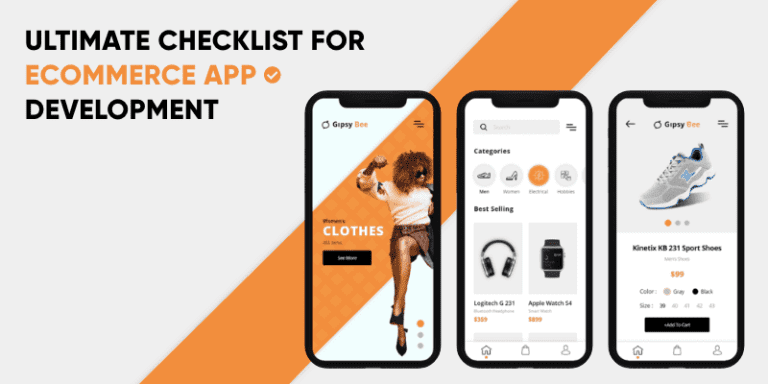
If you are planning an e-commerce app in 2026, the first real question is cost. Here is the direct answer: most custom e-commerce apps span from an entry-level to an enterprise-scale investment, and the range is wide because scope drives everything. A lean MVP that validates a single shopping and checkout flow can start near the low end, while a multi-vendor marketplace with custom checkout, loyalty, and back-office tooling sits at the top. Where your project falls depends on platform coverage (iOS, Android, or both), the number of integrations, and how much custom design and logic you need.
This guide is written for founders and product owners who are budgeting a build. It covers what you actually pay for, the features that matter, the tech stack behind a durable app, realistic timelines, the factors that move the price, and how we approach e-commerce app development. We do not publish fixed prices, because a real number depends on your requirements. Instead, you get a transparent quote after a short scoping call, so the estimate matches what you are actually building.
Key takeaways
- Custom e-commerce apps span from an entry-level to an enterprise-scale investment in 2026; an MVP sits lower and a marketplace runs higher.
- Scope, platform coverage, and integrations (payments, inventory, shipping, analytics) drive most of the price.
- A focused MVP takes roughly 3–5 months; a full-featured app or marketplace often runs 6–10 months.
- Prioritize a fast checkout, reliable search, and a stable payment and inventory backbone before adding extras.
- Start with a low-risk pilot sprint to validate scope and get a transparent quote before committing the full budget.
How much does an e-commerce app cost in 2026?
The honest answer is that price follows scope, so the most useful way to budget is by app type rather than a single number. The ranges below reflect 2026 market rates for custom e-commerce app development across common project sizes. They assume a dedicated team handling design, development, testing, and a store release. Offshore and nearshore teams typically deliver comparable quality below onshore rates, which is why many brands build with a partner like us to control cost without cutting corners.
| App type | Investment level | What you get |
|---|---|---|
| MVP / single-store app | Entry-level | Core catalog, cart, checkout, one payment gateway, basic accounts on one platform |
| Mid-market app (iOS + Android) | Mid-range | Custom UX, search and filters, push, loyalty, multiple integrations, admin panel |
| Marketplace / multi-vendor | Enterprise-scale | Vendor onboarding, split payments, ratings, commissions, logistics, back-office tooling |
| Ongoing support / releases | 15–20% of build/year | Maintenance, OS updates, new features, monitoring, security patches |
Treat these as planning ranges, not quotes. Two apps that look similar on paper can differ substantially once you account for custom design, third-party integrations, and compliance needs. If you are weighing a native versus cross-platform approach to control budget, our mobile app development team can map the trade-offs against your roadmap, and our mobile app development cost guide breaks the drivers down further.
Must-have features and scope
Not every feature belongs in version one. The apps that succeed ship a tight core first, prove that people buy, and then expand. Below is the scope we recommend thinking in, split by what earns its place early versus what can wait.
Shopper-facing essentials. These directly affect conversion, so they come first:
- Product catalog and search. Fast, forgiving search with filters and sort is the single biggest driver of add-to-cart. Slow or literal search quietly loses sales.
- Product detail pages. Clear images, variants (size, color), stock status, and reviews. This is where the buying decision happens.
- Cart and checkout. A short, guest-friendly checkout with saved addresses and one or two trusted payment methods. Every extra step costs conversions.
- Accounts and order history. Login, order tracking, reorder, and saved payment details for repeat buyers.
- Push notifications. Order updates, back-in-stock, and offers, used sparingly so they help rather than annoy.
Business-facing essentials. The app is only half the system; you also need to run it:
- Admin panel to manage products, pricing, inventory, and orders without a developer.
- Inventory and order management synced with your existing systems so stock and fulfilment stay accurate.
- Analytics and reporting to see what sells, where buyers drop off, and which campaigns work.
Growth features that can wait. Loyalty programs, referral engines, subscriptions, AR try-on, multi-currency, and AI recommendations all add value, but they add cost and time too. Sequence them after the core proves demand. If you are validating a new concept, our MVP for startups approach helps decide how much to build before you commit to the full feature set.
Tech stack and integrations
The stack matters because it decides how fast you can ship, how easily you can hire, and how the app holds up as traffic grows. There is no single correct choice, but the patterns below are what we reach for on most e-commerce builds in 2026.
Front end (the app itself). For most brands, a cross-platform framework such as Flutter or React Native covers iOS and Android from one codebase, which cuts cost and keeps features in sync across devices. Native Swift or Kotlin still makes sense when you need deep platform features or the highest possible performance on complex screens. If you are undecided, our React Native vs Flutter comparison lays out the trade-offs.
Back end and data. A well-structured API layer (Node.js, Python, or Java are all common), a relational database for orders and inventory, caching for fast catalog reads, and a cloud host such as AWS or Google Cloud that can scale during sales spikes. The goal is a backbone that stays reliable on your busiest day, not just an average one.
Integrations that carry the real work. An e-commerce app is a hub connecting several third-party systems, and each one is a line item in both budget and timeline:
- Payments: Stripe, PayPal, Braintree, Apple Pay, Google Pay, or regional gateways.
- Commerce platform: Shopify, WooCommerce, Magento, or a custom back end if you already run a store.
- Shipping and tax: carrier rates, label printing, and tax calculation.
- Inventory and ERP: keeping stock accurate across web, app, and warehouse.
- Analytics and marketing: product analytics, attribution, push, and email or SMS.
Every integration adds development and testing time, which is why a clear integration list is one of the fastest ways to tighten a cost estimate. Teams that need extra engineering capacity to hit a deadline often add specialists through our IT staff augmentation services rather than delaying the roadmap.
How long it takes to build
Timeline tracks scope closely. As a planning guide for 2026, a focused MVP usually takes 3 to 5 months from kickoff to store release, a mid-market app with custom UX and several integrations runs 5 to 7 months, and a multi-vendor marketplace commonly needs 7 to 10 months or more. These assume a dedicated team working in parallel rather than one or two developers stretched across everything.
A typical build moves through five phases. Discovery and design (3–6 weeks) turns your idea into a scoped plan, user flows, and UI. Core development (8–16 weeks) builds the catalog, cart, checkout, accounts, and admin. Integrations (overlapping, 3–8 weeks) wires in payments, shipping, inventory, and analytics. Testing and hardening (3–5 weeks) covers functional, payment, performance, and security testing. Launch and stabilization (2–4 weeks) handles store submission, monitoring, and the first round of fixes.
Two things shorten a timeline more than anything else: a clear, prioritized scope, and fast decisions from your side on design and content. Two things stretch it: mid-project scope changes and slow feedback loops. Building the essential core first, then iterating after launch, is almost always faster and cheaper than trying to ship every feature at once.
What drives the cost
If you want to control the budget, it helps to know which levers actually move it. In our experience these six factors explain most of the difference between an entry-level app and an enterprise-scale one.
- Feature depth. A single-store catalog is far cheaper than a marketplace with vendor management, split payments, and commissions. Every workflow you add multiplies design, development, and testing.
- Platform coverage. One platform costs less than two. Cross-platform frameworks reduce the gap, but iOS and Android still need separate testing and store work.
- Custom design. Template-driven UI is economical; a distinctive, brand-led interface with custom animation and interactions costs more and takes longer.
- Integrations. Each payment gateway, ERP, shipping, or tax system is its own build-and-test effort. A long integration list is often the biggest hidden cost.
- Backend complexity. Real-time inventory, personalization, recommendations, and high-traffic scalability require more engineering than a basic catalog.
- Team location and seniority. Onshore senior teams cost the most; offshore and nearshore dedicated teams deliver comparable quality at lower rates, which is the main reason brands build with a partner rather than hiring locally.
The practical takeaway: you control cost mainly through scope and sequencing, not by cutting quality. Ship the core, measure real demand, and fund the next features from results. For teams comparing in-house hiring against a delivery partner, our software development company overview explains how the dedicated-team model keeps cost predictable.
How EchoInnovate IT builds e-commerce apps
EchoInnovate IT is an India-based custom and white-label software development shop with 12 years of experience, 50+ employees, and 500+ products shipped, most of them under our clients’ own brands. We hold a 5.0 rating on Clutch across 6 verified client reviews. For e-commerce, that means we have built the catalog-to-checkout backbone, the payment and inventory integrations, and the admin tooling many times over, so you are not paying us to learn on your project.
Our model is a dedicated team rather than a rotating cast of freelancers. You get product, design, mobile, backend, and QA working together, with one point of contact and clear weekly progress. We start by scoping tightly, build the essential core first so you have something real to test early, then layer in integrations and growth features. We handle native work, store submission for iOS and Android, and ongoing releases after launch. Because we work as an extension of your team, many clients ship under their own brand with our engineers behind the product rather than on it.
We do not publish fixed prices, because a genuine number depends on your scope. What we do promise is a transparent quote after a short scoping call, a realistic timeline, and no surprise line items. Whether you need a first e-commerce app, a rebuild of an aging one, or extra capacity to hit a deadline, we can size the engagement to fit.