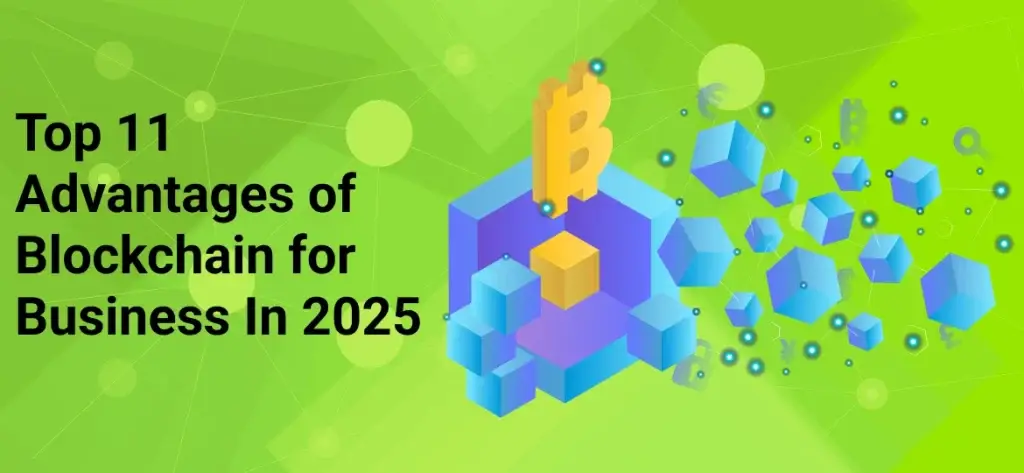
In a fast-changing digital world, businesses work hard to keep their operations safe and transparent. Blockchain offers a strong solution, with real benefits that can reshape how companies work in 2025. As we look at the top 11 blockchain benefits for business this year, you will see how blockchain can boost efficiency, security, and trust across many sectors.
With blockchain, companies can find new paths to growth while protecting data integrity. Blockchain helps you streamline processes and cut costs, speed up transactions, and improve data security. It removes middlemen, opens up supply chains, and enables smooth cross-border payments. It also gives you immutable records, more trust between stakeholders, and room to innovate with smart contracts and decentralized apps.
Popular AI Features For Mobile Apps In 2025
6 min read · Last updated: May 2026
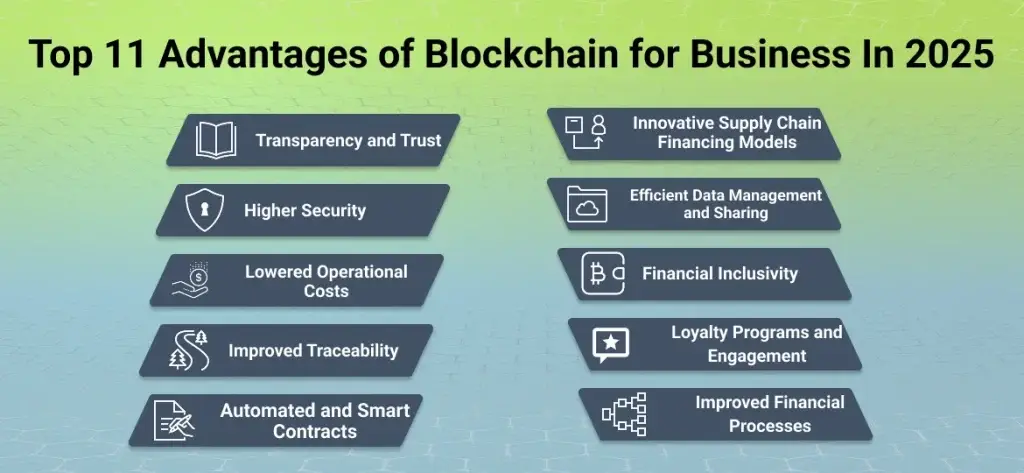
Blockchain is an exciting technology that is transforming businesses in numerous ways, from enhancing customer service to reducing operating expenses. Blockchain has many applications across different industries. Related: mobile app development services.
Examples include observing food supply chains to avoid outbreaks, reducing the dependence on stock exchanges and brokers for trading in shares, and using digital signatures to prove ownership for the sale of intellectual property. Here are some of its benefits:
1. Transparency and Trust
Blockchain gives businesses high accountability and transparency. It is an extremely secure record that can’t be altered. That makes it a strong fit for shipping, banking, stock trading, and other sectors that require a lot of documentation or verification.
Faster transactions. Blockchain networks handle payments 24 hours a day. They also lower transaction costs by removing middlemen and by automating contract execution through smart contracts in business (agreements that run automatically) when certain conditions are met. For instance, a tiny boutique coffee shop might use tokenization (turning something into digital tokens) to raise money and offer customers discounted future purchases.
2. Higher Security
Blockchain technology creates trust where it would otherwise be difficult or impossible to achieve, for instance between organizations that have no direct relationship but need to exchange information or pay for services.
Supply chains are a good example. They can use blockchain to track items from farm to retailer quickly and accurately, tracing food back to its source in seconds rather than days, which helps ensure transparency and accountability. At the same time, smart contracts automate business processes to minimize human intervention.
3. Lowered Operational Costs
Automation streamlines and improves processes, which boosts efficiency, productivity, and customer service. This is how business models change. Blockchain tracks the whole process from creation to delivery in real time, which raises transparency and cuts fraud. It can also help industries hit by food-safety incidents trace the source of a problem. Related: cross-platform app development.
Blockchain technology provides new efficiency in financial services, such as trading and banking. It also protects the academic credentials of students and resumes, enhances transparency in real estate contracts, and monitors media content.
4. Improved Traceability
Blockchain offers an irrevocable track of every transaction, which makes it perfect to track the movements of items as well as information. Blockchain for supply chain management, this traceability permits businesses to trace their products from their source to the final consumer, assuring authenticity and high quality. This is particularly important in sectors such as pharmaceuticals and food, where safety and traceability of products are crucial. Better traceability can also help businesses find and correct inefficiencies, cut down on fraud, and improve customer satisfaction.
5. Automated and Smart Contracts
The blockchain has long been associated with transactions in cryptocurrency. However, it also offers businesses an efficient solution to many other issues. Smart contracts can automate processes that take action automatically in the event that certain conditions are met.
Supply chains rely on multiple parties to monitor shipping. Blockchain networks’ immutable capabilities for tracking documents could eliminate middlemen and make tracking back orders much more straightforward, which means lower expenses and risk for businesses.
6. Innovative Supply Chain Financing Models
Blockchain databases allow secure access, greater transparency, and authenticated transactions in foreign trade that involve a large amount of paperwork that is susceptible to fraud. When documents are stored on the blockchain, captains of ships and clients, financiers, harbor managers, and insurance companies are able to track the progress of their deliveries in real time more easily. Related: hire cross-platform developers.
Blockchain can also cut costs by removing middlemen. For instance, Veem utilizes it to let businesses transfer money overseas without paying costs from banks. While initially linked to cryptocurrency, such as Bitcoin, blockchain technology is currently being employed across various industries to provide a safe, reliable, effective, and secure method for conducting business.
7. Efficient Data Management and Sharing
Companies that need to handle large volumes of transactions can find blockchain a cost-effective and efficient option: it removes middlemen, cuts transaction costs, and speeds up processing. A few examples:
- Cross-border banking. With blockchain for data security, transfers of funds between banks internationally can be completed in minutes instead of days, with better security.
- Voting systems. Blockchain helps secure voting systems.
- Public records. It manages public records efficiently.
- Legal documentation. Blockchain can save companies money on legal documentation by automating procedures with smart contracts, which makes managing ownership of products much simpler.
Related: custom software development.
8. Financial Inclusivity
Blockchain is a promising technology that could increase financial inclusion by providing access to financial services to people who are not served. In reducing the necessity of traditional bank infrastructures, the blockchain could reduce the costs of transactions in the financial sector and make them easier to access. This will empower people as well as businesses in developing nations and also those who are marginalized from traditional financial services, encouraging the growth of their economy and creating opportunities.
9. Loyalty Programs and Engagement
Blockchain can reshape loyalty programs with safe, transparent ways to reward customers. By tracking loyalty-point balances on-chain, companies make sure rewards are shared correctly and can be redeemed. That builds trust and engagement. Blockchain also enables decentralized loyalty programs, where customers earn and redeem rewards across many platforms and companies.
10. Improved Financial Processes
Blockchain can simplify and streamline many financial processes, including settlements, payments, and audits. By eliminating middlemen and reducing the need for manual data entry, Blockchain can cut down on costs for transactions and processing times. This can result in significant improvement in accuracy and efficiency. In addition, a permanent, unchangeable record of activity improves transparency and decreases the chance of fraud. This makes financial operations more secure and reliable.
11. Tokenization
Tokenization lets companies trade assets without revealing their true value, thus cutting down on risk while saving time and money and allowing for more effective business collaboration. Tokens are a great option for instant investment and transfer. A transaction that could have taken weeks could now be completed within a matter of minutes.
Blockchain can provide businesses with significant cost-cutting advantages. It streamlines processes, cuts down paperwork, and eliminates middlemen while also creating an irrevocable track of transactions, which helps to make fraud less likely and hackers more difficult to access. Related: AI-powered app development.
Conclusion
As we finish our look at the top 11 blockchain benefits for business in 2025, one thing is clear: this technology has enormous potential to reshape industries. With blockchain, companies can improve security, transparency, and efficiency.
The future of blockchain in business holds strong opportunities for companies that adopt it and keep pace with change. Ready to put blockchain to work? Our custom software development team builds blockchain solutions under your brand. Get a free consultation.
Frequently Asked Questions
How does blockchain improve business security?
Blockchain offers tamper-proof data storage with decentralized encryption, making it highly resistant to fraud, cyberattacks, and unauthorized access.
Can blockchain help reduce business costs?
Yes! By eliminating intermediaries, automating transactions through smart contracts, and ensuring transparent record-keeping, businesses can cut operational costs significantly.
How does blockchain enhance supply chain management?
Blockchain enables real-time tracking, transparent record-keeping, and fraud prevention, ensuring secure and efficient supply chain operations.



Web3 apps built for utility, not hype.
Solidity, Rust (Solana), token economics, NFT marketplaces, DeFi protocols, wallet integrations (MetaMask, WalletConnect, Phantom), gas optimization, audit-ready code — we’ve shipped on Ethereum, Polygon, Solana, and Base. We know the audit firms (Trail of Bits, OpenZeppelin) and we write code they don’t laugh at. If you’re past the whitepaper stage, talk to us.