
Why Second-Hand Clothing Apps Like ThredUp Are Booming in 2026
The global secondhand fashion market crossed $197 billion in 2025 and is projected to hit $350 billion by 2028 — growing roughly 3× faster than overall fashion retail. ThredUp, Poshmark, Depop, Vinted, and Mercari have built billion-dollar businesses by tapping into Gen Z and Millennial demand for affordable, sustainable fashion alternatives.
If you’re considering building a ThredUp-style resale app in 2026, the opportunity is real but the playbook has matured: success requires more than a marketplace — it requires authentication infrastructure (especially for premium resale), seller-side logistics (mail-in vs. self-list), and buyer trust mechanisms (returns, condition guarantees, fraud detection).
This guide covers what it takes to launch a successful second-hand clothing app in 2026 — feature must-haves, monetization models (consignment vs. peer-to-peer commission vs. subscription), and tech stack choices. If you’re ready to build, see our ecommerce app development and mobile app development services.
Why Create a Thrift Clothing App?
9 min read · Last updated: May 2026
Smartphones are central to shopping behavior. A well-designed Android app or iOS app enables consumers to buy and sell used clothing effortlessly, right from their phones. The resale model also supports the circular economy, making your app not just a shopping tool, but a sustainability movement. By combining mobile-first UX design, AI-powered personalization, and social commerce features, you can build a competitive platform that engages users and drives revenue.
Key Business Models for Resale Apps
There are two dominant models in the second-hand fashion industry:
Managed Marketplace Model: The platform handles clothing intake, inspection, pricing, and shipping—ideal for full control and quality assurance (like ThredUp).
Peer-to-Peer (P2P) Model: Sellers list, ship, and manage items themselves—more scalable and lower operational overhead (like Poshmark or Depop).
Choose the model based on your available resources, user expectations, and business vision.
Essential Features for a Resale App
Your resale app should be built with mobile-first features that users expect from modern fashion marketplaces:
AI-Powered Product Listings: Auto-tagging, categorization, and price suggestions
Virtual Try-On with AR: Enhances buyer confidence using augmented reality
Smart Recommendations: Machine learning suggests items based on user behavior
In-App Messaging: Secure and real-time communication between buyers and sellers
Order Tracking: Transparency in shipping and delivery process
Secure Payments: Encrypted transactions and multiple payment gateways
Social Sharing: Encourage virality through social commerce integrations
Choosing the Right Tech Stack
To ensure high performance and scalability, choose between:
Native App Development: Ideal for robust iOS and Android performance, especially if you’re using AR or camera features.
Cross-Platform Frameworks: Flutter or React Native lets you deploy faster and cut development costs while targeting both platforms.
UI/UX Trends Shaping Mobile Resale
Today’s users expect minimalistic, fast, and intuitive interfaces. Prioritize:
Swipe gestures and thumb-friendly controls
Light/dark mode adaptability
Voice-enabled search
360-degree product images
Accessibility features like large fonts and screen reader compatibility
Mobile optimization is no longer optional—Google’s search rankings now favor mobile usability and page experience.
AI, AR, and Smart Automation in Resale
Artificial Intelligence is revolutionizing resale platforms. It enables:
Automated Image Recognition: Identifies item types, brands, and flaws
Dynamic Pricing Engines: Suggest optimal pricing based on market trends
Virtual Fitting Rooms: Using AR, users can preview items before buying
Fraud Detection: Ensures listing authenticity and minimizes scams
These tools improve user experience, reduce overhead, and build trust in your app.
Monetization Models
Here are top monetization strategies for your second-hand fashion app:
Commission per sale
Subscription plans for premium sellers
Featured listings or promoted products
In-app advertising or affiliate marketing
Logistics and fulfillment service add-ons
These revenue streams help your platform remain profitable and scalable.
What Is ThredUP?
thredUP is an online consignment and secondhand business that can assist you, your pocketbook, and the environment. They were not only an app to sell used clothes, but also one of the finest clothing retailers. What began as a shirt exchange for men has evolved into an exclusive second hand clothes sales marketplace for women and children, with over two million pieces from 35,000 brands. Their online consignment service operates as follows:
- Purchase a Clean Out Kit. They will give you a large bag with a mailing label and a list of acceptable items
- Fill out and return
- ThredUP will choose how to recycle used clothing and which pieces to sell
- Each item is then professionally photographed and offered for sale
- You get cash or shop credit according to a payout percentage. Alternatively, you may get a Donation Kit, in which case they will contribute $5 to a charity in your name instead of providing you with cash.
Business Model For ThredUP
Flyp is the perfect solution for those who lack time to sell second-hand clothes themselves. The app connects you with independent Pro Sellers, who handle the selling process for you. It’s a convenient way to begin your journey with clothing resale, whether you’re selling clothes, shoes, bags, or accessories.
Flyp only accepts high-quality items from popular brands like Nike, Lululemon, and Urban Outfitters, ensuring that customers find premium pieces. If you’re looking to sell, Pro Sellers have a vested interest in getting your items sold to buyers who truly want them, offering a more sustainable solution for your wardrobe. While there is a commission for sellers, it’s comparable to what other thrift store online platforms charge. Related: cross-platform app development.
If you’re looking for where to sell clothes or exploring a second-hand store alternative, Flyp is an excellent choice. And if you’re shopping for quality items, you might also explore a secondhand store near me, or check out other platforms like thredUP. thredUP is a leading second-hand store launched online in 2009 by James Reinhart, offering a seamless shopping experience for pre-loved fashion. It operates by charging commissions based on the listing price of each item, considering factors like the brand, size, and condition.
For those wondering how to make a successful 2nd hand store near me or build an app like thredUP, the business model relies on a balance between sellers and buyers, making it crucial to curate quality clothing and manage commissions effectively.
- Sellers — Individuals that want to profit from the sale of their secondhand clothing
- Buyers – Individuals who want to purchase second hand clothing that has been inspected for quality
Commission
thredUP generates revenue by charging a commission on each item of apparel sold on their site. Commission rates are determined by a team of pricing professionals depending on the listed price. Pricing is determined by seasonality, item age, quality, design, and current stock levels of the same size or brand.
In general, thredUP earns a bigger commission on cheaper products than on more expensive ones. Currently, the firm utilizes the following commission structure:
- For products priced between $5.00 and $19.99, thredUP takes a commission of 85 to 95%.
- For products priced between $20.00 and $49.99, thredUP gets 70% to 85%
- For products priced between $50.00 and $99.99, thredUP gets 40% to 70%
- For products priced between $100.00 and $199.99, thredUP gets 20% to 40%
- For transactions above $200,000, the firm receives a 20% fee
Expedited Clean Out Bags
When customers choose to sell or give undesired apparel items, they may purchase Clean Out Bags from thredUP. A regular Clean Out Bag is provided at no cost, however the firm charges $16 for expedited processing of returned bags of clothing.
What Are Must-Have Features For App Like ThredUP?
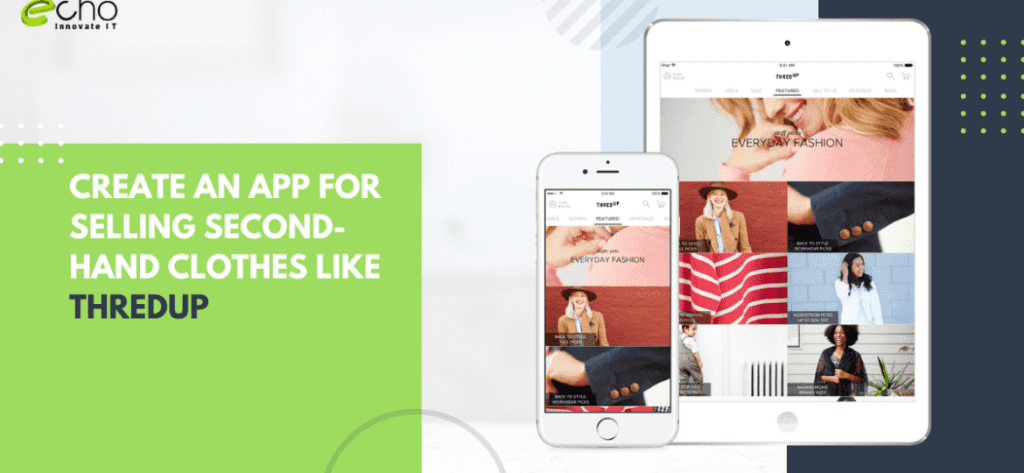
Generally speaking, you must gear your app with a set of features in the fashion app that assist the buyer’s journey, create a fantastic user experience (UX), and make purchasing effortless. Overall, to develop shopping app Like thredUP, each feature should contribute to the app’s fundamental objective: growing sales, fostering customer loyalty, and providing your company the necessary competitive edge to succeed. Related: hire cross-platform developers.
- Easy registration and Login
- Product screening and sorting that is simple to use
- Product descriptions in detail
- The shopping cart
- Shipping alternatives
- Order description
- In-app payments are safe and simple
- Creating an invoice and entering business information
- Returns and tracking return status Tracking shipping status The amount of goods users see/have left on the list
- Checking the availability of items in certain regions
- Reminder about item availability
- Wishlist
- Loyalty schemes
- Simple access to client service
- Product ratings and reviews
Best App To Sell Clothes Online
If you want to learn how to create a thrift shop, starting with an online version might be a terrific learning experience. Check out our current list of applications if you want to develop a resale clothing app like thredUP and choose the best apps for selling clothing online.
ASOS Marketplace
If you wish to sell vintage apparel, the ASOS Marketplace app is home to the best independent brands and vintage stores. ASOS consumers adore retro, vintage, and edgy apparel.
Mercari
The Mercari app enables merchants to offer clothes, shoes, and accessories at any price. Everything sold incurs a 10% charge. You can sell more than clothing. Mercari lets you sell phone covers, Fitbits, and soccer gear.
Poshmark
Poshmark lets users sell unwanted apparel. Shoppers may find items by category. Poshmark’s virtual fancy parties attract thousands of people who make listings, share listings, and shop. When your old apparel sells, you’ll get a mailing label to send it off at a postal dropbox.
The RealReal
Good quality products typically sell within three days, so if you need money fast and have several pieces, this is the place to go. The RealReal also accepts beautiful jewelry, home furnishings, and art. Send things by USPS or arrange free in-home pickup in certain cities.
Vinted
Vinted lets you sell or trade garments. Add a picture and description to the pricing. After the item sells and the buyer gets it, print a mailing label and drop off the box within five days. The money is then sent to your bank account or PayPal. Related: custom software development.
eBay
eBay opened the path for every at-home seller selling designer clothing on the cheap. Selling your item here—especially a designer collab—can trigger bidding wars. If you’re looking to purchase, there’s no dearth of options, but choosing between Cuisinarts and lawn mowers (and seeing the price rise every second) may be difficult.
Grailed
Good quality products typically sell within three days, so if you need money fast and have several pieces, this is the place to go. The RealReal also accepts beautiful jewelry, home furnishings, and art. Send things by USPS or arrange free in-home pickup in certain cities.
Kidizen
Kidizen is a popular consignment app for children’s clothing. The app makes it simple to sell gently used children’s apparel. Simply take a photo, list the item, create a mailing label, and send it. If you don’t want to sell them, you may donate them.
Depop
Depop lets you sell clothes and jewelry from anywhere. It is a network of sellers and buyers for streetwear and vintage goods. The vendor or buyer pays for shipping. Depop creates the shipping labels, and fees vary on weight and size. PayPal, direct deposit, or shop credit.
OfferUp
OfferUp makes it easy to sell clothes locally. It helps people locate clothing in their region, eliminating shipping expenses.
Etsy
Sell your antique fashions on Etsy. Etsy charges 3.5% transaction and 3% payment processing fees. You’ll be among 1.7 million Etsy merchants. Related: AI-powered app development.
Letgo
The letgo app lets you sell worn clothing and accessories. Letgo claims to be the largest and fastest-growing app for local buying and selling.
Facebook Marketplace
People wishing to purchase and sell clothing online use Facebook Marketplace. They generally serve locals, although they ship nationally. Facebook Marketplace is a simple method to have your clothing noticed by people. There’s a 5% shipping cost.
Conclusion
Building a successful second-hand clothing app in 2026 comes down to four critical decisions:
- Pick your model: ThredUp’s consignment-mailer model removes seller friction but requires warehouse infrastructure. Poshmark’s peer-to-peer model is faster to launch but harder to scale quality. Depop’s Instagram-style social-discovery model wins on Gen Z engagement.
- Pick your category: Going broad (everyday clothing) puts you in direct competition with $1B+ incumbents. Going niche (vintage designer, kids only, sustainable brands, regional language markets) is more achievable for a startup.
- Solve trust early: Authentication for premium items (StockX-style guarantees), photo verification, and money-back protection are the difference between a marketplace people trust and one they don’t.
- Plan for logistics: Whether you ship items yourself (consignment) or facilitate seller-to-buyer (peer-to-peer), shipping costs, return policies, and dispute resolution shape your unit economics.
EchoInnovate IT has built marketplace and ecommerce platforms across fashion, second-hand, and consumer goods for over 17 years through our ecommerce app development and mobile app development services. Our team handles seller onboarding, payment splitting (Stripe Connect, Mangopay), photo moderation, fraud detection, and full Apple/Google store compliance — including the additional review requirements for marketplace apps. Get a free roadmap and quote below.
Frequently Asked Questions
How to make an app like thredUP successful?
Any application can achieve success with the appropriate features. If the software is simple to use and has functional features, it would not take long for it to become popular.
When you develop resale clothing app like thredUP, how does it make money?
Every transaction that happens on an app to sell used clothes, such as thredUP, incurs a transaction fee. The firm also charges customers a premium if they want their old garments sorted within a week or so.
What is the cost to develop an app like thredUP?
To develop shopping app like thredUP, many factors come into play while determining its costs including features, location of development, etc. To get an estimate, get in touch with us.
What is a second-hand clothing app?
A resale mobile app that allows users to buy or sell pre-owned clothes, typically using a marketplace model.
How much does it cost to build an app like ThredUp?
Building a fully-featured resale app may cost between $50,000 to $250,000 depending on features and scale.
Which is better: native or cross-platform app development?
Native apps offer better performance, but cross-platform development is faster and more cost-effective.
What are the key features of a thrift fashion app?
AI-powered listings, AR try-on, smart search, secure payment, and seller verification.
How do resale apps make money?
Common revenue models include commission fees, subscriptions, featured listings, and logistics services.
Is it legal to resell branded clothing?
Yes, as long as the items are authentic and you comply with intellectual property laws.
What is the future of resale fashion apps?
AI, AR, and sustainability trends will shape the industry; peer-to-peer and brand-owned reselling will rise.
Ecommerce builds that actually convert — not just look pretty.
Shopify Plus, custom MERN/Laravel commerce, headless storefronts, multi-vendor marketplaces, AR try-on, AI recommendations, Stripe/Adyen/Razorpay — we’ve shipped stores doing $100M+ GMV. We optimize for the metrics that matter: AOV, CR, repeat rate, CAC payback. Send us your funnel data — we’ll show you where you’re leaking revenue.