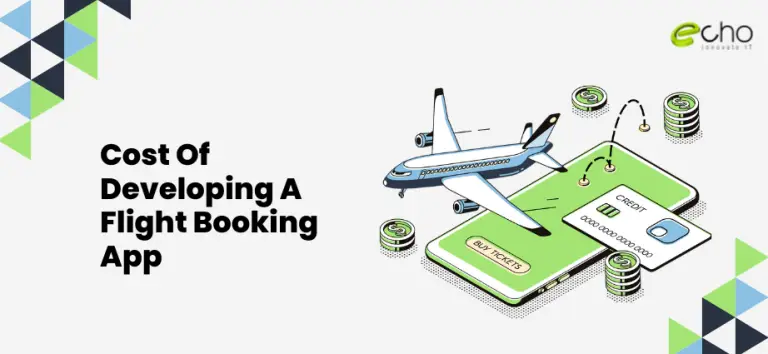
Building a flight booking app in 2026 ranges from a lean MVP to a full-featured travel platform, with most funded products landing in the mid-range. The spread is wide because a flight booking app is not one product but a stack of connected systems: a fare search layer wired into global distribution systems, a booking and ticketing engine, secure payments, an itinerary manager, and the notification and support flows that keep travelers informed after they buy. This guide breaks down what actually moves the number so you can budget with real figures instead of a single headline price. We cover the cost drivers, three complexity tiers with a side-by-side table, regional hourly rates, the integrations that carry the heaviest engineering weight, the core feature set, tech-stack choices, the hidden and ongoing costs that surprise first-time founders, and practical ways to reduce spend without gutting the product. If you are scoping a mobile app development project for travel, treat the numbers here as market ranges. Every product is different, and the only accurate figure comes from a short scoping conversation about your routes, suppliers, and launch markets.
In this article
- What Drives the Cost of a Flight Booking App
- Flight Booking App Cost by Complexity Tier
- Cost by Region: Developer Hourly Rates
- Key Integrations and What They Cost You
- Core Features and Their Impact on Price
- Tech Stack Choices That Move the Budget
- Hidden and Ongoing Costs to Budget For
- How to Reduce the Cost Without Cutting Corners
- How EchoInnovate IT Scopes and Prices Your Build
- Frequently Asked Questions
What Drives the Cost of a Flight Booking App
The price of a flight booking app is set by a handful of variables that compound quickly. The first is scope: a domestic single-airline app is far cheaper than a global aggregator that shops dozens of carriers in real time. The second is data sourcing. Connecting to a global distribution system such as Amadeus or Sabre, or to New Distribution Capability (NDC) feeds, requires certification, error handling for thousands of fare and rule combinations, and constant reconciliation between what the app shows and what the supplier confirms. That integration work often accounts for a third of an early budget. The third driver is platform coverage. Native iOS and Android plus a web companion roughly doubles surface area versus a single platform, which is why cross-platform frameworks are common in this space. Fourth is the depth of the booking flow itself: seat maps, baggage, ancillaries, refunds, and reissues each add engineering and testing time. Fifth is compliance and payment security, since handling card data pulls PCI DSS obligations into scope. Finally, team location and seniority set the hourly rate that every one of those hours is multiplied by. Because these factors stack, two apps that look similar in a pitch deck can differ by six figures once the supplier contracts and edge cases are mapped. For a broader baseline across app types, see our mobile app development cost guide, and for platform-scale systems the custom software development cost breakdown.
Flight Booking App Cost by Complexity Tier
The clearest way to budget is to place your product in one of three complexity tiers. An MVP proves the core loop: search a route, see fares from one source, pay once, and receive an e-ticket. It exists to validate demand and unit economics before you invest in breadth. A mid-tier build adds the things travelers expect from a real product: accounts, saved passengers, multi-currency, seat and baggage selection, an itinerary manager, and an admin panel your team uses to monitor bookings. An advanced platform layers in multiple supplier feeds, hotels and car rentals, loyalty, fare alerts, a refund and reissue engine, fraud tooling, and analytics across native iOS, native Android, and web. The table below shows the market ranges and rough timelines for each tier. These are industry figures, not our quote. EchoInnovate IT gives a transparent quote only after a short scoping call, because the same tier can swing widely depending on how many suppliers you connect and how complex your fare rules are.
Most first-time travel founders start at the MVP or lower mid-tier and expand once real booking data tells them which features drive conversion. That staged path keeps early spend contained and reduces the risk of building ancillary flows travelers never touch. If you are weighing a startup budget specifically, our MVP for startups approach is built around exactly this kind of staged rollout.
| Tier | What it includes | Investment level | Timeline |
|---|---|---|---|
| MVP | Flight search, one GDS or aggregator feed, single payment gateway, basic booking and e-ticket, email notifications | Entry-level | 3 – 4 months |
| Mid-tier | Multi-source fares, seat and baggage add-ons, user accounts, saved travelers, itinerary manager, push notifications, multi-currency, admin panel | Mid-range | 5 – 8 months |
| Advanced | Multiple GDS and NDC feeds, hotels and cars, loyalty, fare alerts, refunds and reissue engine, fraud tooling, analytics, iOS and Android plus web | Enterprise-scale | 9 – 15 months |
Cost by Region: Developer Hourly Rates
Because a flight booking app is measured in thousands of engineering hours, the hourly rate of your team is one of the largest single levers on the total. The same scope built in San Francisco and in Ahmedabad can differ by a factor of three or four, purely on labor cost, before any difference in quality is even discussed. The table below shows typical 2026 rates by region for travel-capable development teams. Rates vary within each region by seniority and by how specialized the travel-domain experience is, since engineers who have shipped GDS integrations before command a premium and save time by avoiding first-timer mistakes.
The takeaway is not simply to chase the lowest rate. A cheaper team that has never certified against a GDS can burn the savings in rework and failed bookings. The stronger play is a blended model: senior travel-domain architecture paired with a cost-efficient build team, which is how many products keep quality high while holding the budget down. An offshore development center is one structured way to run that model with a dedicated, long-term team rather than a series of short contracts. For hiring mechanics and vetting, our hire offshore developers guide covers what to screen for.
| Region | Relative rate level | Notes |
|---|---|---|
| North America | Premium | Highest rates; same time zone for U.S. buyers |
| Western Europe | Premium | Strong compliance and travel-domain talent |
| Eastern Europe | Mid-range | Mid-range rates, deep engineering pool |
| Latin America | Mid-range | Time-zone overlap with the Americas |
| India / South Asia | Most affordable | Lowest blended cost for full travel-app teams |
Key Integrations and What They Cost You
Integrations are where a flight booking budget is won or lost. The central one is fare sourcing. Global distribution systems such as Amadeus and Sabre, along with airline NDC feeds and third-party aggregator APIs, are how your app finds live availability and prices. These connections are not plug-and-play: they require certification, sandbox testing against realistic fare rules, and defensive code for timeouts, price changes between search and booking, and partial failures during ticketing. Expect this to be the single heaviest integration line in the project. Payment gateways come next. Supporting Stripe, PayPal, Adyen, or regional processors means handling multi-currency settlement, 3-D Secure authentication, refunds, chargebacks, and the PCI DSS scope that comes with touching card data. Maps and location services (Google Maps or Mapbox) power airport lookups, nearby-airport suggestions, and destination context, and they carry usage-based fees that grow with traffic. Beyond those, most apps integrate messaging for confirmations and disruption alerts, a customer-support or ticketing tool, and analytics. Each integration adds not only build time but ongoing per-transaction or per-call fees that belong in your operating budget, not just the build estimate. Underestimating supplier and gateway fees is one of the most common budgeting mistakes in travel software, which is why we model them explicitly during scoping rather than leaving them as a surprise after launch.
Core Features and Their Impact on Price
Every feature in a flight booking app maps to build hours, and the difference between a thin and a rich product is mostly in the feature list. Flight search is the anchor: a fast, filterable search across dates, cabins, and nearby airports is deceptively complex once you factor in caching, sorting, and handling stale prices. The booking flow follows, covering passenger details, seat selection, baggage and ancillaries, and fare-rule display, each of which adds screens and validation. Payments and checkout carry the security and multi-currency work described earlier. An itinerary manager that stores trips, shows real-time status, and handles changes is a feature travelers value highly and one that meaningfully raises cost. Notifications, both push and email, cover confirmations, check-in reminders, gate changes, and disruption alerts, and they require a reliable event pipeline behind them. Beyond the core, products commonly add fare alerts, loyalty and rewards, in-app support chat, and multi-language support for international markets. A useful budgeting habit is to sort features into must-have, should-have, and later, then build only the must-haves first. That discipline is what separates a controlled MVP from a bloated version-one that ships late and over budget. If your product will also live on the web, our web development team builds the browser companion so search, accounts, and bookings stay consistent across phone and desktop.
Tech Stack Choices That Move the Budget
Your technology choices influence both the build cost and the long-term maintenance bill. On the client side, cross-platform frameworks such as React Native and Flutter let one codebase serve iOS and Android, which usually costs less than two fully native apps and is a common choice for travel products where the interface is largely forms, lists, and maps rather than heavy device-specific features. Fully native (Swift and Kotlin) remains an option when you need the tightest platform performance, at a higher price. If you are weighing the two cross-platform leaders, our React Native vs Flutter comparison lays out the trade-offs. On the back end, most flight booking apps use a scalable language and framework (Node.js, Python, or Java), a relational database for bookings and a cache layer for fare data, and a cloud provider (AWS, Google Cloud, or Azure) for hosting, queues, and search. The integration middleware that talks to GDS and payment providers is often the most specialized part of the stack and benefits from engineers who have built it before. Architecture decisions made early, such as how you cache fares and how you isolate the booking engine, have an outsized effect on both performance and cloud cost at scale. Choosing a stack your team can maintain, and that a future team can hire into, protects you from expensive rewrites later. Our mobile app development team helps map the stack to your launch markets, expected traffic, and in-house skills before a line of code is written.
Hidden and Ongoing Costs to Budget For
The build estimate is only part of the total cost of ownership, and the recurring line items are where unprepared founders get squeezed. GDS and aggregator fees are the biggest: many suppliers charge per search segment or per booking, so your data costs scale directly with usage and can become significant as traffic grows. Payment processing takes a percentage of every transaction plus fixed per-charge fees. Cloud hosting, search infrastructure, and map API calls all bill on usage and rise with your user base. Then there is maintenance, which for a live travel app is not optional: suppliers change APIs, operating systems release annual updates, security patches are constant, and fare-rule edge cases surface in production. A common planning figure is to budget 15 to 25 percent of the original build cost per year for maintenance and iteration. Add app store fees, third-party service subscriptions (analytics, error monitoring, customer support), and the cost of a support team to handle booking issues and refunds. Compliance is another ongoing commitment, since PCI DSS and data-protection obligations require periodic review, not a one-time checkbox. The practical lesson is to build a two-part budget from the start: a one-time build figure and a monthly operating figure that grows with bookings. Modeling both up front prevents the cash-flow surprise that catches many travel startups in their first year of real traffic.
How to Reduce the Cost Without Cutting Corners
There are several proven ways to bring a flight booking app in on a tighter budget while keeping quality intact. The first is an MVP-first strategy: ship the smallest product that proves travelers will book, using a single fare source and one payment gateway, then reinvest based on real usage. This avoids spending months on ancillary flows before you know they convert; our MVP for startups process is built around this staged approach. The second is choosing a cross-platform framework so one codebase covers iOS and Android instead of funding two native teams. The third is engaging an offshore or blended team, which can lower the effective hourly rate substantially without sacrificing senior oversight; an offshore development center gives you a dedicated, continuous team rather than fragmented contractors. The fourth is reusing proven components and third-party services for non-differentiating functions such as authentication, notifications, and analytics, rather than building them from scratch. The fifth is ruthless feature prioritization, sorting the backlog into must-have and later so the first release stays lean. What you should not cut is integration testing against real supplier sandboxes, payment security, or error handling in the booking flow, because failures there cost far more in refunds, chargebacks, and lost trust than they save. Reducing cost is about sequencing and sourcing, not about skipping the work that keeps bookings reliable.
How EchoInnovate IT Scopes and Prices Your Build
EchoInnovate IT is an India-based custom software and software development company with 12 years in business, 50-plus employees, and more than 500 products shipped, most of them under our clients’ own brands as a white-label partner. We hold a 5.0 rating on Clutch across six verified reviews. For travel products, we start with a short scoping call rather than a template price, because the honest number depends on details a generic estimate cannot capture: which suppliers you connect (a single aggregator versus multiple GDS and NDC feeds), your launch markets and currencies, whether you need web alongside mobile, and how complex your refund and loyalty logic is. From that call we produce a transparent, itemized quote that separates one-time build cost from the ongoing operating costs (supplier fees, payments, hosting, maintenance) so you can see the full picture before committing. We then propose a staged plan, usually MVP first, with clear milestones and a dedicated team you can scale up or down. Because so many of our builds ship under client brands, we are comfortable operating as an extension of your team rather than an outside vendor. The market ranges throughout this guide are a starting point for your budget; the figure that matters is the one tied to your actual scope. To get that, the next step is a scoping conversation, which you can start from our mobile app development page.

Start with a 2-week pilot sprint
Start with our $1,500 fixed-price 2-week pilot sprint: in two weeks we turn your flight booking idea into a clickable prototype, a mapped integration plan for your fare and payment suppliers, and a transparent, itemized quote for the full build, with no obligation to continue. It is a low-risk way to replace guesswork with a real scope and a real number. EchoInnovate IT brings 12 years of experience, 50-plus employees, 500-plus shipped products, and a 5.0 Clutch rating across six verified reviews to your project, and we routinely build under our clients’ own brands. Book your scoping call and pilot sprint from our mobile app development page and get a budget you can plan around.
See the service →Book a scoping call →Frequently Asked Questions
How much does it cost to build a flight booking app?
A flight booking app ranges widely in 2026, depending on complexity. A lean MVP with one fare source and a single payment gateway is the entry-level option, a mid-tier product with accounts, ancillaries, and an itinerary manager is a mid-range investment, and an advanced multi-supplier platform with hotels, loyalty, and refunds is an enterprise-scale investment. The largest cost drivers are the number of supplier integrations (GDS, NDC, aggregators), platform coverage, and your team’s hourly rate. These are market ranges; EchoInnovate IT provides a transparent quote after a short scoping call.
What is the cheapest way to build a travel or flight booking app?
The most cost-efficient path is an MVP-first build using a single fare source and one payment gateway, delivered with a cross-platform framework so one codebase serves both iOS and Android, and staffed by an offshore or blended team to lower the effective hourly rate. This combination can bring a validated first release to market for a fraction of a full platform cost, after which you reinvest based on real booking data. Avoid cutting integration testing, payment security, or booking error handling, since failures there cost more than they save.
How long does it take to develop a flight booking app?
An MVP typically takes 3 to 4 months, a mid-tier product 5 to 8 months, and an advanced multi-supplier platform 9 to 15 months. GDS and NDC certification, payment integration, and thorough testing against supplier sandboxes are usually the schedule-defining activities, not the user interface. Staging the build as an MVP followed by iterations often gets a usable product into travelers’ hands sooner while spreading cost over time.
What are the ongoing costs of running a flight booking app?
Ongoing costs include GDS or aggregator fees (often per search or per booking), payment processing percentages, cloud hosting and search infrastructure, map API usage, third-party subscriptions for analytics and monitoring, app store fees, and customer support. Maintenance typically runs 15 to 25 percent of the original build cost per year to cover supplier API changes, OS updates, security patches, and edge cases. Budget a one-time build figure plus a monthly operating figure that grows with your booking volume.
Do I need to integrate with Amadeus or Sabre to build a flight booking app?
Not always. You can launch with a single third-party aggregator API that bundles multiple airlines, which lowers initial integration cost and is a common MVP choice. Direct GDS integrations with Amadeus or Sabre, or airline NDC feeds, give you broader inventory, better margins, and more control, but they require certification and heavier engineering. Many products start with an aggregator and add direct GDS or NDC connections as booking volume justifies the investment. In 2026 the path is easier than it was: Amadeus and Sabre now support NDC content alongside traditional EDIFACT, with both shown on a single comparison screen, and NDC aggregators such as Duffel and Verteil offer a lighter integration path than a full GDS contract. NDC implementation still varies by airline, so the right choice depends on your target routes, carriers, and supplier economics, which we map during a short scoping call.