Hiring offshore developers in 2026 has moved from a cost-cutting experiment to a mainstream way to build software. Teams in the United States, the UK, and Australia routinely extend their engineering capacity with developers in India and other offshore hubs, and the question is no longer whether offshore works, but how to do it without inheriting communication gaps, quality surprises, or intellectual-property risk. This guide walks through the engagement models available to you, realistic offshore developer rates by region, and a practical framework for de-risking the decision, from NDAs and code ownership to time-zone overlap and senior-level staffing. It is written for founders, product leaders, and engineering managers who want offshore software development to feel like an extension of their own team rather than a black box on the other side of the world. EchoInnovate IT has spent 12 years building this way, with a team of 50+ employees who have shipped 500+ products and hold a 5.0 rating on Clutch across 6 verified reviews, so the recommendations here reflect how the work actually plays out, not just theory. If you are comparing vendors right now, our offshore development center approach at https://www.echoinnovateit.com/offshore-development-center-odc is a useful reference point for what a well-run engagement looks like.
Why Companies Hire Offshore Developers in 2026
The core reasons companies hire offshore developers have shifted. Cost still matters, but the bigger drivers today are access to specialized skills and the ability to scale engineering capacity quickly without a months-long local hiring cycle. When a product roadmap needs React Native engineers, DevOps specialists, or AI integration experience for a single quarter, building that bench locally is slow and expensive. Offshore software development lets you assemble the exact mix of skills you need and adjust it as priorities change. A second driver is coverage. With a team a full working day ahead of North America, work can progress while your local team sleeps, which shortens release cycles when the handoffs are structured well. A third is focus: many founders would rather keep their small local team on product strategy and customer-facing work while an offshore development team handles the steady build-out of features and maintenance. The market has also matured. Offshore vendors now offer clear contracts, security certifications, and dedicated project management, which removes much of the friction that made early outsourcing painful. The result is that offshore software development services have become a standard line item in engineering budgets rather than an exception. The decision now is less about justifying the model and more about choosing the right structure, the right partner, and the right safeguards, which is what the rest of this guide covers. For a broader view of how a full-service partner operates, see https://www.echoinnovateit.com/software-development-company.
Offshore Engagement Models Compared
There is no single way to hire offshore developers, and choosing the wrong structure is where most engagements go sideways. The three common models are the dedicated offshore development team, staff augmentation, and fixed-scope project delivery. A dedicated team, often organized as an offshore development center, gives you a group of engineers who work only on your product, report into your process, and grow their context over time. It suits companies with an ongoing roadmap and a need for continuity. Staff augmentation slots individual offshore developers into your existing team to fill specific skill gaps; you keep your own management and process, and simply add capacity, which is why many teams pair it with a plan like the one described at https://www.echoinnovateit.com/it-staff-augmentation-services. Fixed-scope project delivery hands a defined deliverable to the vendor for a set price and timeline, which works for well-specified, bounded work but strains when requirements evolve. Many companies blend these: a dedicated core team for the product, augmentation for short-term spikes, and fixed-price pilots to test a partner before committing. The right choice depends on how stable your requirements are, how much management bandwidth you have, and how long you expect the work to run. The table below summarizes the trade-offs so you can match a model to your situation before you talk to any vendor. EchoInnovate IT runs all three, and we help you pick based on your roadmap rather than pushing a single format. You can see how the dedicated model is structured at https://www.echoinnovateit.com/offshore-development-center-odc.
| Model | Best For | Who Manages | Cost Structure | Flexibility |
|---|
| Dedicated offshore team (ODC) | Ongoing roadmap, long-term product | Shared: your leads + vendor PM | Monthly per engineer | High over time; team gains context |
| Staff augmentation | Filling specific skill gaps | You manage directly | Monthly or hourly per person | High; scale up or down fast |
| Fixed-scope project | Well-defined, bounded deliverables | Vendor manages to spec | Fixed price per milestone | Low; changes need re-scoping |
Offshore Developer Rates by Region in 2026
Offshore developer rates vary widely by geography, seniority, and specialization, and understanding the ranges helps you set a realistic budget and spot quotes that are too good to be true. Very low rates often signal junior staffing, high turnover, or hidden management costs, while premium rates do not always buy better outcomes. The table below shows typical market ranges for mid-to-senior full-stack developers in 2026, expressed as blended hourly rates in US dollars. These are market figures gathered across common engagement types, not our quote. Rates in North America and Western Europe remain the highest, Eastern Europe and Latin America sit in the middle, and South and Southeast Asia offer the widest cost advantage, with India continuing to combine large talent pools and mature delivery practices. Keep in mind that a headline hourly rate is only part of the picture: management overhead, quality assurance, onboarding time, and rework all affect the true cost per shipped feature. A slightly higher rate with strong senior engineers and low rework often costs less per outcome than a rock-bottom rate that produces churn. For a deeper country-by-country breakdown with more roles and seniority bands, see our companion guide at https://www.echoinnovateit.com/blogs/offshore-software-development-rates-by-country. Rather than publish a fixed price list, EchoInnovate IT provides a transparent quote after a short scoping call, because the right number depends on the stack, seniority mix, and engagement length rather than a generic per-hour sticker.
| Region | Relative rate level | Notes |
|---|
| United States / Canada | Premium | Highest cost; strong time-zone alignment |
| Western Europe | Premium | High cost; strong process maturity |
| Eastern Europe | Mid-range | Mid-range; good English and overlap with EU |
| Latin America | Mid-range | Mid-range; strong US time-zone overlap |
| India | Most affordable | Large talent pool; mature offshore delivery |
| Southeast Asia | Most affordable | Cost-competitive; varies by country and skill |
How to Choose a Hire Offshore Development Company
Choosing where to hire an offshore development company is the decision that most determines whether the engagement succeeds. Start with verifiable track record rather than sales claims. Look for a portfolio of shipped products in your domain, references you can actually contact, and third-party reviews on platforms like Clutch, where ratings come from verified clients. EchoInnovate IT holds a 5.0 rating across 6 verified Clutch reviews and has shipped 500+ products over 12 years, which is the kind of evidence you should ask any vendor to produce. Next, evaluate the seniority of the people who will actually touch your code, not just the names in the pitch deck. Ask who your engineers are, how long they have been with the company, and whether you can interview them before they join. A stable, senior team is worth far more than a large but junior roster. Assess communication directly: schedule a technical call and see whether the team asks sharp questions about your product, because the quality of their questions predicts the quality of their work. Check their security posture, including NDAs, access controls, and how they handle your repositories and credentials. Finally, confirm process maturity such as code review, testing, CI/CD, and regular demos, and make sure there is a named project manager accountable for delivery. A partner that welcomes a paid pilot before a long commitment is signaling confidence in its own work. To understand the full range of services a mature partner should offer, review https://www.echoinnovateit.com/software-development-company, and for capacity-only needs consider https://www.echoinnovateit.com/it-staff-augmentation-services.
De-Risking Trust, Quality, and IP Ownership
The objections that keep leaders from hiring offshore developers usually come down to four fears: quality, communication, control, and intellectual property. Each can be addressed with concrete safeguards rather than promises. On intellectual property, insist on a written agreement that assigns all work product and IP to you, backed by a signed NDA before any code or business detail is shared. Your code should live in your repository, under your version control and cloud accounts, with the offshore team granted scoped access that you can revoke at any time. That single arrangement, your repo and your accounts, resolves most control anxieties because nothing critical sits behind a vendor you cannot reach. On quality, require senior engineers on the core roles, mandatory peer code review, automated testing, and a definition of done that both sides agree to before work starts. Ask for sample code and a technical interview so you can judge skill directly. On communication and control, set up daily or twice-daily overlap with your working hours; a team in India can comfortably cover several hours of US-morning and US-evening overlap, giving you real-time conversations plus overnight progress. Add shared tooling for tickets, chat, and demos so status is always visible. EchoInnovate IT works this way by default: signed NDA, IP assigned to you, code in your repositories, senior developers on the build, and scheduled US-time-zone overlap so the team feels close rather than remote. For a related build-versus-buy decision on operations, our analysis at https://www.echoinnovateit.com/blogs/in-house-vs-outsourced-devops covers similar trade-offs in more depth.
Where Offshore Developers Fit: Web, Mobile, and Specialized Skills
Offshore development teams are not limited to back-office maintenance; they build the core products companies depend on. On the web side, offshore engineers handle everything from marketing sites to complex, data-heavy applications, and a capable partner brings modern front-end and back-end practices rather than dated patterns; our approach is outlined at https://www.echoinnovateit.com/web-development/. Mobile is one of the strongest fits for offshore work, because building and maintaining iOS and Android apps requires a spread of skills that is expensive to keep in-house full time. You can see how we structure that work at https://www.echoinnovateit.com/mobile-app-development/. Cross-platform frameworks make offshore mobile especially efficient: a single React Native codebase can serve both platforms, and dedicated specialists keep it performant, which is why many teams specifically hire React Native developers offshore, as described at https://www.echoinnovateit.com/hire-react-native-developers. Beyond web and mobile, offshore teams increasingly cover DevOps, cloud infrastructure, quality assurance, data engineering, and AI feature development, letting you assemble a full delivery unit rather than a set of isolated coders. The key is matching the skill to the model: use a dedicated offshore development team for the sustained core of your product, and augmentation for specialized skills you need only for a phase. Because a mature partner can move an engineer between web, mobile, and infrastructure work as your roadmap shifts, you avoid the cost of hiring and releasing local specialists for each swing in demand. This flexibility, more than raw hourly savings, is what makes offshore software development services valuable to a growing product organization.
Offshore vs Nearshore vs In-House: Making the Call
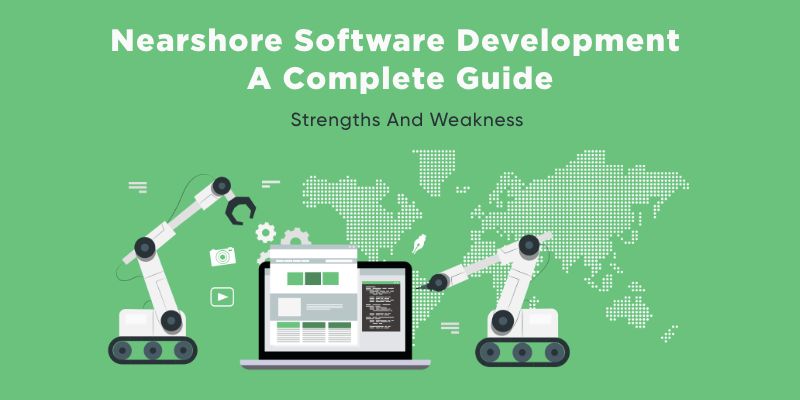
Offshore is one of three broad ways to staff engineering, and the right answer often combines them. In-house teams give you the tightest control and the deepest product context, but they are the slowest and most expensive to scale, and hard to shrink when priorities change. Nearshore development, using teams in nearby or overlapping time zones, trades some cost savings for closer working-hour alignment and cultural proximity; we compare that option in detail at https://www.echoinnovateit.com/blogs/nearshore-software-development. Offshore, typically to South or Southeast Asia, offers the widest cost advantage and access to very large talent pools, at the cost of a bigger time-zone gap that must be managed with deliberate overlap and clear async communication. A practical pattern for many companies is a small in-house core for strategy and architecture, an offshore development center for the bulk of the build, and occasional nearshore or augmentation for time-sensitive or region-specific work. Another dimension is whether you need branded delivery for your own clients, in which case white-label arrangements let an agency deliver under your name; our guide at https://www.echoinnovateit.com/blogs/white-label-software-development explains how that works. There is no universally correct choice, only the one that fits your budget, your management bandwidth, and how much real-time collaboration your work requires. The mistake to avoid is treating this as all-or-nothing. Most successful engineering organizations run a hybrid, and a good offshore partner will help you design that mix rather than insist you move everything offshore at once.
How EchoInnovate IT Runs an Offshore Engagement
When you engage EchoInnovate IT, the goal is to make offshore software development feel like adding to your own team rather than handing work to strangers. It starts with a short scoping call where we map your product goals, current stack, and the skills you need, then propose a model, a dedicated offshore development center, staff augmentation, or a fixed-scope project, that fits your situation instead of a one-size template. Before anything sensitive changes hands, we sign an NDA and confirm in writing that all IP and work product belong to you. Your code stays in your repositories and your cloud accounts, and our engineers work with scoped, revocable access. We staff senior developers on the core roles, put every change through peer review and automated testing, and hold regular demos so progress is visible rather than reported after the fact. We schedule daily overlap with your working hours so you get real-time conversations plus overnight progress, and you get a named project manager accountable for delivery. Our record, 12 years in business, 50+ employees, 500+ products shipped, and a 5.0 rating across 6 verified Clutch reviews, is the evidence behind this process. Rather than a generic price list, we provide a transparent quote after that short scoping call, because the honest number depends on your stack, seniority mix, and engagement length. You can review how the dedicated model is organized at https://www.echoinnovateit.com/offshore-development-center-odc, and if you want capacity-only support, our team can slot into your existing process through https://www.echoinnovateit.com/it-staff-augmentation-services.
Start with a 2-week pilot sprint
The lowest-risk way to find out whether offshore development fits your team is to try it on real work, not a sales pitch. Start with a 2-week pilot sprint at a fixed price: we scope a concrete slice of your roadmap, staff senior developers on it, sign an NDA, work in your repository, and show you working software at the end of the two weeks. You keep the code and the IP regardless of what you decide next. If the pilot earns your trust, we scale into a dedicated offshore development team; if it does not, you have lost only two weeks and a fixed, known cost. Book your scoping call and start your fixed-price pilot at https://www.echoinnovateit.com/offshore-development-center-odc.
See the service →Book a scoping call →
Frequently Asked Questions