
What is DevOps in Salesforce?
10 min read · Last updated: May 2026
At its core, DevOps is about collaboration, integration, and automation between development and operations teams. It closes the gap between two functions that used to work in silos. The result is faster delivery of high-quality software.
In Salesforce, DevOps means the tools and steps that speed up building, testing, deploying, and monitoring apps. It brings development, admin, and operations teams together around a shared, continuous-improvement culture.
DevOps’ guiding principles-
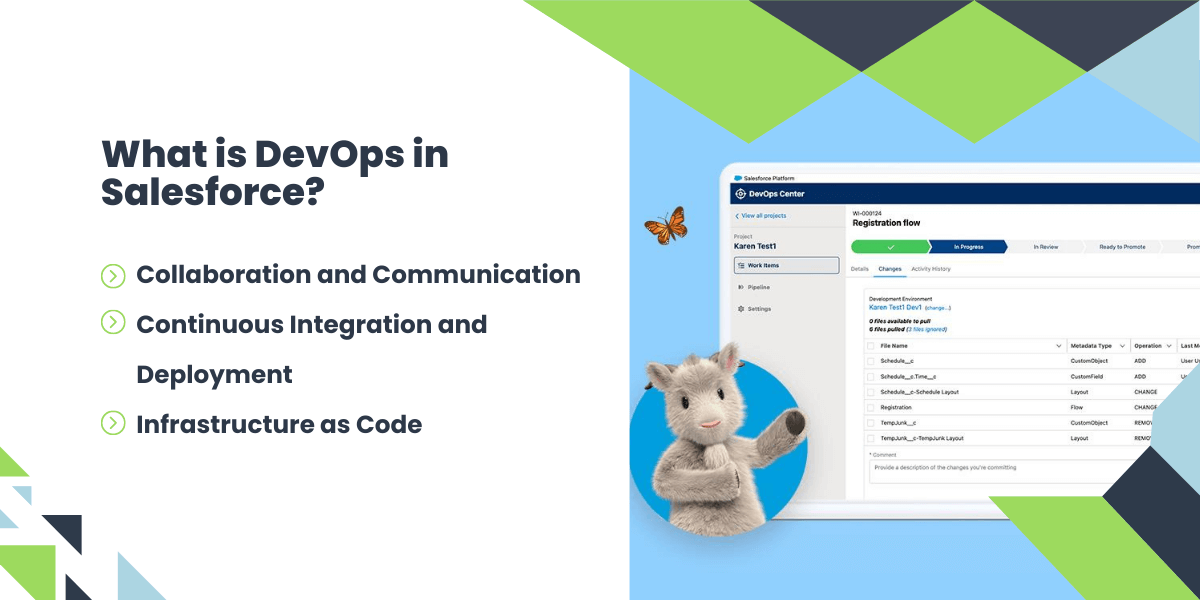
1. Collaboration and Communication
DevOps breaks down barriers. It encourages open communication between development, operations, and other stakeholders in the Salesforce ecosystem. That keeps everyone on shared goals and builds a culture of transparency.
2. Continuous Integration and Deployment
DevOps uses automation to run continuous integration and continuous deployment (CI/CD) pipelines. Developers merge code changes, automate testing, and deploy updates efficiently. That gives you a fast, reliable release cycle. Related: mobile app development services.
3. Infrastructure as Code
In DevOps, infrastructure is treated as code. Teams automate how they set up and configure Salesforce environments. Tools like Jenkins and Copado define these configurations in code, so deployments are consistent, repeatable, and scalable.
4. Monitoring and Feedback
DevOps keeps an eye on performance and user experience. Tools like New Relic and AppDynamics gather data and feedback. Teams spot and fix issues early, tune performance, and keep the app running well.
6 Salesforce DevOps Trends You Must Watch Out for

1. Shift-Left Testing
Shift-left testing is a major Salesforce DevOps trend. You move testing earlier in the development cycle, so you catch issues sooner. That keeps critical bugs out of production and smooths deployment. Tools like Selenium and Provar let you automate tests and validate Salesforce apps fast.
2. Low-Code/No-Code Development
Low-code and no-code platforms like Salesforce Lightning and Heroku are reshaping development. They let citizen developers build and deploy apps with little or no code. Visual interfaces and pre-built components speed up work and bring technical and business teams together.
3. ChatOps and ChatBots
ChatOps is growing in Salesforce DevOps. You bring chat tools like Slack or Microsoft Teams into your workflows to automate routine tasks and get real-time alerts. AI chatbots answer common questions instantly, which frees up developer time.
4. Security and Compliance Automation
With increasing data security and compliance concerns, organizations focus on security and compliance automation in Salesforce DevOps.
Salesforce DevOps tools like Fortify and SonarQube scan code for vulnerabilities, enforce security policies, and check compliance with standards. When security is built into the process, you protect your apps and earn user trust.
5. Artificial Intelligence and Machine Learning
AI and machine learning are changing how businesses run, and Salesforce is no exception. Einstein features give you insights, automate repeat tasks, and support better decisions. With AI and ML, you can personalize experiences and drive new ideas in your apps. Related: cross-platform app development.
6. Containerization and Kubernetes
Containers and orchestration tools like Kubernetes are gaining ground in Salesforce DevOps. Containers give you a light, portable environment that stays consistent across development, testing, and production. They improve scalability, resource use, and deployment flexibility.
Finding Top Mobile App Development Company?
EchoInnovate IT has deep experience building top white-label mobile apps. Get in touch with us today.
Contact Us
What are the Benefits of Salesforce DevOps?
Companies always look for ways to improve how they build software and ship quality. Salesforce DevOps trends help here. By combining Salesforce with DevOps, businesses can reshape their development process, improve collaboration, and spur new ideas.
1. Increased Efficiency and Speed
A big win with Salesforce DevOps is speed. You automate repeat steps, remove bottlenecks, and shorten release cycles with CI/CD. Automated testing, clean code integration, and smooth deployment help your team ship faster and get to market sooner.
2. Enhanced Collaboration and Communication
Salesforce DevOps builds a culture of collaboration among developers, admins, and operations. Agile methods and cross-functional teams break down silos and encourage knowledge sharing. When teams work together, they align their efforts and deliver higher-quality apps.
3. Improved Quality Assurance and Reduced Risk
With Salesforce DevOps, quality assurance is part of the process. Automated testing and continuous monitoring help you find and fix issues early. Unit, integration, and regression tests catch flaws before they reach production. That lowers risk, raises quality, and keeps customers happy.
4. Scalability and Flexibility
Salesforce DevOps gives you scalability and flexibility as your needs change. Infrastructure as code and containers let you scale environments fast. Docker keeps deployments consistent and portable, while infrastructure as code makes provisioning efficient. You can respond quickly to the market. Related: hire cross-platform developers.
5. Continuous Improvement and Innovation
Salesforce DevOps builds a culture of continuous improvement. Feedback loops, retrospectives, and a learning mindset help you refine your process over time. This iterative approach lets you adapt to customer needs, ship new features, and stay ahead.
How to Start with Salesforce DevOps?
1. Align Development and Operations team
Start by aligning your development and operations teams around shared goals. Decide how much automation you want, how often you deploy, and how teams collaborate. This plan guides your Salesforce DevOps rollout.
2. Strong Development Support
You need a solid development setup. Use a version control system like Git to manage your code, track changes, and roll back when needed. Create separate environments, like sandboxes or scratch orgs, so you can work on features or fixes without touching production.
3. Quality Assurance
Quality is key in Salesforce DevOps. Automate your testing for consistent, reliable results. Write unit, integration, and regression tests to validate your apps. Use frameworks like Selenium or Provar to automate repeat tests and catch issues before production.
4. Continuous Deployment
Continuous deployment delivers your Salesforce apps to production automatically and often. After each successful build and test cycle, you deploy changes to a staging or production-like sandbox. This lowers the risk of errors and gets updates to users fast.
Constantly monitor and iterate once your Salesforce DevOps process is running.
Looking To Hire Top Mobile App Developers?
Contact Us
Hire a team of mobile app developers who are adept in creating excellent AI/ML applications.
What Are The Challenges And Opportunities
From digital transformation to cybersecurity, we’ll delve into the trends shaping the business landscape and provide insights on navigating them successfully. Related: custom software development.
Challenges
1. Digital Transformation
As businesses strive to stay competitive, digital transformation remains a pressing challenge. Organizations must adapt to rapidly changing technologies, customer expectations, and market dynamics.
This calls for a shift in mindset, culture, and process toward agility and innovation. Investing in modern tech, using data analytics, and building a culture of continuous learning help organizations handle digital transformation.
2. Cybersecurity
More digitization means a bigger need for strong cybersecurity. Cyber threats put your data, operations, and reputation at real risk. A strong security framework, proactive monitoring and detection, and staff training all help reduce those risks and protect your assets.
3. Talent Acquisition and Retention
Fast-moving tech creates demand for skilled people who can keep up. To attract and keep top talent, offer growth opportunities, fair pay, and a supportive workplace. Diversity and inclusion efforts and employee development programs help you build a strong team.
4. Customer Experience
Customer expectations are changing fast, driven by digital tools and more competition. To stay ahead, you need to understand client needs, personalize interactions, and offer smooth omnichannel experiences. Key strategies include:
- Investing in customer relationship management (CRM) systems.
- Utilizing data-driven insights.
- Empower workers to provide exceptional customer service.
Opportunities
1. Artificial Intelligence (AI) and Machine Learning (ML)
AI and machine learning give organizations a chance to use their data and drive new ideas. From predictive analytics to intelligent automation, AI and ML improve decisions, streamline work, and personalize customer experiences. Investing here can give you an edge.
2. Cloud Computing
Cloud computing gives organizations room to grow and adapt. Its flexibility, scale, and low cost let you focus on your core work while relying on solid infrastructure. We offer DevOps development services to help companies ship faster, improve communication, and streamline work.
Hire DevOps Engineers for your next project.
3. Data Privacy and Ethics
Data privacy and ethics matter more every year. Organizations that put them first build customer trust and gain an edge. Transparent data practices, compliance with rules like GDPR or CCPA, and ethical data use help you build long-term customer relationships. Related: AI-powered app development.
4. Agile and DevOps Methodologies
Agile methods and DevOps tools keep helping organizations work more efficiently and collaborate. Agile and DevOps let you ship faster, respond to market changes, and build a culture of continuous improvement. Breaking down silos raises productivity and innovation.
Conclusion
Salesforce DevOps trends have huge potential ahead. Salesforce and DevOps together keep reshaping how organizations build, deliver, and maintain apps. To make the most of it, work with a reliable Salesforce development company that can help you use Salesforce with DevOps to the fullest.
EchoInnovate IT has deep experience building and delivering Salesforce solutions using DevOps best practices.
Frequently Asked Questions
What Are The Emerging Salesforce DevOps Trends?
Several trends are set to shape the Salesforce DevOps landscape. These include the rise of shift-left testing, the adoption of low-code/no-code development platforms, the integration of ChatOps and ChatBots into workflows, increased focus on security and compliance automation, and the utilization of artificial intelligence and machine learning in Salesforce applications.
What New Developments Can We Expect In Salesforce DevOps?
We can anticipate new developments in Salesforce DevOps. These may include advancements in containerization and Kubernetes, enabling enhanced scalability and flexibility. Additionally, we can expect further integration of Agile and DevOps methodologies, fostering efficiency and collaboration within development processes.
What's On The Horizon For Salesforce DevOps?
We anticipate continued emphasis on continuous integration and Deployment, driving streamlined workflows and accelerated release cycles. Additionally, organizations will prioritize automation, allowing for faster and more reliable testing and deployment processes.
Are There Any Emerging Best Practices Or Frameworks For Salesforce DevOps That Will Gain Traction?
Emerging best practices and frameworks for Salesforce DevOps are expected to gain traction. These may include shift-left testing to catch issues early, infrastructure as code for consistent and reproducible deployments, and a focus on fostering a culture of collaboration and continuous learning within development teams.
Backends that scale to millions without firefighting weekends.
Node.js, Python (Django, FastAPI), Laravel, Ruby on Rails, .NET — we architect backends that handle real load: queue systems, caching layers, read replicas, circuit breakers, observability. We’ve untangled monoliths and shipped event-driven microservices for fintech, marketplaces, and SaaS. If your backend keeps you up at night, we’ll diagnose the bottleneck for free.