

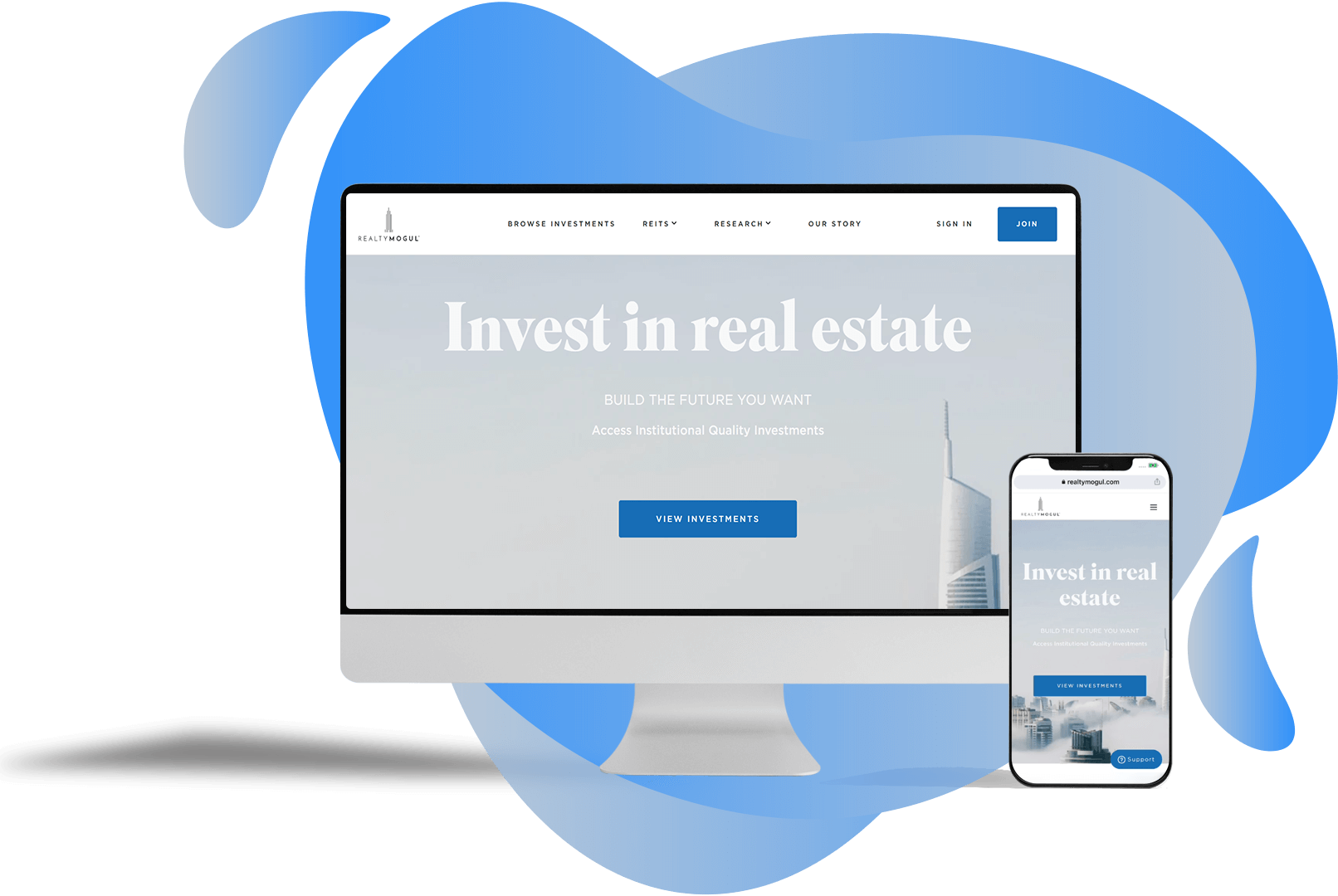
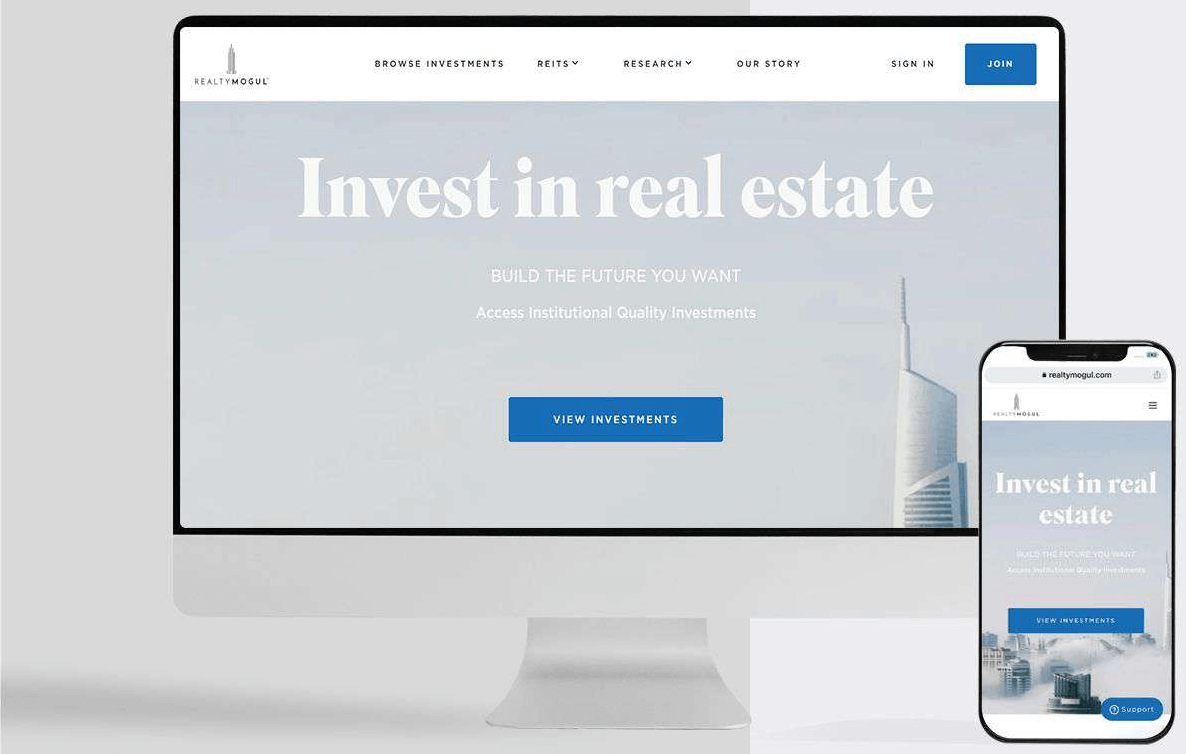
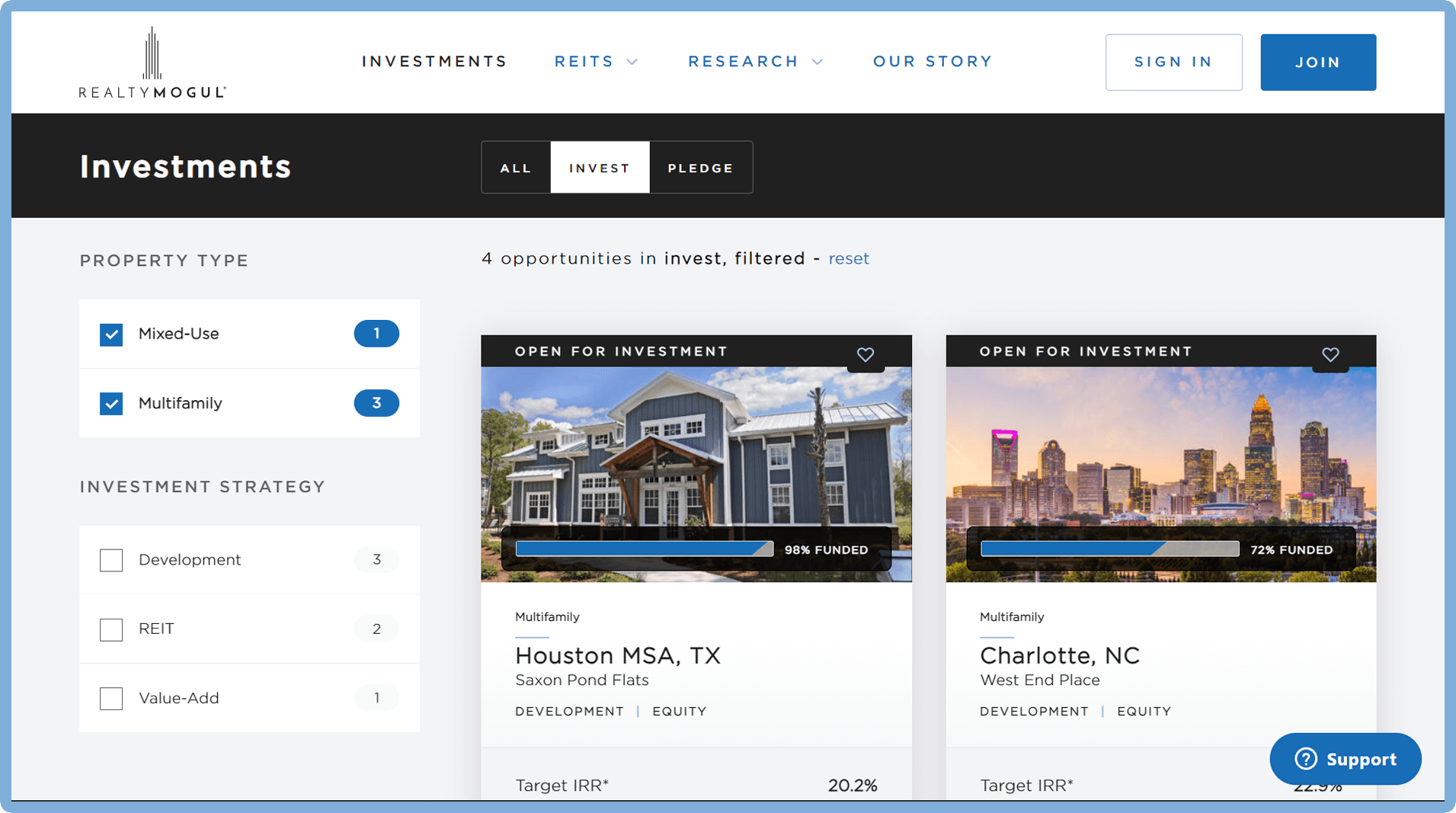
Filter Investment Deals
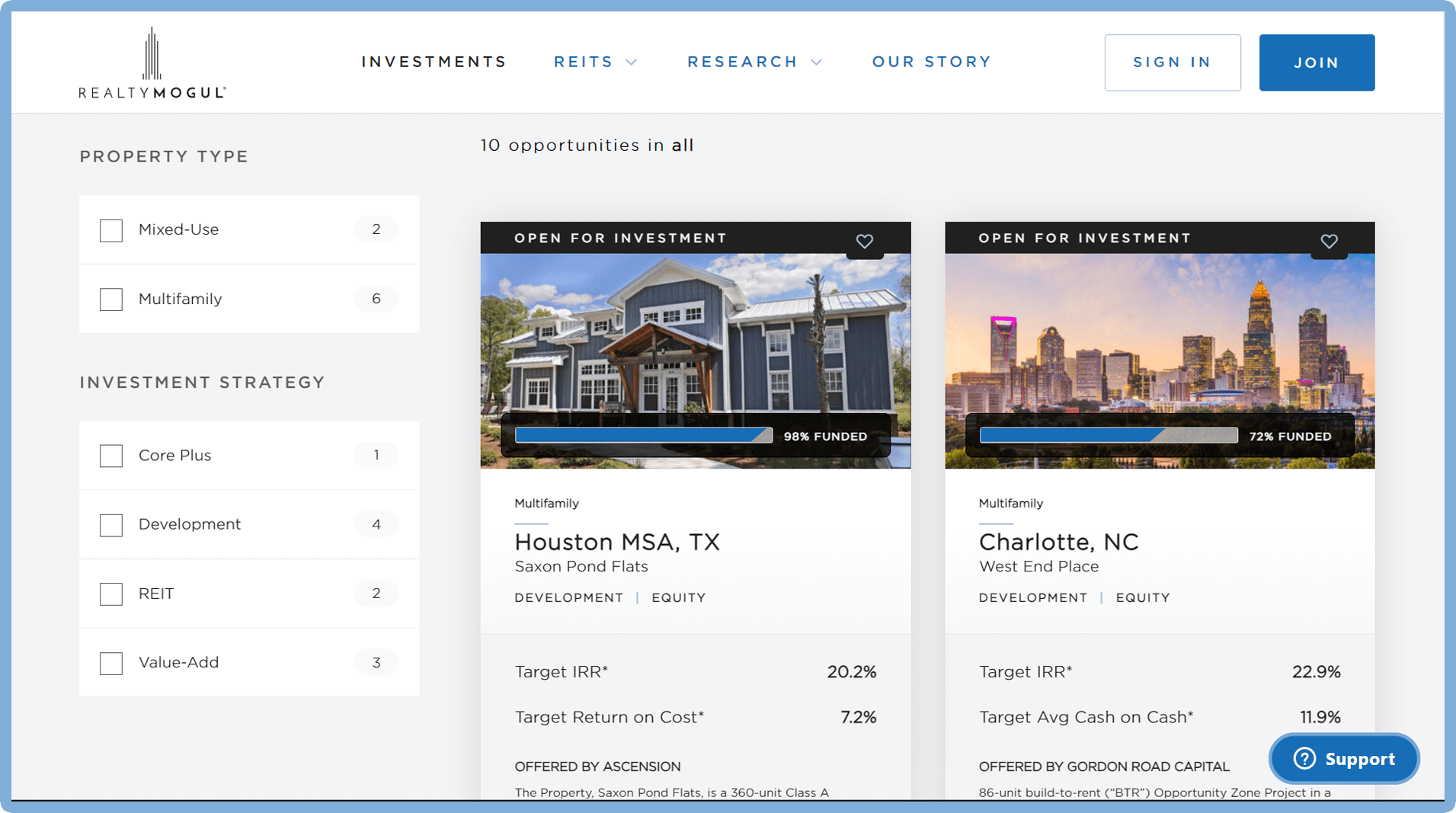
The platform allows users to filter investment opportunities based on a variety of factors. This enables customers to readily locate investment possibilities that match their investing goals and risk tolerance.
Realty Mogul also gives thorough information about each investment deal, such as financial predictions, market analysis, and sponsor background, allowing customers to make more informed investment selections.
What real estate investment platforms usually need from their website
An investment platform asks people to trust it with serious decisions, so the website carries a heavy load. Visitors want to understand each opportunity, the risks involved and how their money is handled before they sign up. Clear structure and honest presentation matter more here than flashy design.
Most platforms in this space serve two audiences at once: investors browsing deals and sponsors listing projects. Each group needs its own path through the site, with language and tools that fit its role. Getting that split right early keeps the product simple as the deal count grows.
Features investment portals like this typically include
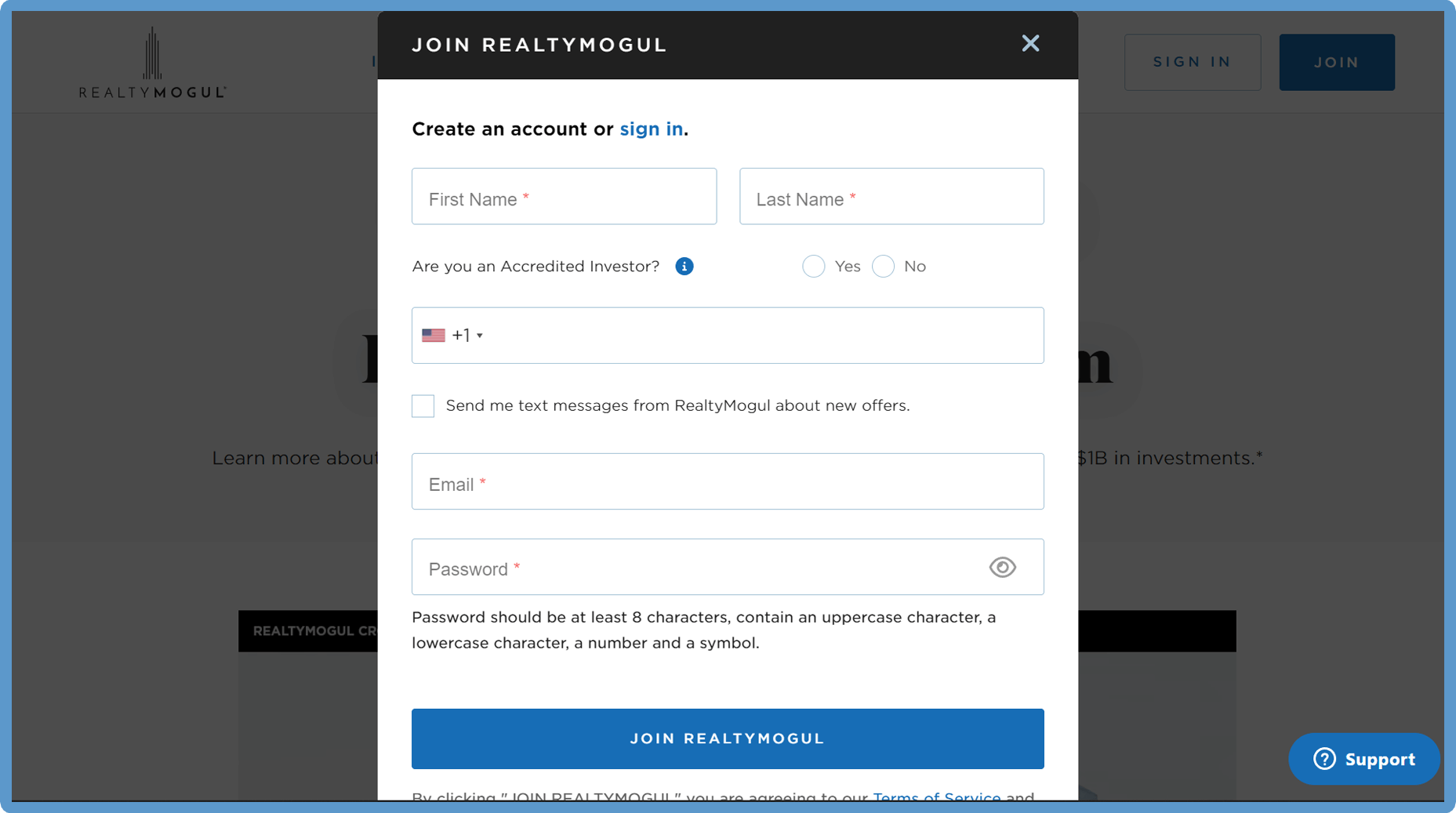
- Investor onboarding, so new members can register, confirm their identity and state their investor status in a few guided steps.
- Deal listings with filters, letting users narrow opportunities by property type, location, hold period or target return.
- Detailed offering pages that bring together the summary, documents, sponsor profile and key terms for each property.
- A personal dashboard where members follow their holdings, distributions and any updates posted by sponsors.
- Secure document storage for subscription papers, tax forms and quarterly reports that investors download later.
- Notifications by email and in the app, so members hear about new deals and account events without logging in daily.
- Sponsor and admin panels for publishing offerings, answering questions and moderating content behind the scenes.
- Educational content such as guides and glossaries that help first-time investors understand how private real estate works.
Build considerations for a property investment website
A WordPress, PHP and MySQL stack suits a content-rich platform like this, because editors can publish deals and articles without developer help. Custom plugins handle the investment logic, while jQuery and modern JavaScript keep filters and dashboards responsive. Keeping custom code separate from the theme makes later updates far less risky.
Security needs attention from the first sprint. Investor accounts should use strong password rules, optional two-factor login and encrypted connections everywhere. Sensitive files belong behind authenticated links rather than public media folders, and admin roles should only see what they need.
Financial platforms also connect to outside services. Identity checks, e-signature tools, payment processors and CRM systems are common integration points. Planning those connections up front avoids rework once legal and compliance teams review the investor journey.
Performance and accessibility round out the list. Listing pages with many photos should load quickly on phones, with compressed images and caching in place. Readable fonts, proper contrast and keyboard-friendly forms help every investor complete their paperwork without trouble.
Earning investor trust through design
Trust signals on a property platform are practical rather than decorative. Plain-English fee explanations, visible risk statements and a clear process page answer the doubts most newcomers carry. Team bios and contact options show that real people stand behind each offering.
Consistency also builds confidence. When every deal page follows the same layout, investors learn where to find returns, timelines and documents, and comparing two properties becomes easy. A predictable structure also speeds up the work of sponsors who prepare new listings.
Finally, reporting should feel calm and readable. Charts that show performance over time, short written updates and downloadable statements help members follow their money without calling support. Fewer support tickets usually means a happier investor base and a leaner operations team.
Mobile access is worth planning early as well. Many investors check their holdings on a phone, so dashboards, statements and new-deal alerts should read cleanly on small screens. A responsive web app often covers this well before a native app is needed.
What to plan before you start
- Scope and MVP: decide which investor and sponsor features are needed at launch and which can wait for a second phase.
- Compliance input: involve legal advisers early, since disclosure wording and investor checks shape both screens and workflows.
- Content: prepare deal templates, sponsor bios and help articles in advance so the site launches with substance.
- Budget tier: a listings site with a simple dashboard sits at the entry tier, while full onboarding, document flows and integrations move a project into the mid or upper tier.
- Timeline factors: the number of integrations, the review cycles with compliance and the amount of custom reporting drive the schedule most.
- Care after launch: plan for plugin and core updates, security monitoring, backups and small feature releases as investor feedback arrives.
Planning a similar investment platform?
EchoInnovate IT has spent 12+ years building websites and apps, with 500+ products delivered by a team of 50+ people. Our real estate app development and finance app development teams can shape a portal for your investors and sponsors. Tell us about your deal flow on a brief discovery call and we will reply with a fixed-price proposal.