

About
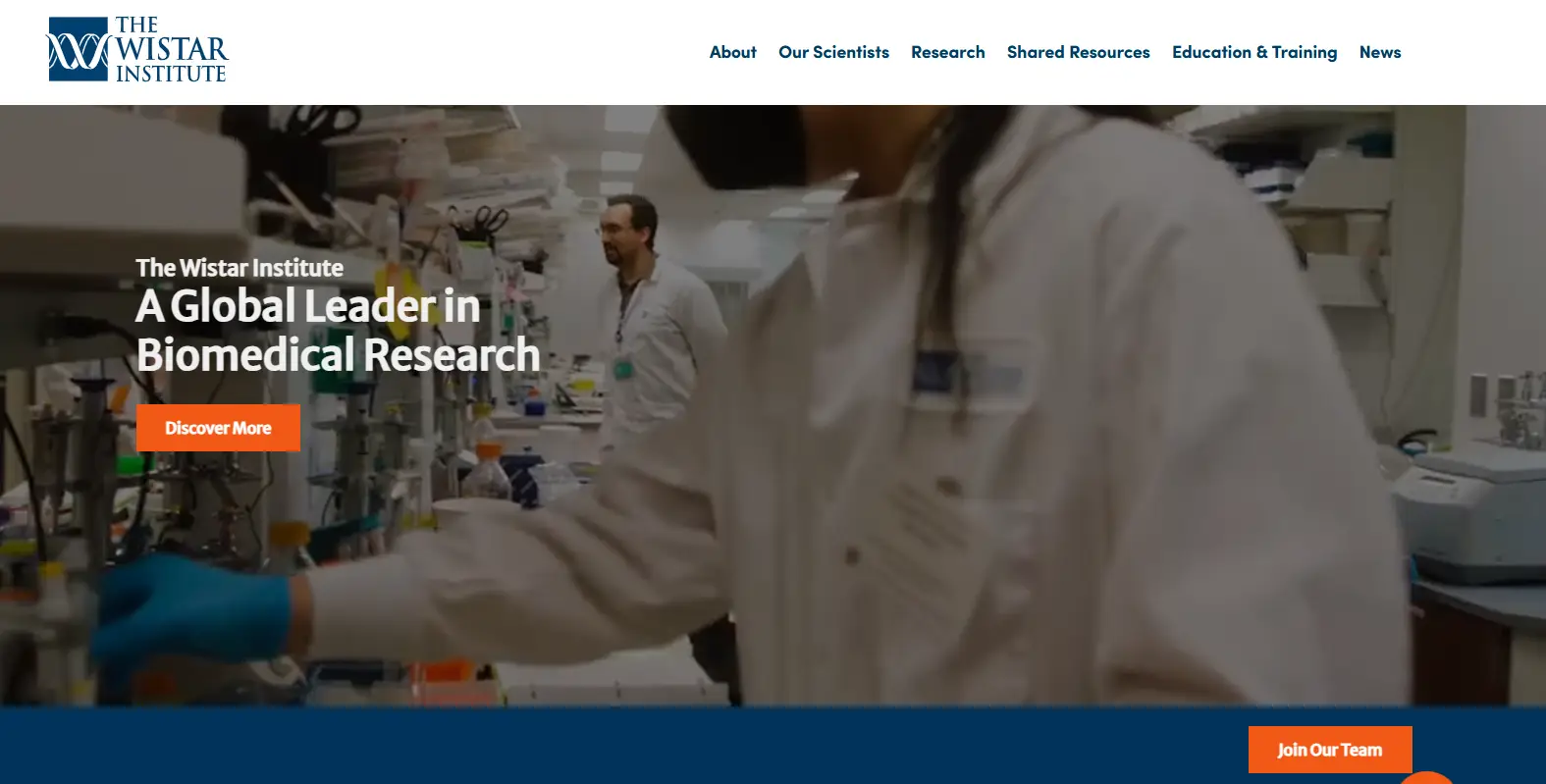
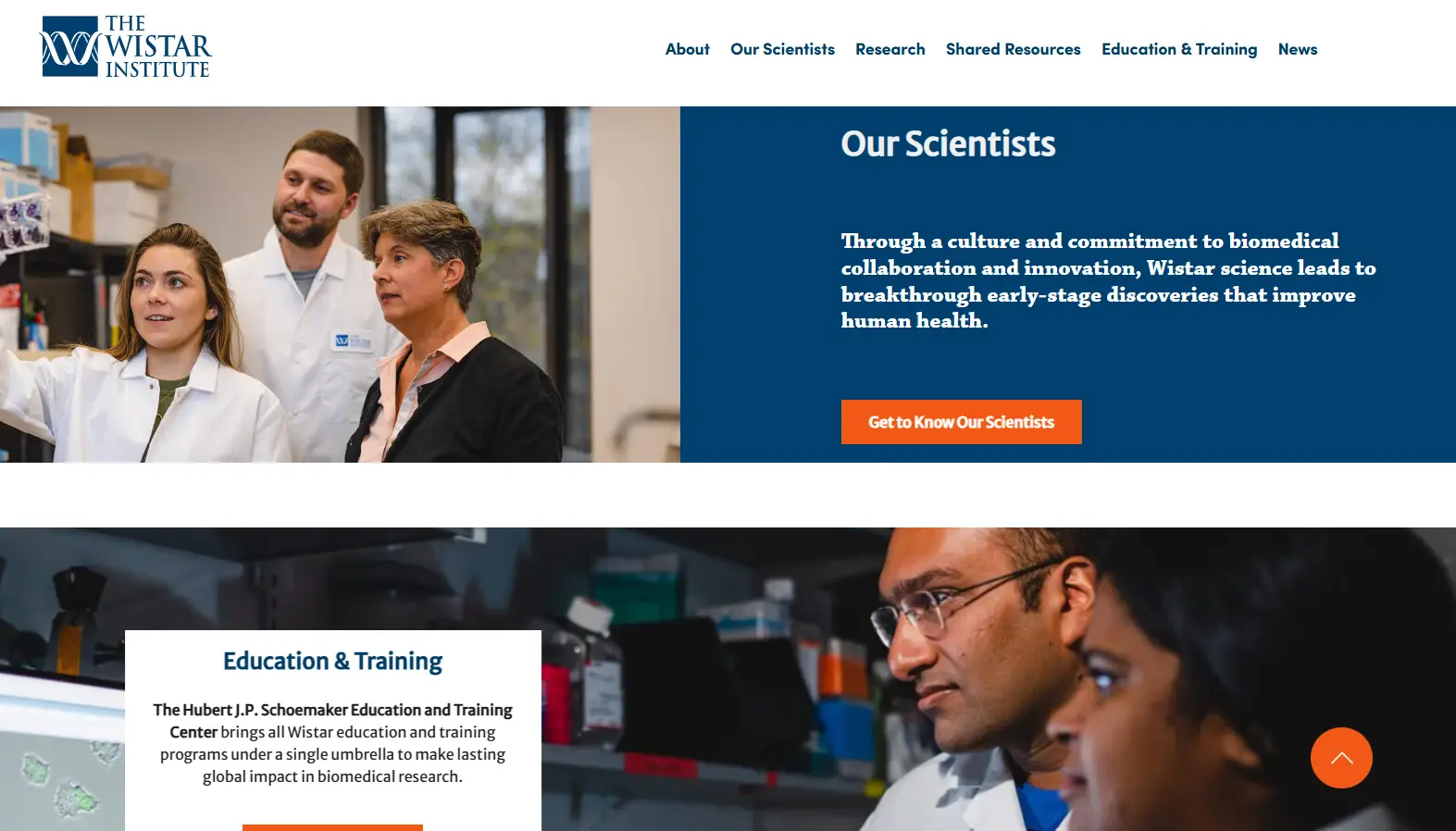
The Wistar Institute is an autonomous, nonprofit biomedical science research facility with two primary focus areas: cancer research and vaccine and immunotherapy development. It provides various training programs for high school students, undergraduates, and postgraduates. To achieve maximum performance, the Institute actively recruits interns and apprentices while cultivating an all-around team research culture.
Caspar Wistar, M.D., a distinguished physician from Philadelphia, named the Wistar Institute the country’s first independent biomedical research institution. Wistar, with a rich tradition of outstanding research, shaped modern medicine and influenced the history of human health.
Since then, Wistar Institute has been actively continuing the legacy of nonprofit biomedical research by making lifesaving contributions and following brave research approaches to life science discoveries.
What research institutes usually need from their website
A research institute speaks to many groups at once: scientists, donors, students, journalists, partners and the public. Each arrives with a different question, so the site must route them quickly to the right section. Clear navigation and plain summaries of complex science make that possible.
Credibility is the core asset for a nonprofit science organisation. Visitors look for evidence of rigour, such as publications, lab profiles and named investigators. A well-organised website turns that body of work into something people can browse, cite and share.
Features websites like this typically include
- Research program pages that explain each focus area in plain language, with links to the labs behind it.
- Lab and scientist profiles listing team members, research interests, publications and contact details.
- A news and press section where communications staff publish discoveries, grants and media coverage.
- An events calendar for seminars, lectures and public talks, with registration and reminders.
- Training and careers listings for fellowships, graduate programs, internships and open roles.
- Online giving with one-time and recurring donations, tribute gifts and clear acknowledgment emails.
- Site search with filters so visitors can find a scientist, a topic or a paper without clicking through menus.
- Partnership and licensing information that shows companies how to collaborate on research or technology transfer.
Build considerations for a science and nonprofit website
WordPress, PHP and MySQL give communications teams an editor they can use daily without asking developers for help. Custom post types keep labs, people, news and events in structured form, so one profile can appear on many pages automatically. jQuery and JavaScript then add filters, tabs and interactive timelines.
Accessibility is a priority for an institution that serves the public. Pages should follow WCAG guidance, with alt text on figures, captions on video and logical heading order. Charts and microscope images need text descriptions so the science reaches every reader.
Integrations are common in this sector. Donation platforms, CRM and donor databases, email newsletters and publication databases often connect to the site. Single sign-on for staff and role-based editing keep content control clear across many departments.
Security and speed protect the reputation the institute has built. Regular updates, a web application firewall and tested backups reduce risk. Image compression, caching and a content delivery network help visitors around the world load pages quickly.
Writing science for a wider audience
Scientific detail and public clarity can live on the same page. A short plain-language summary at the top, followed by deeper technical sections, lets each reader stop at the right depth. Glossary pop-ups or linked definitions help non-specialists with unfamiliar terms.
Stories make research memorable. Profiles of trainees, behind-the-scenes lab features and explainers about how a discovery moves toward the clinic help donors see the impact of their gifts. Short videos and annotated images often explain a method faster than paragraphs of text.
Consistent templates protect quality as more staff contribute. Shared formats for news posts, lab pages and event listings keep tone and layout uniform across departments. A simple style guide inside the editor helps new writers follow the same conventions.
Supporting fundraising and recruitment online
Many nonprofit institutes rely on the website to bring in both funding and talent. Giving pages work best when they explain where money goes and offer suggested gift levels described in words, not figures. A short form with few fields lowers the chance that a donor gives up halfway.
Recruitment pages compete with universities and industry for the same people. Clear program descriptions, application steps and stories from current fellows make an opening easier to weigh. Linking each role to the lab that offers it gives candidates useful context.
Corporate partners look for something different again. A short page on collaboration models, available core facilities and a named contact route turns a curious visit into a conversation. Keeping that page current matters as programs change.
What to plan before you start
- Audience map: list the main visitor groups and the top tasks each one needs to complete on the site.
- Content audit: review existing pages, retire outdated material and agree on owners for every section.
- Governance: decide who can publish, who approves scientific wording and how often profiles get reviewed.
- Budget tier: an informational site with news and profiles sits in the entry tier, while giving, event registration and several integrations move it into the mid or upper tier.
- Timeline factors: content migration, stakeholder reviews and accessibility testing usually shape the schedule more than the build itself.
- After launch: plan for security patches, analytics reviews and steady content updates as new research is published.
Planning a similar project?
EchoInnovate IT designs and builds websites for organisations with complex content, drawing on 12+ years and 500+ products delivered. Explore our WordPress development service and healthcare app development work to see how we approach it. Share your goals with us in an initial scoping conversation, and we will prepare a fixed quote for your institute.