
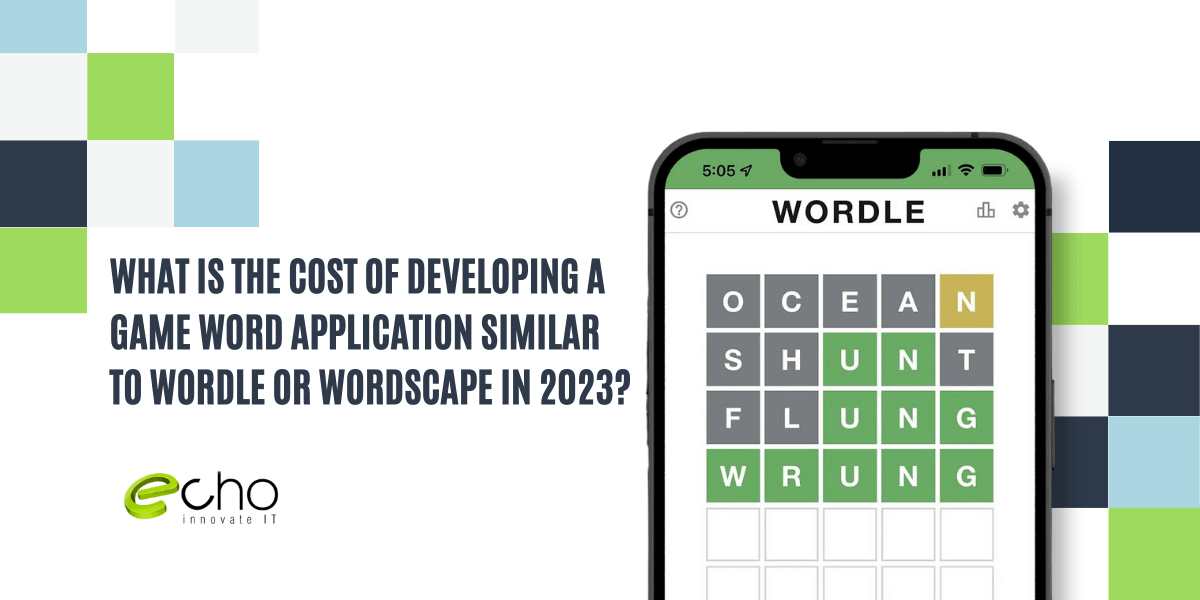
A word game app in 2026 typically costs between $15,000 and $40,000 for a focused first version and $50,000 to $150,000+ for a full product with multiplayer, daily challenges, leaderboards, and a live-ops content pipeline. Word games are among the more affordable game genres to build because they lean on logic and a word database rather than heavy 3D graphics — but the cost quietly moves once you add real-time multiplayer, a steady stream of new puzzles, and a monetization system tuned to keep players coming back.
This guide gives you the real 2026 market ranges, the features that drive retention in a word or puzzle game, the technology behind the game engine and word validation, how long a build takes, and what moves the budget. It is written for founders scoping a word, puzzle, or trivia game before choosing a development partner. We build these apps for clients under their own brand, so the numbers reflect what production teams quote today, not sticker prices.
Key takeaways
- A word game MVP costs roughly $15,000–$40,000; a full product with multiplayer, daily challenges, and live-ops runs $50,000–$150,000+.
- Word games are cheaper than graphics-heavy genres, but real-time multiplayer and a steady content pipeline are where cost concentrates.
- Retention comes from daily challenges, streaks, leaderboards, and a fair hint/power-up economy — not from more levels alone.
- Monetization usually blends rewarded ads with in-app purchases; a balanced economy is an engineering and design effort, not an afterthought.
- A realistic timeline is 8–14 weeks for an MVP and 4–7 months for a full cross-platform release.
How much does it cost to build a word game app?
“Word game” ranges from a single-player daily puzzle to a real-time multiplayer word battler, so the cost span is wide. The ranges below are 2026 market ranges for a professionally built game, not a fixed EchoInnovate IT price. We quote after a short scoping call, because multiplayer, the content pipeline, and your monetization model change the figure far more than the number of screens.
Think in three tiers. An MVP delivers the core gameplay loop — a working word game, a validated dictionary, scoring, and basic progression — enough to test whether people enjoy it. A growth-tier game adds daily challenges, leaderboards, hints and power-ups, an economy, and monetization through ads and in-app purchases. A scale-tier game adds real-time multiplayer, tournaments, live-ops with regularly published new content, and the analytics needed to tune retention and revenue. The single biggest jump in cost is from single-player to real-time multiplayer, because it introduces servers, matchmaking, and synchronization.
| Tier | What you get | 2026 market range |
|---|---|---|
| MVP / Lite | Core word gameplay, validated dictionary, scoring, level or daily-puzzle progression, sound and simple animation, local save. Single-player, cross-platform. | $15,000–$40,000 |
| Growth | Everything in MVP plus daily challenges and streaks, leaderboards, hints/power-ups and an in-game economy, accounts and cloud save, and monetization via rewarded ads plus in-app purchases. | $45,000–$90,000 |
| Scale | Full game: real-time multiplayer and matchmaking, tournaments, live-ops content pipeline, social features, deep analytics, and A/B-tested monetization. | $90,000–$150,000+ |
Ranges reflect typical 2026 dedicated-team and studio quotes for a production build. Your figure depends on multiplayer, content cadence, and monetization — we quote after a short scoping call.
Must-have features of a word game app
A word game succeeds when the core loop is satisfying and there is always a reason to come back tomorrow. That reframes the feature list around gameplay feel and retention rather than raw content volume. This is the set worth building first.
- A polished core gameplay loop. Responsive input, satisfying feedback (animation, haptics, sound), and clear rules. In a word game the feel of forming and submitting a word is the whole product, so it has to be crisp.
- A validated word dictionary. A fast, reliable dictionary that confirms valid words and rejects invalid ones, ideally with multiple languages if you plan to localize. This is the technical backbone of any word game.
- Progression and difficulty. Levels, daily puzzles, or an increasing-difficulty curve that keeps players in the sweet spot between bored and frustrated.
- Daily challenges and streaks. A fresh puzzle each day plus streak tracking is the single strongest retention mechanic in the genre, and it is what turns casual players into daily ones.
- Hints, power-ups, and an economy. A fair system of hints and boosts, backed by an in-game currency, that helps players without trivializing the game. Balancing this economy is design and engineering work.
- Leaderboards and social. Scores, friend challenges, and sharing. Competition and bragging rights extend a game’s life well beyond its content.
- Accounts, cloud save, and monetization. Cross-device progress plus a monetization system — rewarded ads and in-app purchases — wired through the ad network and store billing.
Features you can defer past v1 include real-time multiplayer, tournaments, and seasonal events. Cutting these from the first release protects the budget while you confirm the core loop is fun and sticky.
Tech stack and integrations
A word game is chosen around the game engine, the word-validation system, and (if you add it) the real-time multiplayer layer. Here is a typical 2026 build.
Game engine and front end. A 2D word or puzzle game can be built in a lightweight game engine such as Unity, or directly in a cross-platform app framework like Flutter for simpler titles. Unity is the common choice when you want rich animation, effects, and a single build for iOS and Android; a Flutter build can be lighter and cheaper for a straightforward puzzle. The right choice depends on your visual ambition and team, which a scoping call settles.
Word validation and content. A validated dictionary (often a trie or hashed word list for speed) confirms legal words instantly, with optional multi-language support. A content system lets you publish new puzzles, levels, and daily challenges without shipping an app update — essential for live-ops.
Back end, accounts, and multiplayer. A back end (Node.js, Go, or a managed platform) handles accounts, cloud save, leaderboards, and the economy. Real-time multiplayer adds a dedicated game server or a managed real-time service for matchmaking and state synchronization — this is the biggest single addition to the stack and the biggest cost jump.
Monetization and ads. An ad-mediation SDK for rewarded and interstitial ads, plus App Store and Play billing with an entitlement layer for in-app purchases. A remote-config service lets you tune difficulty, the economy, and ad frequency after launch without a new release.
Analytics and live-ops. Game analytics, funnel and retention tracking, crash reporting, and A/B testing. Word games are tuned continuously after launch, so this instrumentation is not optional if you want the game to grow.
How long does it take to build?
For a word game, timeline tracks whether you stay single-player or add multiplayer. A single-player MVP with a polished core loop, dictionary, and progression is usually an 8–14 week build. A growth-tier game that adds daily challenges, leaderboards, an economy, and monetization typically runs 4–7 months across iOS and Android. A scale-tier game with real-time multiplayer, tournaments, and live-ops is an ongoing program rather than a fixed project.
A typical phased plan: 1–2 weeks of discovery and game design, 3–4 weeks to build and polish the core gameplay loop and dictionary, 2–3 weeks for progression, daily challenges, and leaderboards, 2–3 weeks for the economy, hints, and monetization, and 2–3 weeks of QA, balancing, and store submission. If you add real-time multiplayer, budget an extra 4–8 weeks for the server, matchmaking, and synchronization work.
The reliable way to compress the timeline is to prove the core loop is fun first and defer multiplayer to a fast follow, rather than adding developers late. A two-week pilot sprint is designed to test that loop before the full build starts.
What drives the cost
To control a word game budget, focus on these levers in order of impact:
- Single-player vs. real-time multiplayer. This is the biggest lever by far. Multiplayer adds game servers, matchmaking, synchronization, and anti-cheat, which can add tens of thousands of dollars. Many successful word games launch single-player and add multiplayer later.
- Content cadence and live-ops. A fixed set of levels is cheap; a pipeline that publishes fresh daily puzzles and seasonal events indefinitely is an ongoing operational cost, not a one-time build.
- Economy and monetization depth. A simple ad-only model is light. A tuned economy with currencies, power-ups, IAP, rewarded ads, and A/B-tested pricing adds real design and engineering work — but it is where the revenue comes from.
- Visual and audio polish. Word games are simple, so polish is what makes one feel premium. Custom animation, effects, and sound take time that a bare-bones build would skip.
- Localization. Supporting multiple languages means multiple validated dictionaries and localized content, which multiplies content work.
- Team model and rates. Onshore senior game talent costs multiples of an offshore dedicated team of comparable seniority, which is the biggest lever on total cost and why most casual games ship with an offshore or hybrid team.
A good partner helps you spend on a genuinely fun core loop and the retention mechanics that keep players — and defers multiplayer and heavy live-ops until the game has proven it deserves them.
How EchoInnovate IT builds word game apps
EchoInnovate IT is an India-based custom and white-label software development company with 12 years of experience, 50+ employees, and 500+ products shipped — most under our clients’ own brands. We hold a 5.0 rating across 6 verified Clutch reviews. For word, puzzle, and casual games, our mobile app development teams build the core gameplay loop, the validated dictionary and content system, the economy and monetization, and — when you are ready — the real-time multiplayer layer, then handle store submission and post-launch live-ops.
We work as a dedicated team: game and mobile engineers, a game designer, a product designer, and a QA lead who balance the economy and test the game on real devices. Because we build white-label, the game ships entirely under your brand. If you would rather extend an in-house team, our IT staff augmentation services let you add vetted game and backend engineers to your project, and our broader software development company practice covers the servers, cloud, and DevOps that multiplayer and live-ops depend on.
We do not publish fixed prices, because multiplayer, content cadence, and monetization drive the figure. Instead we give a transparent quote after a short scoping call. To see the full build process end to end, visit our mobile app development service page.