A cloud kitchen (also called a ghost or dark kitchen) has no dining room; it exists to fulfill delivery orders, and its app is the storefront, the kitchen controller, and the business dashboard all at once. If you are planning one in 2026, start with scope. A focused ordering-and-delivery MVP is the most affordable tier and ships in four to six months, while a full multi-brand platform with a customer app, kitchen and rider apps, and an admin dashboard is a much larger investment over eight to twelve months. Those ranges move with the number of apps, brands, and integrations you need, so treat them as planning anchors rather than a quote.
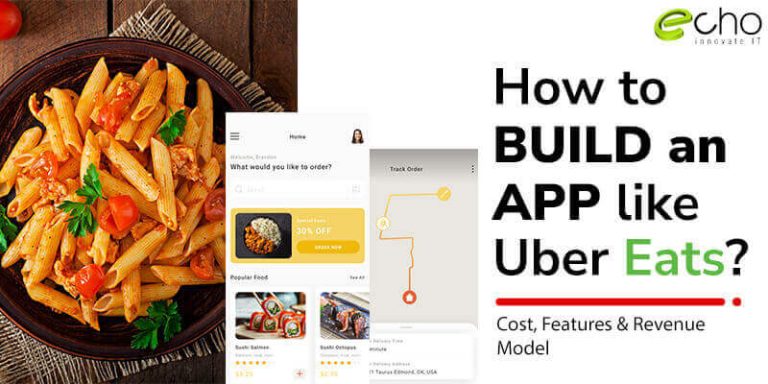
This guide is written for the founder or operator signing off on the budget, not only the engineer. We cover what a cloud kitchen app costs in 2026, the apps and roles involved, the features that matter for customers, kitchen, and admin, the tech stack and integrations, a realistic timeline, what drives cost, and how a dedicated partner like EchoInnovate IT builds one. For deeper context, our breakdown of the food delivery business model and our guide to the cost of an Uber Eats-style delivery app pair well with this article.
Key takeaways
- A cloud kitchen ordering MVP is the most affordable tier and ships in 4–6 months; a full multi-app, multi-brand platform is a much larger investment over 8–12 months.
- A cloud kitchen app is really a system of apps: customer ordering, kitchen display, rider/delivery, and an admin dashboard.
- The biggest decision is whether to build your own delivery and ordering stack or integrate with existing aggregators and delivery services.
- Multi-brand support, real-time order tracking, and delivery logistics are the main cost drivers.
- Scope drives price, so we quote after a short scoping call. A 2-week pilot sprint is the lowest-risk way to start.
How much does a cloud kitchen app cost in 2026?
Cost depends on how many of the apps below you build and whether you run your own delivery. A single customer ordering app that hands off delivery to a third party is a very different budget from a full platform that runs multiple virtual brands with its own riders and real-time logistics. The table below shows relative investment levels by scope, drawn from typical food-tech engagements across offshore and blended teams. Use it to size your budget before a detailed scope, then confirm with a short scoping call.
| Scope | Investment level | Timeline |
|---|---|---|
| Customer ordering app + basic admin | Entry-level | 4 – 6 months |
| Customer + kitchen display + admin | Mid-range | 6 – 9 months |
| Full platform (customer + kitchen + rider + admin) | High-end | 8 – 12 months |
| Multi-brand / multi-location platform | Enterprise-scale | 10 – 16 months |
Two factors move these ranges most:
- Delivery logistics. Running your own riders means building or integrating dispatch, live GPS tracking, and route handling, which is a substantial piece of engineering. Handing delivery to an aggregator removes that scope but gives up margin and control.
- Multi-brand support. This is central to the cloud kitchen model, because one kitchen often runs several virtual restaurant brands from the same physical space. Supporting that cleanly adds real complexity to menus, orders, and reporting.
Offshore and blended delivery, which is how most of these budgets are built, keeps blended rates well below onshore-only teams for comparable quality.
We do not publish fixed EchoInnovate prices, because the same feature list can cost very differently once delivery and multi-brand scope is understood. We provide a transparent quote after a short scoping call. To scale a team quickly during the build, many clients combine a core squad with IT staff augmentation.
The apps that make up a cloud kitchen platform
The mistake that inflates cloud kitchen budgets is thinking of the product as one app. It is really a connected system, and deciding which pieces you need at launch is the fastest way to control scope.
The customer app. This is the storefront where diners browse menus, customize orders, pay, and track delivery. If you run several virtual brands, each can have its own branded presence while sharing the same backend. This app must be fast, clear, and reassuring, because a confusing checkout or an opaque delivery status loses orders directly.
The kitchen display or order-management app. Running on a tablet in the kitchen, this receives incoming orders, shows tickets, tracks preparation status, and manages capacity so the kitchen is not overwhelmed at peak. When one kitchen serves several brands, this app has to merge and route orders sensibly so staff can cook efficiently.
The rider or delivery app. If you run your own delivery, riders need an app for assignments, navigation, order pickup and drop-off confirmation, and earnings. This is where the logistics complexity, and cost, concentrates.
The admin dashboard. Behind everything sits a web dashboard for menu and pricing management, order oversight, brand and location control, delivery-zone settings, promotions, and analytics on sales, prep times, and delivery performance. This is the operator’s cockpit and it is where the business is actually run.
Because these pieces share data and must stay in sync in real time, a cloud kitchen platform is closer to custom mobile app development with heavy backend coordination than to a single simple app, and scoping it piece by piece keeps the estimate honest.
Core features by app
Here is the feature spine most cloud kitchen platforms share, grouped by the app it belongs to. Scoping each item honestly, rather than assuming it is a checkbox, is how you avoid the mid-project surprises that inflate food-tech budgets.
Customer app. Registration and login, menu browsing with photos and modifiers, cart and customization, multiple payment methods including wallets and cash on delivery where relevant, real-time order tracking with live map, order history and reordering, ratings and reviews, promotions and loyalty, and push notifications for order status. Address handling and delivery-zone checks belong here too.
Kitchen app. Incoming order queue, ticket display with modifiers, accept and prep-time controls, status updates that flow back to the customer, capacity and pause controls for busy periods, and multi-brand order merging so staff cook efficiently across virtual brands.
Rider app. Order assignment (manual or automatic), turn-by-turn navigation, pickup and delivery confirmation with proof, live location sharing, earnings and payout tracking, and availability toggles.
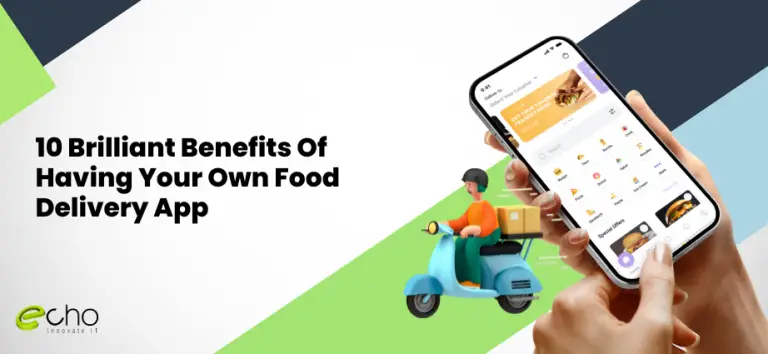
Admin dashboard. Menu, pricing, and availability management across brands and locations; order oversight and manual intervention; delivery-zone and fee configuration; promotions and coupon management; rider and staff management; and analytics on sales, prep and delivery times, and brand performance. For the strategic case behind owning this stack, our overview of the benefits of your own food delivery app is worth a read.
Shared infrastructure. Secure payments, real-time order sync across all apps, reliable push notifications, and a mapping and geolocation layer underpin the whole platform.
Build your own or integrate aggregators?
This is the decision that shapes your whole budget and business model, so it deserves a deliberate answer rather than a default.
Integrating with aggregators. Many cloud kitchens start by listing on existing delivery marketplaces and using their riders. The advantage is speed and reach: you get customers and delivery without building either. The cost is margin, since aggregators take a significant commission, and control, since you do not own the customer relationship or the data. In this model your own app focuses on the kitchen and admin side while orders flow in from marketplaces through their integration.
Building your own stack. Owning the customer app and, optionally, your own delivery gives you the full margin, the direct customer relationship, and the data to build loyalty and repeat orders. The cost is the engineering to build ordering and, if you self-deliver, dispatch and logistics, plus the marketing to acquire customers that an aggregator would otherwise supply.
The common middle path. Most operators blend the two: they build their own customer app and admin to own the relationship and margin on repeat customers, while also integrating aggregators for reach and using third-party delivery until their own volume justifies self-delivery. This hybrid controls both risk and cost, and it is the approach we most often recommend at launch. Whichever route you choose, our software development team can build the integrations and the owned stack so you are not locked into any single delivery partner.
Tech stack and timeline
There is no single correct stack, but the choices below reflect what most teams reach for in 2026 when they want a maintainable platform with real-time coordination and a healthy hiring pool behind it.
Mobile clients. The customer and rider apps are usually built cross-platform with React Native or Flutter so one team ships iOS and Android from a single codebase, which controls cost. The kitchen display often runs as a tablet app or a web app on a dedicated device.
Backend. Node.js or Go handles accounts, menus, orders, payments orchestration, and the real-time sync that keeps customer, kitchen, and rider apps in agreement. Real-time messaging (WebSockets or a managed realtime service) is central, because an order status that lags by even a minute frustrates customers and confuses the kitchen.
Maps and logistics. A mapping and geolocation provider powers address entry, delivery-zone checks, live tracking, and, for self-delivery, routing and assigning orders to riders. This is a recurring operational cost tied to usage.
Payments and notifications. A payment gateway (and wallet or cash-on-delivery support where the market needs it), plus push and SMS notifications for order updates.
Timelines scale with scope:
- Customer ordering app with basic admin: reaches the store in four to six months
- Add a kitchen display: six to nine months
- Full customer, kitchen, rider, and admin platform: eight to twelve months or more, with multi-brand and multi-location platforms longer still
The work moves through discovery and scoping, design, a core build in two-week sprints, integration of payments and maps, then testing and a staged launch, followed by ongoing maintenance.
The levers that move cost and time most are the number of apps, whether you self-deliver, multi-brand support, and your team model. Our mobile app development cost guide breaks the drivers down further.
How EchoInnovate IT builds cloud kitchen apps
EchoInnovate IT is an India-based custom and white-label software development company with 12 years of delivery behind us, a team of 50+ employees, and more than 500 products shipped, most of them under our clients’ own brands. We hold a 5.0 rating across 6 verified client reviews on Clutch. For cloud kitchen and food-delivery work we assemble a dedicated team, typically a mobile lead, backend engineers with real-time experience, a designer, and a QA engineer, and we run in two-week sprints so you see working software throughout.
Our approach is clear about scope and honest about trade-offs:
- We start by helping you decide the build-versus-integrate question and which apps you truly need at launch, because those choices shape the entire budget.
- We design the customer experience for speed and clarity.
- We build the real-time sync that keeps every app in agreement, and structure the platform for multi-brand from the start if that is your model, so you are not rebuilding the system later.
- We are candid about which features to defer, since a focused launch that runs reliably beats an overbuilt platform that stumbles at peak.
Because we work as a white-label partner, the product ships under your brand.
Whether you need the full platform, a customer app to start, or extra engineering capacity through dedicated teams, we scope transparently and quote after understanding your real requirements. Explore our mobile app development services, and remember you are hiring a team and a process, which is what keeps a delivery platform reliable at the dinner rush and improving long after launch.