Cash no longer rules as the main way to pay. That shift makes it vital to know how to build a payment app for today’s needs. Payment app development is now a core part of financial technology. It powers secure, instant payments through contactless payments, credit card, debit card, and digital wallet options like Google Pay and Google Wallet.
The uses are wide. They span P2P payment app development for peer-to-peer transfers. They also cover mobile payment app development for eCommerce payment integration and retail. Digital platforms now let users send and receive money with ease. Advanced wallet app features, tap to pay technology, and real-time payment processing all drive this space forward.
A well-designed mobile wallet app supports many use cases. These include secure payment solutions, online transaction app features, and custom payment app development for both iOS and Android. Developers must plan for a payment gateway and payment gateway integration. They also need to meet terms and conditions and subject to credit approval disclosures. In short, both performance and compliance matter. Related: fintech app development services.
This guide covers what you need to know about digital wallet development. We look at essential features, technology stacks, and monetization models. We also cover common challenges and real-world examples. The goal is to help your app stand out in fintech app development and online payments.
The digital payment industry is growing fast. Money now moves faster and more easily than ever. This ranges from contactless payments at local coffee shops to international remittances. Still, the market is crowded. Big names and newcomers both fight for user attention. That makes it hard to stand out. So how do you create a payment app that rises above the rest?
The main challenge is building more than basic transactions. Users today expect much more than sending and receiving money. They want smooth experiences, strong security, and features that simplify their finances. That is why this blog exists. It offers practical steps for a payment app development guide that helps your app survive and grow.
User expectations keep rising. People want instant results, personal service, and full trust in the apps they use. When an app falls short, users leave and you lose chances to grow. So it helps to understand the features of a successful payment app that appeal to modern users. Let’s dig in and see how to get there.
Building Your Payment App: A Step-by-Step Process
7 min read · Last updated: May 2026
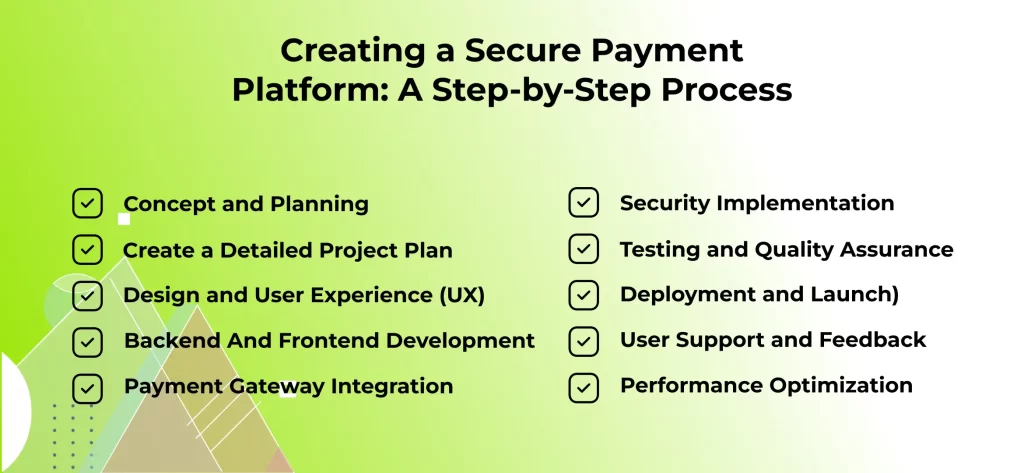
Building a payment app takes careful, structured work. Here is an outline of the key stages.
1. Concept and Planning
The first phase is the most important. Define your app’s core purpose, target audience, and unique value. Do thorough market research to find gaps and opportunities. Then outline the key features, goals, and objectives. This phase shapes every task that follows. It also makes sure your app meets real user needs. Related: mobile app development services.
2. Draft an Intricate Project Plan
Build a detailed project plan. It should cover timelines, milestones, resources, and budget. Break the work into manageable tasks and assign clear owners. The plan should also include risk analysis and mitigation steps. That way you can handle obstacles as they come up.
3. Designs to Enhance User Experience (UX)
Payment app user experience is essential. The design should be intuitive and easy so transactions feel simple. Use wireframes or prototypes to map user flows and improve usability. Pay attention to visuals, navigation, and accessibility. A strong user experience will boost adoption of your app.
4. Backend and Frontend Developments
Build a scalable backend that handles transaction processing, data storage, and security. Pick the right programming languages, frameworks, and databases for your needs. Then build a front end that keeps users engaged across devices.
5. Payment Gateway Integration
Integrate reliable, secure payment gateways for smooth transactions. Make sure they support many payment methods. These include credit and debit cards, mobile wallets, and bank transfers. Also weigh each gateway’s transaction fees, processing times, and security protocols before you choose.
6. Security Implementation
Add strong payment app security features to protect user data and prevent fraud. Use encryption, multi-factor authentication, and fraud detection systems. Follow industry standards like PCI DSS for transaction security. Run regular security audits and penetration tests to track progress. Related: hire cross-platform developers.
7. Testing and Quality Assurance (QA)
Test the app thoroughly to find and fix bugs. Make sure it performs well across devices and operating systems. Run unit, integration, and user acceptance testing (UAT). Check compatibility and reliability before you go live.
8. Deployment and Launch
Plan an orderly launch by configuring all systems correctly. Create a launch strategy that covers marketing and user acquisition. After launch, watch performance closely. Respond quickly to any issues that appear.
9. User Support and Feedback
Offer strong customer support to answer questions and fix issues fast. Set up feedback channels to capture user ideas and suggestions. Then use that input to improve the app and raise user satisfaction over time.
10. Performance Optimization Options Available Now
Keep monitoring and improving the app’s performance. Fix bottlenecks that slow load times. Scale the infrastructure as user traffic grows. Add new features and enhancements often to stay competitive.
Payment app compliance requirements are critical during build and launch. Work with legal and financial experts throughout the process. This helps you meet every rule that applies. Related: custom software development.
Essential Features
A secure, user-friendly payment app needs a few key features. These protect users and add convenience. User authentication keeps access safe. It can use OTPs, biometrics, and multi-factor authentication. Secure payment solutions like end-to-end encryption and AI-powered fraud detection guard financial data. Wallet app integration makes it simple to send and receive money. Users can pay with a credit card, debit card, or digital wallet service like Google Pay and Google Wallet.
Transaction history adds transparency with detailed records. Push notifications keep users updated in real time on online payments, balances, and key alerts. That is essential for a smooth mobile payment app. It matters even more in peer-to-peer payment app development. There, real-time payment processing, security, and trust are critical. For apps with contactless payments and tap to pay, user privacy and safety come first.
Compliance also builds credibility. Follow the terms and conditions and be clear about subject to credit approval rules. This is vital in regions with strict financial regulations.
Advanced Features
Modern payment apps add advanced features to improve function, security, and user experience. These features speed up transactions, widen global access, and protect against fraud.
P2P Payment: Enables fast, secure peer-to-peer transactions for smooth money transfers through mobile wallet app development.
Multi-Currency Support: Expands reach by letting users transact in many currencies.
AI-Powered Fraud Detection: Strengthens security and protects online transaction app activity.
Rewards and Loyalty Programs: Boosts engagement with cashback, loyalty points, and promotions.
eCommerce payment integration: Essential for businesses. It enables smooth payment gateway function and payment gateway integration for online checkouts.
Custom payment app development: Tailors solutions to specific business models and niches. This helps your payment app for iOS and Android stand out in fintech app development.
Digital wallet development: Adds secure, convenient payment options that fit the demands of today’s users.
Conclusion
A great payment app starts with knowing your audience. It puts user experience first and welcomes new ideas. We covered every stage, from concept planning to ongoing performance tuning. We paid special attention to strong security features, smooth integration, and compliance. Keep thinking creatively and put user needs first. Do that, and your app will meet and exceed expectations.
Digital payments keep changing. That means businesses must stay agile and adaptable. You need to keep finding ways to strengthen your app’s value. To stay ahead, stay nimble and look for improvements that help your users. Related: AI-powered app development.
Ready to turn your vision into reality? Mobile payment app development can be complex. That is where EchoInnovate IT comes in. We build custom mobile payment solutions tailored to each client’s needs. Our work spans concept, design, secure gateway integration, and post-launch support. We help your app succeed and last.
Contact EchoInnovate IT now for a consultation. Let us help you create a payment app that stands out in a crowded market.
Frequently Asked Questions
What features make a payment app truly stand out in today’s market?
A standout payment app should offer smooth user experience (UX), real-time transaction tracking, strong security (e.g., biometric login, end-to-end encryption), and multi-platform support. Integrating value-added features like budgeting tools, rewards, or crypto support can also give your app a competitive edge.
How important is UI/UX design in the success of a payment app?
UI/UX is critical. A smooth, intuitive design builds trust and keeps users engaged. Complex, clunky interfaces often drive users away—especially when dealing with something as sensitive as money. Clear navigation, responsive design, and user-centric features are key.
What security measures should be prioritized when developing a payment app?
Start with robust authentication (2FA, biometrics), encryption for data in transit and at rest, and secure APIs. Compliance with standards like PCI DSS and regular security audits are essential to ensure user trust and regulatory alignment.
Ship your eWallet before your competitors do.
Card-on-file, P2P transfers, NFC tap-to-pay, KYC/AML, multi-currency, crypto rails — we’ve shipped it all. Are you launching an MVP or replatforming a stored-value wallet? Our fintech engineers know the compliance gotchas. They know the BaaS integrations (Synapse, Unit, Treasury Prime). They also know the PCI scope tricks that save you months of pain. Get a real engineer on a call in 24 hours — not a sales rep.