Healthcare app development cost typically runs from an entry-level focused MVP to an enterprise-scale, multi-role clinical platform. Most funded builds land in the mid-range in 2026. The range is wide for a reason. A symptom-tracking wellness app and a HIPAA-regulated telemedicine platform with EHR integration are not the same project, even though both are “healthcare apps.” What moves your number is the feature set, the number of user roles, the integrations you need, and how much compliance work sits underneath.
This guide breaks down medical app development cost the way a buyer actually needs it. You will see what drives the price, what each app type costs, and how HIPAA compliance affects the budget line by line. Compliance is not a checkbox at the end. Encryption of PHI, access controls, audit logging, Business Associate Agreements, secure hosting, and penetration testing all carry real engineering hours. Together, they commonly add 20-40% to a healthcare software development cost estimate. We will keep pricing to market ranges. For your specific project, EchoInnovate IT gives a transparent quote after a short scoping call, not a number pulled from thin air.
What drives healthcare app development cost
Before you compare quotes, it helps to understand the levers that move a healthcare app development cost estimate. Six factors do most of the work. First is scope: the number of screens, user roles, and workflows. An app serving patients, clinicians, and administrators needs three distinct interfaces and three permission models. It also needs far more testing than a single-user tool. Second is feature depth. Video consultations, real-time messaging, e-prescriptions, payment processing, and appointment scheduling each carry their own engineering and third-party integration costs.
Third is data sensitivity. The moment your app stores, transmits, or displays protected health information, it enters regulated territory. Compliance engineering then becomes a line item rather than an afterthought. Fourth is integrations. Connecting to an EHR, a lab system, wearables, or a payment gateway adds interface work and testing against systems you do not control. Fifth is platform choice. Native iOS and Android, a cross-platform framework, and a web portal each change the hour count. Sixth is the team and region you hire, which can swing the blended rate by three to five times.
None of these factors work in isolation. A modest feature list with heavy compliance and two EHR integrations can cost more than a large feature list with none. That interaction is exactly why a fixed catalog price is misleading. It is also why our healthcare app development team scopes each build against your actual workflows before quoting. For a broader view of what shapes any mobile budget, our mobile app development cost guide covers the platform and feature mechanics in more detail.
Healthcare app development cost by app type
The clearest way to anchor a budget is by app category, because each type carries a different baseline of features, integrations, and compliance load. A fitness or wellness app that never touches clinical data sits at the low end. At the high end sits a remote patient monitoring platform that ingests device data around the clock, or an EHR/EMR system that becomes the system of record. The table below shows how each app category compares for a production-ready build, not a throwaway prototype. Your position within each range depends on the feature depth and integration count discussed above.
| App type | What it typically includes | Investment level |
|---|---|---|
| Fitness & wellness | Activity tracking, goals, content, wearable sync, subscriptions | Entry-level |
| Patient engagement | Scheduling, reminders, secure messaging, records access, billing | Mid-range |
| Telemedicine | HIPAA video visits, e-prescriptions, payments, clinician + patient roles | Enterprise-scale |
| Remote monitoring / IoMT | Device ingestion, alerts, dashboards, care-team workflows | Enterprise-scale |
| EHR / EMR | Clinical records, charting, HL7/FHIR interop, audit trails, admin | Enterprise-scale |
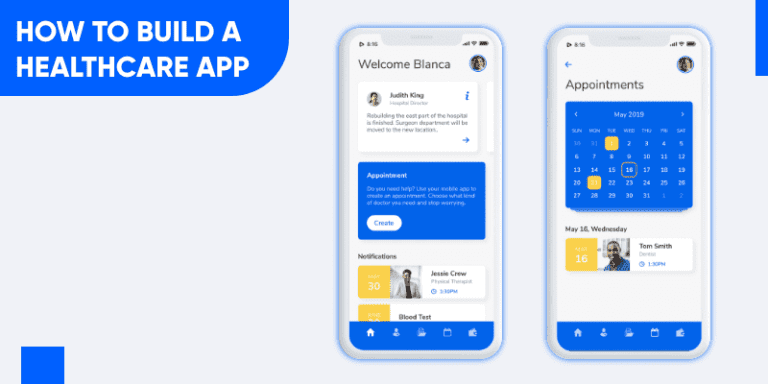
Use these as planning anchors, not final quotes. Two telemedicine apps can differ dramatically. It depends on whether they reuse a compliant video SDK or build one, and whether they integrate with one EHR or five. To pressure-test a range against your own feature list, our app cost calculator gives a quick estimate. And our full guide to building a healthcare app walks through the feature decisions behind each tier.
How HIPAA compliance drives the budget
HIPAA is the single most misunderstood cost driver in medical app development. Buyers often assume compliance is a legal document you sign at the end. In reality, it is engineering work spread across the entire build. It commonly adds 20-40% to the base cost of an app that handles protected health information. The HIPAA Security Rule requires administrative, physical, and technical safeguards. Each one translates into hours your team spends building, testing, and documenting controls that a non-regulated app would skip entirely.
What each safeguard costs
The table below maps the major safeguards to what they require in practice and how they hit the budget. Read it as a checklist of what should already be inside any credible HIPAA compliant app development quote. If a vendor’s estimate does not account for these items, the number is not comparable to one that does.
| Safeguard | What it requires | Budget impact |
|---|---|---|
| PHI encryption | Encryption in transit (TLS) and at rest, key management, secure storage | Moderate, baked into architecture |
| Access controls | Role-based permissions, unique logins, MFA, automatic session timeout | Moderate |
| Audit logging | Tamper-evident logs of every PHI access, retention, and review tooling | Moderate to high |
| Business Associate Agreements | Signed BAAs with every vendor touching PHI (hosting, SMS, email, analytics) | Low cost, high diligence |
| Secure hosting / data residency | HIPAA-eligible cloud, network isolation, backups, region controls | Ongoing monthly cost |
| Penetration testing | Third-party security testing, remediation, and periodic re-testing | Moderate, recurring external cost |
Where your app crosses other jurisdictions or regulatory lines, add more. Serving EU users, for example, pulls in GDPR obligations around consent and data-subject rights. And any app that diagnoses or drives treatment decisions may qualify as a medical device under FDA rules, a separate and far larger compliance track. Our HIPAA compliance checklist covers each safeguard in depth, so you can scope it accurately.
Tech stack and integrations: FHIR, HL7, and EHR
Integrations are where healthcare projects quietly outgrow their budgets, because you are building against systems you do not control. Interoperability standards like HL7 and its modern successor FHIR (Fast Healthcare Interoperability Resources) define how clinical data moves between your app and an electronic health record. Reading and writing FHIR resources correctly is skilled work. So is handling authentication through standards like SMART on FHIR, and mapping your data model to a hospital’s. On top of that, every EHR vendor implements the standard with its own quirks.
A single EHR integration with a major platform such as Epic or Cerner can take weeks of engineering. Add vendor onboarding, sandbox access, and certification steps that you cannot rush. Multiply that by each system you connect to, and integration alone can rival the cost of your core app. Beyond EHRs, common integrations include lab systems, pharmacy and e-prescription networks, payment processors, identity verification, and wearable or IoMT device feeds. Each one adds an interface to build, an external dependency to test, and a Business Associate Agreement to sign if it touches PHI.
The tech stack itself also shapes cost and longevity. Native builds deliver the best device performance for camera, sensor, and background-monitoring features. Cross-platform frameworks, by contrast, can cut cost when a single codebase serves both platforms. The right choice depends on your feature set, not fashion. Our mobile app development team weighs these tradeoffs per project. And for the server, data, and interoperability layer, our custom software development practice handles the FHIR and HL7 plumbing that clinical apps depend on.
How team and region change the price
The same healthcare app can cost dramatically different amounts, depending on who builds it and where they sit. Developer rates vary by region. And because healthcare projects run into hundreds or thousands of hours, the blended hourly rate is one of the largest levers on your total. A senior mobile engineer in North America or Western Europe often bills at a multiple of an equally senior engineer in India or Eastern Europe. On a 2,000-hour build, that rate difference alone can move the total by six figures.
The instinct to chase the lowest rate has a trap, though. Healthcare software rewards experience. An engineer who has shipped a HIPAA-compliant app before will avoid architecture mistakes that a cheaper generalist discovers only during a failed security review. The goal is senior talent at a sustainable rate, not the cheapest hands you can find. That is the logic behind an offshore delivery model with senior engineers. You get experienced developers who have handled PHI and interoperability, at a rate that leaves budget for the compliance and testing work the app actually needs.
Team composition matters as much as location. A credible healthcare build is not just developers. It needs a solution architect, backend and mobile engineers, and a QA team that tests security and edge cases. It also needs a UI/UX designer who understands clinical workflows, and a project manager who keeps compliance documentation current. EchoInnovate IT runs projects with this full team through an offshore development center model. Our guide to hiring offshore developers explains how to evaluate a partner without gambling on rate alone.
Hidden and ongoing costs to plan for
The build price is only part of the true cost of ownership, and the items buyers forget are almost always in healthcare’s regulated layer. The first is ongoing hosting on HIPAA-eligible infrastructure. That carries a monthly bill that scales with your user base and data volume, plus backups, monitoring, and disaster recovery. The second is recurring security work. Penetration testing is not a one-time event, and most organizations re-test annually or after major releases, with remediation hours on top.
The third is compliance maintenance. HIPAA is a living obligation, not a launch milestone. Risk assessments, policy reviews, staff attestations, and re-signing Business Associate Agreements as your vendor list changes all recur. If your app pursues certifications such as SOC 2 or HITRUST to win enterprise and hospital customers, budget for the audit fees and the engineering time to satisfy auditors. And where an app qualifies as a medical device, FDA processes add another layer of cost and calendar time entirely.
The fourth, and the one that dwarfs the rest over a few years, is maintenance and iteration. Operating systems update annually and can break features. Third-party SDKs deprecate, EHR partners change their APIs, and users expect a steady stream of improvements. A common planning rule is to budget 15-25% of the original build cost per year for maintenance, support, and enhancement. Skipping this line is how apps quietly rot after launch. When EchoInnovate IT scopes a project through its healthcare app development practice, these ongoing costs are laid out up front, so the number you approve is the number you can actually live with.
How to reduce healthcare app development cost
Lowering the cost of a healthcare app is less about cutting corners on compliance, which you cannot safely do, and more about sequencing the work well. The highest-leverage move is building an MVP first. Instead of financing every feature before you have a single real user, you ship the smallest version that delivers your core clinical value. You validate it with actual patients or clinicians, and then invest in the features the market confirms it wants. This shrinks the initial spend, gets you to feedback faster, and prevents the classic mistake of paying to build features nobody uses.
An MVP still has to be compliant if it touches PHI, so the savings come from scope, not from skipping safeguards. Several moves reduce the initial number without creating regulatory risk. Choose a HIPAA-eligible managed cloud instead of building infrastructure from scratch. Reuse certified components like compliant video SDKs. And limit the first release to one platform or one user role. Deferring non-essential integrations to a later phase also helps, since integration work is expensive and often not needed to prove the concept.
The second big lever is the team. Engaging senior offshore engineers who have shipped healthcare apps gives you experienced delivery at a sustainable rate. As a result, more of your budget goes to the compliance and testing work that genuinely protects patients. EchoInnovate IT builds MVPs for startups and enterprises this way. Our MVP for startups practice is designed to get a compliant first version live without overspending on unproven scope.
How EchoInnovate IT scopes your healthcare app
EchoInnovate IT is a custom software and healthcare app development company with 12 years of delivery experience, a team of 50+ employees, and more than 500 products shipped, most of them built under our clients’ own brands. We hold a 5.0 rating on Clutch across 6 verified reviews. In healthcare specifically, our work centers on the parts that carry both the most value and the most risk: PHI handling, HIPAA-aligned architecture, and clean interoperability with EHR and clinical systems through FHIR and HL7.
How we scope a healthcare build
Rather than quote a catalog price, we start with a short scoping call to understand your users, workflows, data flows, and regulatory footprint. From that, we produce a feature breakdown, a compliance plan mapped to the HIPAA safeguards, an integration list, and a phased delivery plan. Then comes a transparent quote after that scoping call. You see where the money goes, which items are compliance-driven, and what can be deferred to a later phase to control the initial spend.
Because most of what we build ships under client brands, our value is engineering that holds up under a security review, plus a delivery team you can extend as the product grows. Whether you need a telemedicine platform, a patient engagement app, or a remote monitoring system, our healthcare app development team can scope it against your actual requirements. You get a realistic budget, not a guess. When you are ready, a scoping call is the fastest way to turn the ranges in this guide into a number that fits your project.

Start with a 2-week pilot sprint
Start with a 2-week pilot sprint at a fixed price: we scope your healthcare app, map the HIPAA safeguards it needs, and hand you a phased plan with a transparent quote before you commit to a full build. It is the fastest way to turn the ranges in this guide into a real number for your project. Explore our healthcare app development services and book a scoping call with EchoInnovate IT to get started.
Frequently Asked Questions
How much does it cost to develop a healthcare app?
Most production healthcare apps range from an entry-level focused MVP to an enterprise-scale full clinical platform, with typical funded builds landing in the mid-range in 2026. Your number depends on app type, feature depth, integrations, and compliance scope. HIPAA work alone can add 20-40%. EchoInnovate IT gives a transparent quote after a short scoping call.
What makes an app HIPAA compliant?
A HIPAA compliant app protects protected health information through technical, administrative, and physical safeguards: encryption in transit and at rest, role-based access controls with unique logins and audit logging, HIPAA-eligible hosting, and signed Business Associate Agreements with every vendor touching PHI. Compliance is engineering and process, not a one-time certificate, and it must be maintained after launch with risk assessments and periodic security testing.
How much does HIPAA compliance add to the cost?
Compliance commonly adds 20-40% to the base cost of an app that handles PHI. The added work spans encryption, access controls, audit logging, secure hosting, Business Associate Agreements, and third-party penetration testing, which alone is a recurring external cost per cycle. Serving EU users adds GDPR obligations, and apps that guide diagnosis or treatment may face FDA medical-device requirements on top of that.
How long does it take to build a healthcare app?
A compliant MVP typically takes about 4 to 6 months, while a full telemedicine or EHR-integrated platform often runs 9 to 18 months. EHR integrations, vendor certification steps, and security testing add calendar time you cannot compress. Building an MVP first shortens time to a working, testable product, then you expand based on real user feedback rather than assumptions.
Should I hire offshore developers for a healthcare app?
Offshore senior engineers can cut cost substantially while keeping quality high, as long as they have shipped HIPAA-compliant, PHI-handling apps before. The risk is chasing the lowest rate and getting a generalist who fails a security review. Look for a partner with healthcare and interoperability experience and a full team, which is how EchoInnovate IT delivers through its offshore development center model.