Building a healthcare app in 2026 is a significant investment that scales widely with scope. A focused MVP — say appointment booking with secure messaging — sits at the entry level, while a full telemedicine or patient-engagement platform with EHR integration, video visits, and regulatory compliance reaches the enterprise-scale tier. Timelines run from roughly 3 months for an MVP to a year or more for a fully integrated, compliant platform.
Healthcare apps carry an extra layer that ordinary consumer apps do not: regulation. HIPAA in the United States, GDPR in Europe, and clinical-data standards like HL7 FHIR shape almost every technical decision, from how you store data to how you log access. That is what separates a healthcare build from a standard mobile app, and it is why scoping matters so much before a budget is set. This guide covers the types of healthcare apps, realistic 2026 costs, the features and integrations that matter, the compliance you cannot skip, and how long a build actually takes.
For a related deep dive, see our guide on pharmacy app development.
Key takeaways
- A healthcare app in 2026 ranges from an entry-level to an enterprise-scale investment; compliance and clinical-system integration drive the number as much as features do.
- HIPAA, GDPR, and HL7 FHIR are not optional add-ons — they shape architecture, storage, and access logging from day one.
- Start with an MVP that solves one clear clinical or patient problem, then expand into telemedicine, EHR sync, and analytics.
- The biggest cost drivers are EHR/EMR integration, video and real-time features, security and compliance work, and device or wearable connectivity.
- A short scoping call produces a transparent, fixed quote — essential when regulatory scope is involved.
Types of healthcare apps
“Healthcare app” covers a wide range of products, and the type you are building has a large effect on cost, compliance burden, and timeline. Knowing which category you fall into is the first step to a realistic budget.
Telemedicine and virtual care apps connect patients and clinicians through video visits, secure messaging, and e-prescriptions. They are among the most demanding to build because they combine real-time video, scheduling, payments, and strict privacy requirements.
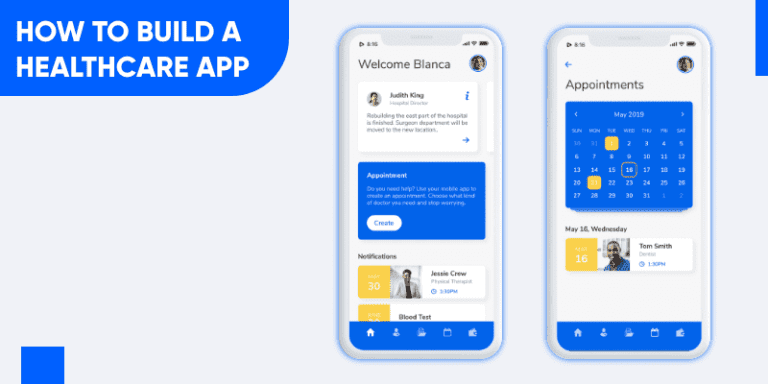
Patient engagement and portal apps let people view records, book appointments, receive reminders, refill prescriptions, and message their care team. These usually integrate with an electronic health record (EHR) system, which is the main cost driver.
Remote patient monitoring (RPM) apps collect data from wearables and medical devices — heart rate, glucose, blood pressure — and surface it to clinicians. Device connectivity and reliable data pipelines are the technical challenge here.
Clinical and provider workflow apps support doctors and nurses with charting, care coordination, and decision support. These live inside a hospital’s systems and demand deep integration and rigorous access control.
Wellness, fitness, and mental-health apps sit at the lighter end. Many avoid handling formal protected health information, which lowers the compliance burden and the cost — though the moment they touch clinical data, the rules change.
Most successful products start narrow: one clear problem for one clear user, built as a well-scoped mobile app, then expanded once real usage proves the concept.
Hospital-facing products are a distinct sub-category with their own workflows, which we cover in our guide to hospital mobile app development.
How much does it cost to build a healthcare app?
Healthcare app cost scales with three things: features, integrations, and the depth of regulatory compliance. The tiers below show the relative investment level for compliant mobile healthcare builds, not fixed EchoInnovate IT prices — we provide a transparent quote after a short scoping call, because compliance scope and EHR integration move the number significantly.
| Tier | Investment level | What it includes | Timeline |
|---|---|---|---|
| MVP | Entry-level | Appointment booking, secure messaging, patient profiles, HIPAA-ready foundation, one platform (iOS or Android) | 3–4 months |
| Growth | Mid-range | Video visits, payments, reminders, EHR integration, both platforms, analytics dashboard | 5–8 months |
| Scale | Enterprise-scale | Multi-role platform, device/wearable integration, full FHIR interoperability, advanced security, audit tooling | 9–14 months |
Two factors push a project up the tiers fastest: integration with clinical systems (an EHR/EMR connection alone can add substantially to the budget), and real-time features like video, which demand more infrastructure and testing. For broader context on app economics, see our mobile app development cost guide and our detailed healthcare app development cost breakdown.
Must-have features
The right feature set depends on your app type, but a core group appears in almost every patient-facing healthcare product. Build these well before adding anything else.
Secure user onboarding and identity. Verified sign-up, strong authentication (including biometric and multi-factor options), and clear consent capture. In healthcare, proving who a user is and what they agreed to is a compliance requirement, not a nicety.
Patient profiles and health records. Structured storage of demographics, history, medications, and documents, with encryption at rest and in transit. This is the data model everything else depends on.
Appointment scheduling. Real-time availability, booking, rescheduling, and automated reminders that reduce no-shows. One of the highest-value features for both patients and providers.
Secure messaging. HIPAA-compliant, in-app communication between patients and care teams, with attachments and read receipts. Replaces the insecure email and text most clinics still rely on.
Telemedicine / video visits. Reliable, encrypted video with waiting-room flow, screen sharing, and session notes. Technically demanding but increasingly expected.
Notifications and reminders. Medication reminders, appointment alerts, and care-plan nudges. Push notifications drive the engagement that makes a health app clinically useful.
Payments and insurance. Copays, self-pay, and where relevant, insurance eligibility checks and claims data. Payment handling adds its own compliance considerations.
Admin and provider dashboard. A web-based console for staff to manage patients, appointments, and content, with role-based permissions. The app is only half the product; staff tooling is the other half.
Features usually added in later phases: wearable and device integration, AI-assisted triage or summarization, multi-language support, and analytics for population health. Each is valuable, and each is easier to justify once the core drives real adoption.
HIPAA, compliance, and security
Compliance is the defining difference between a healthcare app and an ordinary one. It is not a feature you bolt on at the end; it is an architectural decision that runs through the entire build. Getting it wrong is expensive both in fines and in the rework required to fix a non-compliant foundation.
HIPAA (United States). If your app creates, stores, or transmits protected health information, it must meet HIPAA’s privacy and security rules. In practice that means encryption in transit and at rest, strict access controls, comprehensive audit logging of who viewed or changed what, automatic session timeouts, and signed Business Associate Agreements (BAAs) with every vendor that touches the data — including your cloud host and any third-party service.
GDPR and regional laws. If you serve users in Europe, GDPR adds consent, data-portability, and right-to-erasure obligations. Other regions have their own regimes, and a serious build accounts for the markets you will actually operate in.
HL7 FHIR interoperability. FHIR is the modern standard for exchanging clinical data. Building on FHIR from the start makes EHR integration and future data sharing far smoother than a proprietary model that you later have to retrofit.
Security engineering. Beyond regulation, healthcare apps are high-value targets. That means secure coding practices, penetration testing, role-based access at every layer, encrypted backups, and an incident-response plan. Security work is a real line item in the budget, and skipping it is the most expensive shortcut you can take.
The practical implication for cost: a HIPAA-ready foundation adds meaningful engineering time even to an MVP, which is why healthcare MVPs start higher than consumer app MVPs. It is money that protects the entire investment. Our team scopes the exact compliance surface during discovery so the quote reflects real requirements rather than guesswork.
Tech stack and integrations
The stack for a healthcare app looks much like any modern mobile stack, with extra weight on security and interoperability. On the client, teams choose between native (Swift for iOS, Kotlin for Android) when device features and performance are critical, or a cross-platform framework (Flutter or React Native) when a single codebase across both platforms keeps cost down. For most patient-facing apps, cross-platform is the pragmatic default; for deep device or medical-hardware integration, native often wins.
The backend typically runs on Node.js, Python, or Java, with PostgreSQL for structured clinical data and encrypted object storage for documents and images. Hosting sits on a HIPAA-eligible cloud — AWS, Google Cloud, or Azure all offer compliant configurations and will sign a BAA. Real-time video usually relies on a specialized, compliant provider rather than being built from scratch.
The integrations that most affect cost and complexity are:
- EHR / EMR systems (Epic, Cerner, and others) via HL7 or FHIR APIs — usually the single largest integration effort
- Lab and pharmacy systems for results and e-prescribing
- Payment and insurance for copays, billing, and eligibility checks
- Wearables and medical devices for remote monitoring data
- Identity and consent services for verified onboarding
Each integration adds development, testing, and ongoing maintenance, and clinical-system integrations in particular require careful handling of edge cases and data mapping. A disciplined approach builds the one or two integrations that deliver the most clinical value first, exposes a clean FHIR-aligned internal API, and adds the rest as the product grows. Adding specialist integration engineers through IT staff augmentation is a common way to handle a heavy EHR phase without permanent headcount.
How long it takes
A healthcare app timeline runs from about three months for a compliant MVP to a year or more for a fully integrated platform. The phases mirror any serious mobile build, with compliance and integration adding weight in the middle.
Discovery and compliance scoping (2–4 weeks). Mapping user roles, clinical workflows, the exact protected-health-information surface, and which regulations apply. This phase defines the compliance architecture and produces the fixed quote. Skipping it is the most common cause of blown budgets.
Design and clinical UX (3–5 weeks). Interface design that works for patients and clinicians, with accessibility built in. Healthcare users span every age and ability, so usability testing pays off.
Core build (8–16 weeks). Authentication, profiles, scheduling, messaging, and the HIPAA-ready foundation. An MVP often launches at the end of this phase with a pilot group of real users.
Integrations and real-time features (6–16 weeks). EHR connectivity, video visits, payments, and device data. This is where timelines stretch most, because clinical-system integration involves external teams and rigorous testing.
Security testing and launch (3–6 weeks). Penetration testing, compliance review, app-store submission (which has its own healthcare requirements), and staged rollout. Store review for health apps can take longer than for consumer apps, so plan for it.
As with any build, scope discipline is the biggest lever. A focused, compliant MVP that solves one real clinical problem, launched to a pilot and then expanded, consistently beats a big-bang release on both cost and risk. Building with a dedicated offshore team can compress the calendar — our guide on how to hire offshore developers explains the model.
What drives the cost
Five drivers explain most of the difference between an entry-level healthcare MVP and an enterprise-scale platform. Control these and you control the budget.
1. EHR/EMR integration. Connecting to clinical systems like Epic or Cerner is usually the single largest cost. It involves standards work (HL7/FHIR), external approval processes, data mapping, and heavy testing. A standalone app that does not touch an EHR is dramatically cheaper.
2. Compliance depth. A wellness app that avoids protected health information is inexpensive to certify. A clinical app handling full patient records needs encryption, audit logging, access controls, BAAs, and security testing throughout — real engineering time that protects the whole investment.
3. Real-time and video features. Encrypted video visits, live monitoring, and instant messaging need more infrastructure, more testing, and often a paid compliant third-party service. They raise both build and running costs.
4. Platforms and device support. One platform is cheaper than two. Adding wearable and medical-device connectivity multiplies testing across hardware you do not control.
5. Roles and admin tooling. A single patient-facing app is simpler than a platform serving patients, clinicians, and administrators, each with different permissions and dashboards. Every role adds screens, logic, and test surface.
The practical takeaway: decide early whether you truly need clinical-system integration in version one, or whether a standalone MVP can prove the concept first. That single decision often halves the initial budget. Our mobile app development team scopes exactly this trade-off before any code is written.
How EchoInnovate IT builds your healthcare app
EchoInnovate IT is an India-based custom and white-label software development company with 12 years of experience and a team of 50+ employees. We have delivered 500+ products, most under our clients’ own brands, and hold a 5.0 rating across 6 verified reviews on Clutch. Our mobile work spans consumer, enterprise, and regulated healthcare apps, so compliance-first delivery is a familiar discipline rather than a first-time experiment.
For a healthcare build we start with a discovery and compliance-scoping session that maps your user roles, clinical workflows, the exact protected-health-information surface, and the regulations that apply to your markets. From that we produce a fixed, transparent quote — no open-ended meter on a project where scope must be nailed down. We then assign a dedicated team that builds a HIPAA-ready MVP, launches it to a pilot group, and expands into integrations and real-time features from real feedback.
Because we deliver full mobile app development and offer IT staff augmentation, you can engage us for a complete build or add specialist engineers — EHR integration, security, or clinical UX — to your existing team for a single phase. You own the code, the data model, and the compliance documentation throughout. When you are ready to add AI-assisted triage or summarization, our AI development services team can layer it in safely.