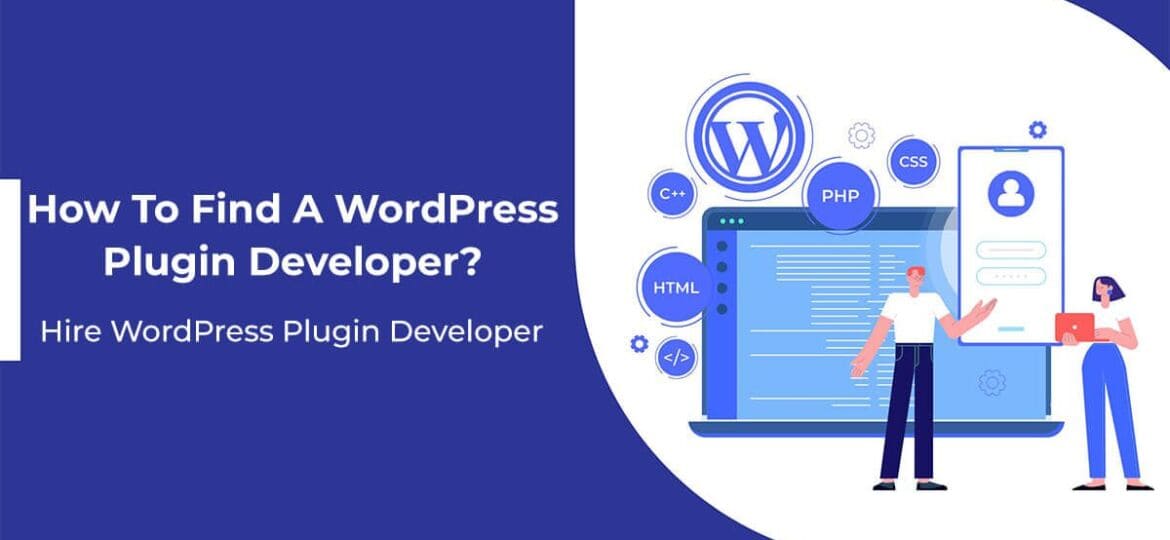
If you want to hire a WordPress plugin developer in 2026, expect the most affordable rates offshore, mid-range rates in Eastern Europe and Latin America, and premium rates in North America and Western Europe. A complete custom WordPress plugin development project can range from a simple utility plugin to a complex, integration-heavy product. The exact number depends on scope, the number of third-party integrations, security and compliance requirements, and where your developer is based. This guide walks you through when you actually need a custom plugin instead of an off-the-shelf one, the specific skills to test before you sign anything, where to find a WordPress plugin developer (marketplaces versus agencies), realistic 2026 cost ranges in two reference tables, the red flags that predict a failed engagement, and how to de-risk the work with clear code ownership, security review, and a maintenance plan. If you are scoping a broader build, our WordPress and web development services page covers how plugin work fits into a full site. EchoInnovate IT has shipped 500+ products across 12 years, and much of that is custom WordPress and plugin engineering delivered under our clients’ own brands.
In this article
- When You Actually Need a Custom WordPress Plugin
- Skills to Test Before You Hire a WordPress Plugin Developer
- Where to Find a WordPress Plugin Developer: Marketplaces vs Agencies
- WordPress Plugin Developer Rates by Region in 2026
- Custom WordPress Plugin Development Cost by Complexity
- Red Flags to Watch For When Hiring
- How to De-Risk the Engagement: Ownership, Security, Maintenance
- How EchoInnovate IT Builds WordPress Plugins
- Frequently Asked Questions
When You Actually Need a Custom WordPress Plugin
Before you hire a WordPress plugin developer, confirm that a custom build is the right call. The WordPress plugin directory holds tens of thousands of free and commercial plugins, and for common needs like contact forms, SEO, caching, or basic e-commerce, an existing plugin is usually faster and cheaper than custom work. You need custom WordPress plugin development when off-the-shelf options force you into compromises that hurt the business: a workflow no plugin models correctly, an integration with an internal or niche third-party system that has no connector, performance problems caused by bloated multipurpose plugins, or licensing costs that scale badly as you grow. Custom is also the right move when you are building a product to sell, when you need to own the roadmap rather than wait on a vendor, or when security and data-handling rules mean you cannot trust an unaudited third-party plugin with sensitive records. A good developer will push back here. If someone agrees to build custom before understanding whether an inexpensive off-the-shelf plugin already solves your problem, treat that as a warning sign. Start by writing down the exact outcome you need, the systems it must talk to, and the constraints that existing plugins violate. That short brief becomes the scoping document every serious candidate will ask for, and it is the difference between a fixed, predictable quote and an open-ended hourly engagement that drifts. If your need spans several custom features, a dedicated build through a software development company is often cleaner than stitching together plugins.
Skills to Test Before You Hire a WordPress Plugin Developer
A WordPress plugin developer is a PHP engineer first, and a WordPress specialist second. Test both. On the language side, look for modern PHP: namespaces, autoloading via Composer, object-oriented structure, dependency management, and comfort with PHP 8.x features. WordPress-specific knowledge is where generalist PHP developers fall short. Ask candidates to explain the hooks system in their own words. They should distinguish actions from filters, know when a hook fires in the request lifecycle, and be able to name the hooks they would use to enqueue scripts, register a custom post type, or modify a query. Probe their command of the WordPress APIs that plugins lean on: the Settings API, the REST API, the Options and Transients APIs for storage and caching, WP_Query for data access, and the database layer through $wpdb with prepared statements. Security is non-negotiable and easy to test. A qualified developer will talk unprompted about sanitizing input, escaping output, nonce verification on forms and AJAX, capability checks before privileged actions, and using $wpdb->prepare() to prevent SQL injection. If security only comes up because you raised it, keep looking. Finally, check for coding standards. Serious plugin developers follow the WordPress Coding Standards, run PHP_CodeSniffer, write code that survives a theme or WordPress core update, and avoid modifying core files. A quick practical exercise, such as asking them to review a small snippet and flag the missing escaping and nonce check, tells you more than an hour of resume review. If you need to embed one of these engineers into your own team rather than outsource a project, our IT staff augmentation services place vetted WordPress and PHP developers directly.
Where to Find a WordPress Plugin Developer: Marketplaces vs Agencies
There are three main places to find a WordPress plugin developer, and each fits a different situation. Freelance marketplaces such as Upwork, Toptal, Codeable, and Fiverr give you the widest pool and the fastest start. Codeable is WordPress-specific and vets its developers, which raises quality and price; Upwork and Fiverr span the full quality range, so you carry the vetting burden yourself. Marketplaces work well for small, well-defined plugins and quick fixes, but you own the risk if the freelancer disappears mid-project or lacks backup when they get sick. The second option is a dedicated agency or development shop. Agencies cost more per hour than an average freelancer, but you get a team rather than a single point of failure: a project manager, code review, QA, and continuity if one engineer rolls off. For anything mission-critical, product-grade, or spanning multiple features, an agency is usually the lower-risk choice despite the higher sticker price. The third option is an offshore development center or dedicated remote team, which blends agency structure with offshore rates. This model suits companies that need ongoing plugin and site work rather than a one-off build, and it scales up and down without repeated hiring cycles. Our guide to hiring offshore developers breaks down how to vet remote teams, and an offshore development center engagement can give you a standing WordPress team without the overhead of recruiting each role in-house. Match the channel to the job: marketplace for small and defined, agency for critical and complex, offshore team for ongoing and cost-sensitive.
WordPress Plugin Developer Rates by Region in 2026
WordPress plugin developer cost varies more by geography than by almost any other factor, so knowing the regional bands helps you read a quote and spot both overpricing and suspiciously cheap work. The table below shows typical 2026 hourly ranges for experienced WordPress plugin developers. These are market ranges gathered from freelance platforms and agency published rates; they are not EchoInnovate IT’s prices. We give you a transparent quote after a short scoping call rather than a blended hourly figure, because a fixed scope almost always costs less than open-ended hours. Read the ranges as guidance for budgeting, not as a promise from any single vendor. A developer at the low end of a band is not automatically worse, and one at the high end is not automatically better; rate reflects local cost of living, demand, and positioning as much as skill. What matters is the total cost to a working, secure, maintainable plugin, which depends on how many hours the work takes and how much rework you pay for later. That is why a slightly higher rate with strong standards and testing often beats a cheap rate that ships buggy code you pay someone else to fix.
For a deeper regional breakdown across roles, see our reference on offshore software development rates by country.
| Region | Relative rate level | Notes |
|---|---|---|
| India & South Asia | Most affordable | Largest offshore talent pool; strong agencies and dedicated teams |
| Southeast Asia | Most affordable | Competitive rates; verify English and standards |
| Eastern Europe | Mid-range | Strong engineering reputation; overlap with EU hours |
| Latin America | Mid-range | Time-zone alignment with North America |
| North America & Western Europe | Premium | Highest rates; local time zone and language |
Custom WordPress Plugin Development Cost by Complexity
Rate tells you the price per hour; complexity tells you how many hours the plugin takes. To budget custom WordPress plugin development, estimate the total project cost by matching your requirements to a complexity tier. A simple plugin does one thing: a custom shortcode, a small admin settings page, a lightweight widget, or a single-purpose utility. A mid-complexity plugin introduces a custom post type or two, a settings dashboard, one external API integration, and some front-end interaction. A complex plugin behaves like a product: multiple integrations, a custom database schema, role-based permissions, background jobs, a REST API, payment or subscription logic, and ongoing update handling. The table below shows realistic 2026 total-cost ranges by tier. These are blended market ranges to help you plan, not EchoInnovate IT pricing; we quote transparently after a short scoping call because the same feature list can vary widely once real requirements surface.
Two costs hide behind these numbers. First, discovery and specification: skipping it is the most common reason projects blow past budget. Second, post-launch maintenance, which we cover below. If your plugin is really the front end of a larger application, our breakdown of web app development cost will help you frame the full scope rather than just the plugin slice.
| Complexity | Investment level | What It Includes |
|---|---|---|
| Simple | Entry-level | Single-purpose utility, shortcode, or basic settings page |
| Mid-complexity | Mid-range | Custom post types, admin dashboard, one API integration, front-end UI |
| Complex | Enterprise-scale | Multiple integrations, custom schema, permissions, payments, REST API |
Red Flags to Watch For When Hiring
Some warning signs reliably predict a painful engagement, and spotting them early saves both money and months. The first red flag is a fixed quote given without any questions. A developer who names a price before understanding your integrations, data, and edge cases is guessing, and that guess becomes a change-order fight later. The second is silence on security. If sanitization, escaping, nonces, and capability checks never come up unless you raise them, the code will likely ship with vulnerabilities. The third is no portfolio of shipped WordPress work or no willingness to show real code. Ask to see a plugin they built and walk through a decision they made; vague answers signal borrowed or purchased work. The fourth is a refusal to discuss code ownership or an insistence on keeping the source themselves so you must return for every change; that is a lock-in trap, not a partnership. The fifth is disregard for coding standards and updates. A developer who edits core files, hardcodes credentials, or cannot explain how the plugin survives a WordPress update is building you future emergencies. The sixth is poor communication during sales. If replies are slow, vague, or evasive before you have paid anything, they will not improve after. The seventh is pressure to skip a written specification or contract. The eighth is an offer priced far below every regional band in the tables above, which usually means an inexperienced developer, a bait-and-switch, or code you will pay someone else to rewrite. None of these alone is disqualifying in every case, but two or more together is a clear signal to walk away and keep interviewing candidates.
How to De-Risk the Engagement: Ownership, Security, Maintenance
Once you choose a developer, three contractual and technical safeguards protect your investment. Start with code ownership and intellectual property. Your contract should state in plain language that you own all source code, assets, and IP on final payment, and that the developer transfers rights and hands over the complete repository. Insist on version control in a repository you control, such as a private GitHub or GitLab organization, so the code lives with you rather than on someone’s laptop. This single clause prevents the most expensive form of lock-in. Next, build security review into the process instead of bolting it on. Require the developer to follow WordPress security practices, and budget for an independent code review or security audit on anything that touches payments, personal data, or user authentication. Ask for evidence that input is sanitized, output escaped, forms and AJAX protected with nonces, and privileged actions gated by capability checks. A short audit is cheap compared to a breach or a compromised site. Finally, plan for maintenance before launch, not after. WordPress core, PHP, and dependencies update constantly, and a plugin that works today can break within months without upkeep. Agree on a maintenance arrangement covering compatibility updates, security patches, and bug fixes, and document how updates are tested and deployed. Get complete handover documentation: setup steps, architecture notes, and how to run and extend the code. A standing team through an offshore development center makes ongoing maintenance predictable, and if your plugin includes a React-based admin interface, our React developers can own that layer alongside the PHP work.
How EchoInnovate IT Builds WordPress Plugins
EchoInnovate IT builds custom WordPress plugins the way we build every product: scope first, ship secure, hand over clean. With 12 years of delivery, 50+ employees, and 500+ products shipped, much of it engineered under our clients’ own brands, we treat plugin work as real software engineering rather than quick configuration. Every engagement begins with a short scoping call and a written specification, so you get a transparent, fixed quote tied to a defined scope instead of an open-ended hourly meter. We write to the WordPress Coding Standards, use modern PHP with Composer and namespaced, object-oriented structure, and build against the WordPress hooks and REST APIs rather than editing core. Security is part of the definition of done: input sanitization, output escaping, nonce verification, capability checks, and prepared statements are reviewed before code ships, not patched afterward. You own the code. We work in a repository you control and transfer all source and IP on completion, with handover documentation that lets any competent developer pick up the work. Because we run structured teams and dedicated offshore engagements, we offer continuity for maintenance, compatibility updates, and future features without you re-hiring for each change. Our 5.0 rating across six verified Clutch reviews reflects that delivery discipline. Whether you need a single utility plugin, a product-grade plugin with integrations and payments, or a plugin as one piece of a larger build, our web development team can scope it, build it, and maintain it. Bring us the outcome you need and the systems it must connect to, and we will turn that into a clear plan and a fixed quote.

Start with a 2-week pilot sprint
Start with a $1,500 fixed-price 2-week pilot sprint: we scope your plugin, build a working slice, and hand over clean, owned code, so you can judge our engineering before committing to the full project. It is the lowest-risk way to hire a WordPress plugin developer and see standards, security, and communication firsthand. Explore our WordPress and web development services, then book a short scoping call and we will turn your requirements into a clear plan and a transparent quote.
See the service →Book a scoping call →Frequently Asked Questions
How much does it cost to hire a WordPress plugin developer?
In 2026, hourly rates for an experienced WordPress plugin developer are most affordable offshore (India and South Asia), mid-range in Latin America and Eastern Europe, and premium in North America and Western Europe. On a project basis, a simple custom plugin sits at the entry level, a mid-complexity plugin in the mid-range, and a complex product-grade plugin at the enterprise scale. The final number depends on scope, integrations, and security requirements. These are complexity tiers; EchoInnovate IT gives you a transparent quote after a short scoping call.
Should I hire a freelancer or an agency for custom WordPress plugin development?
Hire a freelancer through a marketplace like Codeable or Upwork for small, well-defined plugins and quick fixes where the risk of a single point of failure is acceptable. Choose an agency or dedicated development team for mission-critical, product-grade, or multi-feature plugins, because you get code review, QA, project management, and continuity if one engineer becomes unavailable. An offshore development center blends agency structure with lower rates and suits ongoing plugin and site work rather than a one-off build.
What skills should a WordPress plugin developer have?
A qualified WordPress plugin developer needs strong modern PHP (object-oriented code, namespaces, Composer), deep knowledge of the WordPress hooks system (actions and filters), and command of core APIs including the Settings API, REST API, Options and Transients APIs, WP_Query, and $wpdb with prepared statements. Security skills are essential: input sanitization, output escaping, nonce verification, and capability checks. They should also follow the WordPress Coding Standards and write code that survives core and theme updates without modifying core files.
How long does it take to build a custom WordPress plugin?
A simple single-purpose plugin often takes one to three weeks. A mid-complexity plugin with custom post types, an admin dashboard, and one API integration typically takes four to eight weeks. A complex, product-grade plugin with multiple integrations, a custom database schema, permissions, and payment logic can take three months or more. Timelines depend heavily on how well the requirements are specified up front, which is why a discovery and scoping phase shortens the overall project rather than lengthening it.
Will I own the code for my custom WordPress plugin?
You should. Insist on a contract that assigns you full ownership of all source code, assets, and intellectual property on final payment, and require the work to live in a version-control repository you control. Avoid any developer who wants to retain the source so you must return to them for every change, since that creates lock-in. At EchoInnovate IT, you own the code and IP, and we provide complete handover documentation so any competent developer can maintain and extend it.
Written by Kush P, Chief Technology Officer at EchoInnovate IT. Kush has led custom software and dedicated-team builds for 12 years, with 500+ products shipped — most of them under clients’ own brands.