An on-demand car wash app lets customers book a mobile wash straight to their driveway, office car park, or curbside, then a nearby washer accepts the job, arrives, and cleans the vehicle on the spot. It works the same way an app like Washe or MobileWash does: the customer picks a service and a time, the platform dispatches a washer, and payment happens in the app once the wash is done. For an operator, it turns a location-bound car wash into a service that goes wherever the customer parks.
The market opportunity is real. Vehicle owners are short on time, water-saving waterless washes travel well, and the same on-demand model that reshaped rides and food delivery fits car care cleanly. This guide is written for the founder or operator planning the business, not only the engineer building it. You will get the three-app architecture these platforms need, the must-have and advanced features, the tech stack, an honest view of what drives the cost, and how a partner like EchoInnovate builds them end to end. We cover the same mechanics in our on-demand app development and custom mobile app development work. We scope your project and share a transparent, fixed quote after a short call.
Key takeaways
- An app like Washe is really three connected apps: a customer app, a washer or detailer app, and an admin panel, all sharing one backend that matches demand to supply.
- The defining features are on-demand and scheduled booking, real-time GPS dispatch and tracking, in-app payments, ratings, and push notifications.
- Cost is driven by scope, not by a fixed menu. An entry-level MVP, a mid-range platform, and an enterprise-scale build differ in features, platforms, and integrations.
- Launch a lean MVP in one city or service area first, prove the unit economics, then expand.
- We do not publish set prices because scope decides everything. We share a transparent, fixed quote after a short scoping call.
What is an app like Washe and how it works
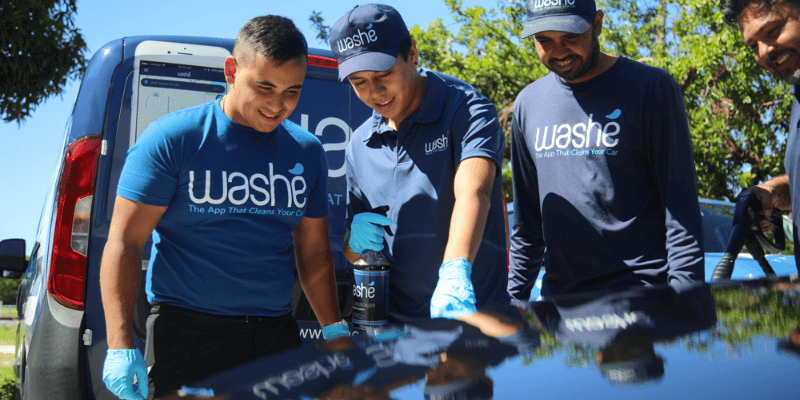
Washe pioneered the on-demand car wash: instead of driving to a wash bay and waiting, a customer opens the app, drops a pin on their car, chooses a package, and a mobile washer comes to them. MobileWash and similar apps follow the same pattern. The whole model rests on a simple promise, which is that the wash comes to the car rather than the car coming to the wash.
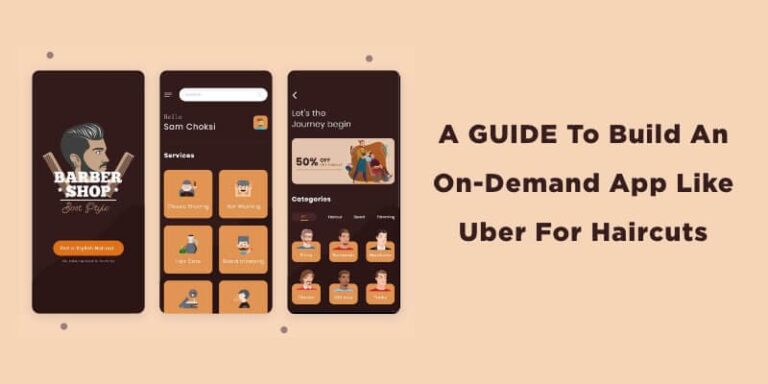
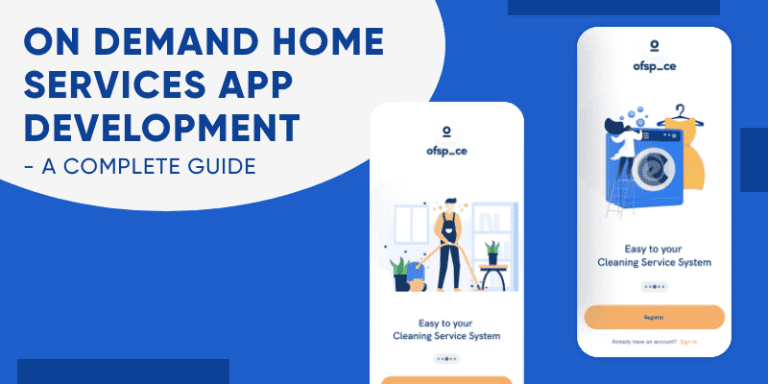
Here is how a typical job flows. The customer selects a service, an exterior wash, an interior detail, or a full package, sets the location and a time, and confirms. The platform finds an available washer nearby and offers them the job. The washer accepts, navigates to the vehicle, completes the wash, and marks it done. Payment is captured in the app, the customer rates the washer, and your platform keeps its commission on the transaction. The same on-demand pattern powers an on-demand app like Uber for haircuts and an on-demand home services app, so the engineering is well understood.
The three-app model
Founders often budget for one app and are surprised to learn a car wash marketplace needs three, plus a backend that ties them together. Each has a distinct job.
Customer app. This is the front door for vehicle owners. Core features include:
- Sign-up, profile, and saved vehicles with make, model, and photos
- Service selection with packages and add-ons
- On-demand and scheduled booking with a live map
- Real-time tracking of the assigned washer
- In-app payment, tips, receipts, and booking history
- Ratings, reviews, and support chat
Washer or detailer app. This is the tool your supply side works from. It handles:
- Job requests with accept or decline and route navigation
- Availability toggle and shift management
- A step-by-step checklist for each service and before-and-after photos
- Earnings, payout history, and performance ratings
Admin panel. This is your control room, a web dashboard where you run the business:
- Manage customers, washers, services, and pricing
- Monitor live jobs, assign or reassign, and resolve disputes
- Set commission, promotions, and service areas
- Reporting on supply, demand, revenue, and unit economics
Must-have features
These features define a working on-demand car wash app. Budget for them upfront, because cutting the wrong one undermines the whole model.
| Feature | What it does |
|---|---|
| Booking and service selection | Lets customers pick a wash package, choose on-demand or scheduled, and confirm in a few taps. |
| Real-time GPS dispatch and tracking | Matches each booking to the nearest available washer and shows a live map as they head to the car. |
| Scheduling | Supports appointments booked for later, with calendars, reminders, and easy rescheduling for recurring washes. |
| In-app payments | Captures payment at booking or on completion, handles tips, and splits each transaction between washer and platform. |
| Ratings and reviews | Two-way ratings build trust and let you keep quality high across the washer network. |
| Push notifications | Keeps both sides informed on job requests, confirmations, washer arrival, and completion. |
| Service packages and subscriptions | Offers tiered packages and recurring plans so customers can set up weekly or monthly washes. |
If you are weighing this against nearby models, our handyman app development guide and our salon booking app guide share the same on-demand mechanics.
Advanced features
Once the core works, these features help you defend margins and grow. Add them when the model is proven, not on day one.
Loyalty and referrals. Points, credits, and referral rewards keep customers booking and bring both sides of the marketplace on board more cheaply.
Surge pricing. Dynamic rates at peak demand keep enough washers online when everyone wants a wash at once, like a sunny weekend.
Multi-vehicle management. Households and small businesses save several cars to one account and book washes for all of them in one flow.
Fleet and B2B accounts. Dealerships, rental companies, and corporate fleets get bulk booking, scheduled recurring washes, and consolidated invoicing. This is often the highest-value segment.
AI scheduling and dispatch. Smarter matching predicts demand, groups nearby jobs to cut travel time, and routes washers efficiently, which lifts the number of washes each washer completes per shift.
Tech stack and integrations
An on-demand car wash app runs on a mainstream stack, with extra care on the real-time layer. A typical setup looks like this:
- Mobile apps (frontend): Flutter or React Native for the customer and washer apps across Android and iOS from one codebase, which lowers cost when you need four app builds in total. Native Kotlin and Swift are options where performance demands it.
- Backend: Node.js is a common choice for the matching, dispatch, and live-update engine, often with WebSockets for location and status updates.
- Admin panel: A web dashboard in React or Vue, sharing the same API and database as the apps.
- Database and hosting: PostgreSQL or MySQL plus a fast store for live location data, on a cloud platform like AWS or Google Cloud with monitoring and autoscaling for demand spikes.
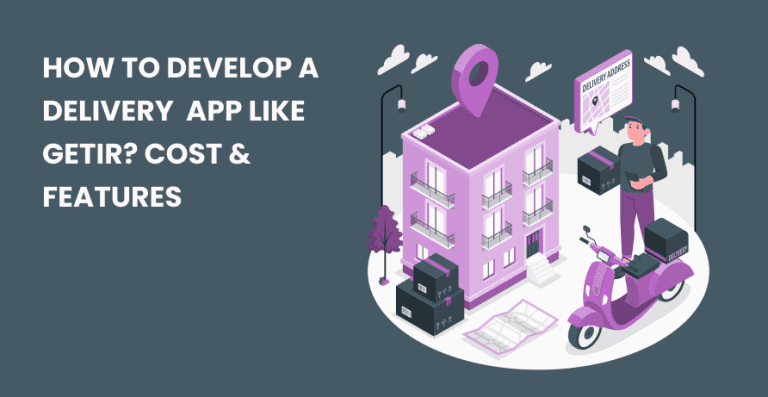
Integrations carry much of the functionality. The essential ones are maps and navigation (Google Maps or Mapbox for matching, routing, and tracking), a payment provider that supports marketplace payouts and commission splits (such as Stripe Connect), and push and SMS for confirmations. The same integration pattern shows up in an on-demand delivery app, so these building blocks are well proven.
How much does it cost to build a car wash app?
Cost depends on scope, so the honest way to think about it is by build tier rather than a single number. What moves you between tiers is how many features you ship, how many platforms and apps you need, and how many integrations and regions are in play. The table below sizes the tiers by scope and typical timeline, not by price.
| Build tier | Investment level | What it includes | Typical timeline |
|---|---|---|---|
| Entry-level MVP | Entry-level | One platform, core booking, GPS dispatch, tracking, and payments in a single service area | 3–5 months |
| Mid-range platform | Mid-range | Both platforms, scheduling, ratings, promotions, subscriptions, and a richer admin panel | 5–8 months |
| Enterprise-scale build | Enterprise-scale | Multi-city, fleet and B2B accounts, surge, loyalty, analytics, and AI dispatch | 8–12 months+ |
An entry-level MVP proves the core loop in one area. A mid-range platform adds the retention and scheduling features that make the business sticky. An enterprise-scale build supports many cities, fleet clients, and smart dispatch. For adjacent numbers and how project phases add up, see our mobile app development cost guide. We share a transparent, fixed quote after a short scoping call, because these variables are specific to you.
What drives the cost up or down
If two quotes for the same app look far apart, the difference is almost always in the scope below, not the hourly rate alone.
Real-time complexity. Live matching, GPS tracking, and instant notifications need more careful architecture than a simple booking form, and that engineering is the single biggest driver.
Number of apps and platforms. A customer app, a washer app, and an admin panel across both Android and iOS is a large surface area. Cross-platform frameworks keep this in check.
Feature depth. Subscriptions, surge, loyalty, and fleet accounts each add design, build, and testing work.
Integrations. Marketplace payments with commission splits, maps, and identity checks for washers all add scope.
Design polish and regions. Custom UX, multiple languages, and multi-city support raise the effort. A dedicated team model, whether in-house or through partners, also shapes the total.
How to monetize a car wash app
A car wash app can earn from several streams at once, and most successful platforms combine a few.
Commission per wash. The most common model. The platform automatically takes a percentage of every booking and pays the rest to the washer. Your payment system must support marketplace payouts and commission splits from day one.
Subscriptions. Recurring plans, say a weekly or monthly wash, give customers convenience and give you predictable revenue.
Surge and premium pricing. Higher rates at peak demand keep supply online and lift revenue on busy days.
Partner and placement fees. Featured placement for top washers, booking fees, and partnerships with dealerships, fleets, and detailing brands add margin without extra washes.
How EchoInnovate builds it
We build on-demand car wash platforms end to end, working white-label so the app carries your brand. Our process is deliberately simple and low-risk.
- Discovery. We scope your service area, features, and unit economics, then agree on the MVP.
- UX and design. We design the customer, washer, and admin flows around the core booking-and-dispatch loop.
- Build. We develop the real-time backend, both apps, and the admin panel, with the payment and maps integrations wired in.
- QA. We test on real devices across the full job flow, from booking to payout.
- Launch. We publish to the App Store and Google Play and help you seed both sides of the marketplace in your first city.
- Support. We handle maintenance, monitoring, and the next wave of features as you grow.
Why work with us: 12+ years building custom and white-label software, 500+ products shipped for founders and operators, and a 5.0 rating on Clutch. We have shipped on-demand marketplaces across rides, home services, and beauty, so the car wash model sits squarely in what we already do.