Key takeaways
- Cost varies widely in 2026. It depends on compliance depth and whether you run one store or a multi-dispensary marketplace.
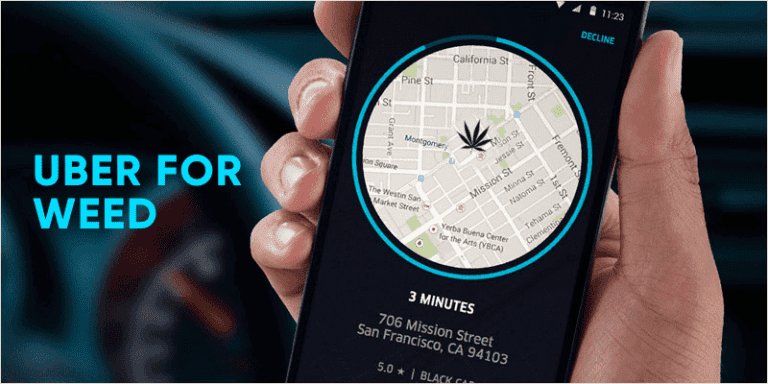
- The Uber-style angle is on-demand dispatch and logistics, matching orders to nearby drivers and tracking delivery live, not just an ordering catalog.
- Compliance is non-negotiable. Age and ID verification, purchase limits, geofencing, and compliant payments shape the whole build.
- An MVP in one market can ship in 4–6 months. A full multi-dispensary platform with inventory and seed-to-sale sync runs 7–10 months.
- A 2-week fixed-price pilot sprint scopes the marketplace and returns a transparent quote before you commit budget.
In this article
How much does it cost to build an Uber for weed app?
What actually drives the cost up
It helps to read these ranges as complexity, not quality. The parts that push a cannabis marketplace toward the top of its tier are almost always compliance-driven. Every additional jurisdiction can bring its own verification, purchase-limit, tax, and reporting rules, and each one has to be built and tested rather than assumed. Remember, the visible ordering experience is the cheaper half of the project. The regulatory plumbing, the compliant payment flows, and the real-time dispatch are where the budget goes. A frequent and expensive mistake is to price the app like a food-delivery clone. Teams then discover that payments, age verification, and seed-to-sale reporting each need dedicated work. So scope the compliance surface as carefully as the customer-facing screens. That is what keeps the build on budget and, more importantly, keeps the launched product legal in every market it serves.| App tier | What you get | Investment level |
|---|---|---|
| MVP / one market | Customer + driver apps, catalog, ordering, age check, live tracking | Entry-level |
| Standard delivery marketplace | iOS + Android, dispatch, real-time tracking, compliant payments, ratings | Mid-range |
| Full multi-dispensary platform | Multi-vendor, inventory sync, seed-to-sale/METRC, admin + driver dashboards | Enterprise-scale |
Must-have features for an on-demand cannabis marketplace
The Uber-for-weed model is a three-sided system, customers, dispensaries, and drivers, and compliance runs through all of it.
Customer side. The essentials here are age and ID verification at sign-up and delivery, a searchable catalog with lab data and potency, and a cart and checkout that enforce legal purchase limits. Live order tracking and compliant payment options round it out.
Dispensary and vendor side. Each store needs menu and inventory management, order acceptance, and reporting that ties back to regulatory systems.
Driver side. This is where the Uber-style logic lives. It covers order assignment and dispatch, route navigation, delivery-time verification of the customer’s ID and age, proof of delivery, and cash or compliant payment handling.
Tie it all together with real-time dispatch and GPS tracking, geofencing that limits delivery to legal zones, ratings and support, and an admin dashboard for oversight and compliance reporting. In the end, the features that matter most are the ones that keep every order inside the law while still feeling as smooth as ordering a ride.
Balancing a smooth experience with hard compliance
The design challenge is holding two goals at once. The experience has to feel effortless, yet every step must enforce rules a food-delivery app never faces. So keep age and ID checks quick but genuine. Enforce purchase limits silently in the cart, rather than rejecting them at checkout. And let geofencing steer customers away from an address you cannot legally serve, before they waste time building a cart. Getting that balance right keeps conversion high without putting the operator at risk.
It also helps to decide early which features belong in the first release. Live tracking, age verification, compliant checkout, and driver dispatch are non-negotiable. Loyalty, reviews, and multi-dispensary browsing can follow once the core order-to-delivery loop is proven in one market. Above all, designing around compliance from the first screen is far cheaper than reworking a launched app to satisfy a regulator.
Tech stack and integrations
Because this is a real-time logistics product with hard compliance rules, the stack is chosen for reliability and auditability.
For the apps, we generally use Flutter or React Native for shared iOS and Android codebases, with a web dashboard in React for dispensaries and admins. The backend commonly runs on Node.js or Django, with PostgreSQL for orders and inventory and Redis for real-time dispatch state.
Live driver tracking and dispatch use the Google Maps Platform or Mapbox for routing, geocoding, and ETAs. On top of that, WebSockets stream location while geofencing enforces legal delivery zones.
The compliance-specific integrations are the ones you cannot skip. These include an age and ID verification service, a seed-to-sale / METRC or equivalent regulatory integration for inventory and reporting, and a compliant payments provider suited to the cannabis industry, since mainstream card processors often restrict it. Notifications, meanwhile, run through Firebase and Twilio, and everything sits behind role-based access and an audit log. If you already run engineering in-house, our IT staff augmentation model can add specialists to your team instead of standing up a new one.
How long does it take to build?
Timelines track scope and compliance. A single-market MVP — customer and driver apps, catalog, ordering, age verification, and live tracking — is realistic in 4 to 6 months. A standard delivery marketplace across iOS and Android then generally takes 6 to 8 months, once you add dispatch, real-time tracking, compliant payments, and ratings. A full multi-dispensary platform with inventory sync, seed-to-sale or METRC integration, and admin and driver dashboards runs 7 to 10 months or more. That is because regulatory integrations and testing add real time.
Those estimates assume a dedicated team in two-week sprints, with a usable build early. We front-load age verification, geofencing, and the dispatch loop, since a single compliance gap can block launch. Then we add multi-vendor inventory and reporting once the core order-to-delivery flow is solid. Above all, launching in one legal market first, and expanding jurisdiction by jurisdiction, is the most dependable path, because compliance rules differ by state and region.
What drives the cost up or down
A handful of decisions move the budget most. Compliance scope is the biggest lever. The number of jurisdictions you serve, seed-to-sale or METRC integration, and purchase-limit and reporting rules all add build and maintenance work, and they vary by market. Next, multi-vendor support — a marketplace of many dispensaries rather than one store — adds inventory sync, payouts, and onboarding. Real-time dispatch and tracking infrastructure adds backend complexity and hosting cost. And compliant payments can be more involved than a standard card integration.
You can also pull cost down. For example, launch in one legal market with a few dispensaries, start with manual dispatch before automating it, use a cross-platform framework to share code, and defer loyalty and promotions to a later release. In short, spend where compliance and trust are created, and economize elsewhere. Our on-demand app development practice scopes exactly this before the build begins.
How does an Uber for weed app make money?
An on-demand cannabis marketplace has several revenue streams, and most operators combine a few. The primary one is a commission on each order, charged to the dispensary as a percentage of the sale. A delivery fee paid by the customer covers the logistics, and it can be flat or distance-based. A subscription tier then builds loyalty and predictable revenue among regular buyers, through free or discounted delivery, priority slots, or member pricing.
On the vendor side, featured placement and in-app advertising let dispensaries and brands pay for visibility in the catalog. As your customer base grows, that becomes a meaningful stream. Some platforms also charge dispensaries a listing or SaaS fee to be on the marketplace and use its tools.
Which mix works depends on how many dispensaries you carry and how competitive delivery is in your markets. It also interacts with compliance, because discounts, promotions, and loyalty all have to respect purchase limits and local rules. So we help you choose a model that funds compliant operations rather than one that fights them, and we build the payment, payout, and promotion logic to support it. Ultimately, a durable marketplace is one where dispensaries, drivers, and customers all keep coming back, so pricing has to work for all three sides.
How EchoInnovate IT builds an Uber for weed app
EchoInnovate IT is an India-based custom and white-label software development company, with 12 years in the field, a team of 50+, and 500+ products shipped, many launched under our clients’ own brands. Across verified Clutch reviews, we hold a 5.0 rating. For an Uber for weed build, we start with compliance and dispatch, not the catalog. That means how age and ID are verified, how purchase limits and geofencing are enforced, how orders are matched to drivers, and how everything is logged for reporting.
A dedicated team of product, design, mobile, backend, and QA engineers then works in two-week sprints. It delivers a testable build early, and it integrates verification, payments, mapping, and regulatory systems as the order-to-delivery loop proves out. Because we work white-label, we build the customer, dispensary, driver, and admin experiences as one system and ship it under your brand. Whether you need a full product team or specialists added to your own, our software development and mobile app development services cover the whole build. The lowest-risk way to start is the fixed-price pilot sprint described below.