In this article
- What Drives Grocery Delivery App Development Cost
- Grocery Delivery App Development Cost by Feature Tier
- The Multi-App Architecture: Customer, Driver, Admin, and Store
- Third-Party Integrations That Shape the Budget
- Choosing a Tech Stack and How It Affects Cost
- Hidden and Ongoing Costs Most Estimates Miss
- How to Reduce Grocery Delivery App Development Cost
- How EchoInnovate IT Scopes and Prices Your Grocery App
- Frequently Asked Questions
What Drives Grocery Delivery App Development Cost
Before you look at any table, it helps to understand the four levers that decide where your project lands in that range. The first is scope: how many features you ship on day one. A catalog, cart, and checkout cost far less than the same app plus live order tracking, multi-vendor onboarding, and an AI recommendation engine. The second is the number of user-facing apps. Most grocery delivery products need a customer app, a driver app, and an admin dashboard, and some add a dedicated store or picker app. Each surface is a separate build with its own screens, logic, and testing.
The third lever is your mobile app development approach, native versus cross-platform, and whether you also need a customer-facing web ordering site built by a web development team. The fourth, and often the largest, is where and how you build. Engineering rates vary widely by region, and the same feature set can differ by a factor of three or four depending on whether you use a US in-house team, a domestic agency, or an offshore partner. Complexity multipliers layer on top: real-time logistics, surge pricing, refrigerated-inventory rules, and compliance for payments and data all add hours. When you request a quote, a serious software development company will price against these levers rather than quoting a single blended figure, because that is the only way the estimate survives contact with the actual product. Understanding them puts you in control of the budget instead of reacting to it.
Grocery Delivery App Development Cost by Feature Tier
The clearest way to budget a grocery delivery app is to group features into tiers and price each one. An MVP tier proves the core loop: browse, add to cart, pay, and receive an order. A growth tier adds the differentiators that retain users, such as real-time driver tracking and multi-vendor support. A scale tier adds intelligence and loyalty that lift order value over time. The table below shows the relative investment level for each tier as a standalone increment, blended across regions. These are qualitative tiers for planning; EchoInnovate IT gives a transparent quote after a short scoping call rather than a fixed number sight unseen.
| Feature Tier | What It Includes | Investment level |
|---|---|---|
| MVP | Product catalog, search, cart, checkout, payments, basic order status, single store or region | Entry-level |
| Growth | Real-time GPS order tracking, driver dispatch, delivery scheduling and time slots, multi-vendor onboarding, ratings and reviews | Mid-range |
| Scale | Loyalty and rewards, subscriptions, AI product recommendations, demand forecasting, advanced analytics, surge and dynamic pricing | Enterprise-scale |
Read the tiers as cumulative. Most teams launch at the MVP tier to validate demand, then reinvest revenue into the growth and scale features that data proves worthwhile. Sequencing this way keeps the initial grocery app development cost defensible and ties every later dollar to a signal you can measure. For a side-by-side look at how these ranges compare to general retail commerce, our ecommerce app development cost guide covers the same tiering method applied to broader storefronts, and it pairs well with the numbers above when you are weighing a grocery-only build against a wider marketplace.
The Multi-App Architecture: Customer, Driver, Admin, and Store
The single biggest surprise for first-time founders is that the cost to build a grocery delivery app covers several connected applications, not one. The customer app is what shoppers see, but it is often the smaller share of the total. The driver app handles route assignment, navigation, proof of delivery, and earnings. The admin panel is where operators manage catalog, inventory, orders, drivers, promotions, and reporting. A store or picker app, used by warehouse or shop staff to accept and assemble orders, is common once you move past a single location. Each surface needs its own design, development, and quality assurance, which is why grocery delivery app development cost scales with the number of panels you commit to.
The table below breaks the build down by app, with indicative shares of a mid-range project so you can see where money concentrates. Actual splits vary with your feature choices, but the shape holds across most grocery platforms we scope.
| App / Panel | Core Responsibilities | Relative build effort |
|---|---|---|
| Customer app (iOS + Android) | Browse, search, cart, checkout, tracking, reorders, support | High |
| Driver app | Order acceptance, navigation, status updates, proof of delivery, earnings | Moderate |
| Admin dashboard | Catalog, inventory, order and driver management, promotions, analytics | Moderate |
| Store / picker app | Order intake, picking lists, substitutions, stock updates | Low |
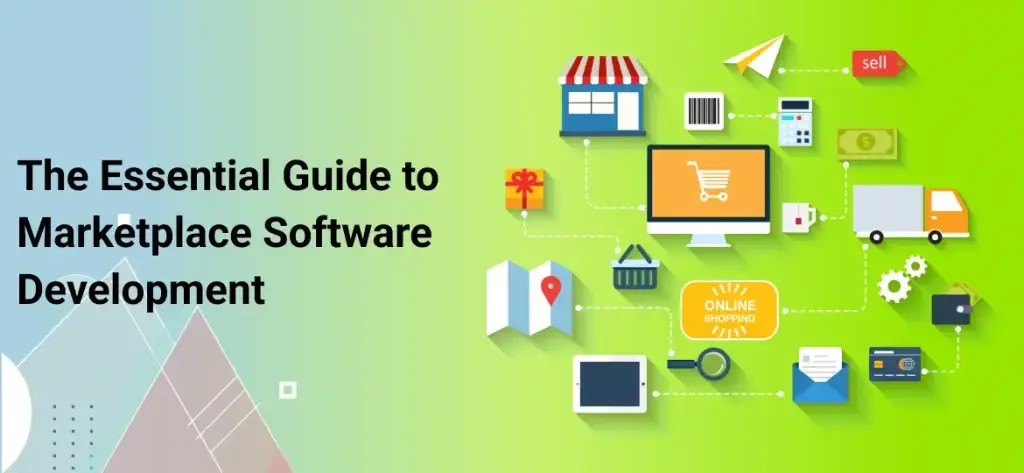
Planning all four surfaces up front, even if you build them in phases, keeps your data model and APIs consistent and avoids expensive rework later. If a marketplace of many independent stores is your end goal, our marketplace software development cost breakdown maps how these panels grow as vendor count rises.
Third-Party Integrations That Shape the Budget
Integrations are where a tidy estimate can quietly expand, so it pays to plan them early. Payments come first. Supporting a gateway such as Stripe, PayPal, or a regional processor means building tokenized checkout, handling refunds and partial refunds for out-of-stock items, and passing compliance reviews. Multi-vendor payouts, where each store gets its cut automatically, add meaningful engineering time. Maps and geolocation are second: address capture, delivery-zone geofencing, live driver location, and route optimization usually run on Google Maps Platform or Mapbox, and their usage-based pricing becomes a recurring operating cost as order volume grows, not just a build cost.
Notifications form the third pillar. Order confirmations, driver-arrival alerts, and promotional messages flow through push services, SMS providers, and transactional email, each metered per message. Beyond these three, grocery apps frequently integrate inventory or point-of-sale systems, identity and fraud checks, customer support chat, and analytics or attribution tools. Every integration adds development, testing against a live sandbox, and ongoing monitoring, because a broken payment or map call breaks the core experience. The practical guidance is to list every external service before you sign a build contract and confirm whether each is in scope, since integrations that surface mid-project are the most common reason a grocery delivery app development budget drifts. A capable partner will document the integration surface in the proposal, estimate both the one-time build and the monthly run-rate for metered services, and tell you which ones can wait until a later phase without blocking launch. Treating integrations as a first-class line item, rather than a footnote, is one of the simplest ways to keep your number honest.
Choosing a Tech Stack and How It Affects Cost
Your technology choices influence both the upfront grocery app development cost and what you spend maintaining the product for years. The first decision is native versus cross-platform for the mobile apps. Native builds, Swift for iOS and Kotlin for Android, give the smoothest performance and deepest device access but mean two separate codebases and, often, two teams. Cross-platform frameworks such as Flutter and React Native let one team ship both platforms from a shared codebase, which commonly reduces mobile development cost by twenty to forty percent and speeds up releases, an attractive trade for most grocery MVPs where the interface is standard commerce rather than heavy graphics.
On the backend, grocery platforms lean on Node.js, Python with Django, or Java depending on the team’s strengths, paired with PostgreSQL or MySQL for transactional data and Redis for carts and sessions. Real-time tracking typically rides on WebSockets or a managed service, and cloud hosting on AWS, Google Cloud, or Azure is billed by usage, so architecture decisions directly shape your monthly bill. A customer-facing ordering website, built alongside the apps, adds a web front end but shares the same backend and APIs, which keeps the marginal cost reasonable. The right stack is the one your team can maintain confidently and that matches your growth plan, not the trendiest option. When you are still weighing native against cross-platform against web, our mobile app development cost guide lays out the numbers behind each path so you can align the stack with your budget before a line of code is written.
Hidden and Ongoing Costs Most Estimates Miss
The sticker price of building a grocery delivery app is only part of the story, and the estimates that fail founders are the ones that stop at launch. Plan for these ongoing and easily overlooked costs from the start. Cloud hosting and infrastructure scale with orders and typically run several hundred to a few thousand dollars a month once you are live, more during peak demand. Metered third-party services, the maps, SMS, push, and payment fees discussed earlier, are recurring and grow with volume. App Store and Google Play carry developer-account fees and review cycles, and each store update needs its own testing pass.
Maintenance is the largest ongoing line. A healthy budget reserves roughly fifteen to twenty percent of the original build cost per year for bug fixes, operating-system updates, security patches, and dependency upgrades, without which the app degrades and eventually breaks on new devices. Beyond maintenance, plan for customer support tooling and staffing, payment-processing percentages on every transaction, data and privacy compliance work, and the design and engineering time for the features you will inevitably add after seeing real usage. There are also softer costs, such as onboarding drivers and stores and the marketing needed to earn your first orders. None of these are optional in practice, and surfacing them during scoping is what separates a budget you can live with from one that surprises you in month three. A transparent quote should name each of these lines explicitly, even when the exact figure depends on your launch scale, so you can plan cash flow around the full lifecycle rather than the build alone.
How to Reduce Grocery Delivery App Development Cost
Bringing the cost to build a grocery delivery app down is less about cutting corners and more about sequencing and sourcing wisely. The most effective lever is an MVP-first approach: ship the smallest version that proves people will order groceries through your app, then let usage data decide what you fund next. Launching one region, one or two stores, and the essential order loop can cut the initial number by more than half compared with a full-scale platform, and it gets you to market months sooner. Our MVP for startups approach is built around exactly this discipline.
The second major lever is where you build. Offshore and nearshore engineering can deliver the same quality at a fraction of onshore rates, which is why so many funded grocery apps are built through an offshore development center. The savings come from rate arbitrage, not reduced scope, provided you work with a partner that has a real track record and clear communication. If you are evaluating this route, our guide on how to hire offshore developers covers what to check before you commit. Beyond these two, choosing cross-platform over dual native, reusing proven components instead of building everything bespoke, integrating established services rather than reinventing payments or maps, and phasing the four apps instead of shipping them all at once each trim the budget. Stacked together, these levers routinely take a project that quoted at scale-tier pricing and land a strong first release well inside the MVP-to-growth range, with a clear, funded path to the rest.
How EchoInnovate IT Scopes and Prices Your Grocery App
EchoInnovate IT has spent 12 years building software, with a team of 50-plus and more than 500 products shipped, most of them under our clients’ own brands as a white-label and custom development partner. That background shapes how we price a grocery delivery app: not with a headline number, but with a transparent quote that follows a short scoping call. In that call we map your target regions, the apps you actually need on day one versus later, your must-have integrations, and your growth plan, then translate that into a phased estimate against the tiers and panels described above. You see where every dollar goes and why, and you keep the code and the brand.
Because most of our work ships under client logos, we are comfortable being the engineering team behind your product rather than a name on it, which is exactly what a grocery startup or an established grocer expanding online usually wants. We hold a 5.0 rating across six verified Clutch reviews, and we scope grocery builds the same way we scope any commerce platform through our ecommerce app development practice: customer, driver, and admin experiences designed together, integrations planned as first-class line items, and a maintenance plan quoted alongside the build so there are no surprises later. Whether you want a lean single-market MVP or a multi-vendor platform, the path starts the same way, with a conversation that turns the ranges in this guide into a number built specifically for your product, and a plan to ship it in phases you can fund.