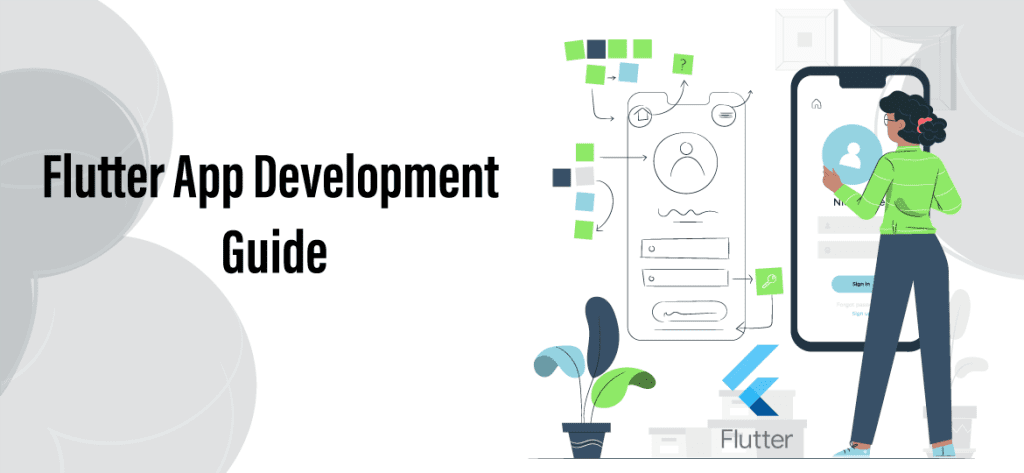
A Flutter app for a startup in 2026 costs an amount that depends on scope, features, and region, and Flutter is popular with founders precisely because one codebase serves both iOS and Android, which cuts the cost and timeline of reaching a full market roughly in half compared with building two native apps. A lean MVP to validate an idea sits at the entry level; a funded startup building a polished, feature-rich first product lands higher. For most early-stage teams, the question is not whether Flutter can build their app but how to scope a first version that proves demand without burning the runway.
This guide covers what a Flutter startup app costs in 2026, why Flutter fits early-stage teams, the features a first release needs, the timeline, and what drives the price. It is written for founders and product leads deciding how to build their first app, and it ends with how EchoInnovate IT scopes and delivers startup Flutter builds.
Key takeaways
- Cost for a startup Flutter app in 2026 depends on scope, features, and region; a validation MVP starts at the entry level, a funded first product runs higher.
- Flutter builds iOS and Android from one codebase, which is the main reason it saves startups time and money.
- A Flutter MVP typically takes 6 to 16 weeks, fast enough to test an idea within a single funding cycle.
- Flutter has a large, growing talent pool in 2026, which lowers hiring risk and makes it easier to scale a team.
- Cost is driven by feature scope, backend complexity, custom design, and integrations, not by supporting two platforms.
- Start with a short scoping call so the estimate matches your MVP scope rather than a generic price.
Why Flutter fits startups
Flutter is Google’s open-source framework for building apps from a single codebase that runs on iOS, Android, web, and desktop. For a startup, the appeal is direct: you reach both major mobile platforms without paying to build and maintain two separate apps, which is usually the difference between launching in one quarter and launching in two. Early-stage teams live and die by runway and speed, and Flutter is engineered for exactly those constraints.
Four things make it a strong early-stage choice. First, cost: one team, one codebase, one set of tests, roughly halving the effort of a dual-native build. Second, speed: Flutter’s hot reload lets developers see changes instantly, and its rich library of ready-made widgets means common screens come together fast, so you get to a testable product sooner. Third, a consistent, high-quality interface: because Flutter draws its own pixels, your app looks and behaves the same on every device, which keeps design predictable and polish achievable on a startup budget. Fourth, hiring: Flutter has one of the largest and fastest-growing developer talent pools in 2026, so staffing up or replacing a developer mid-project carries less risk than with niche frameworks.
The trade-off worth naming is that Flutter apps can be slightly larger in download size, and truly platform-specific, hardware-heavy features occasionally need a little native code. For the vast majority of startup apps, neither is a real obstacle, and the savings in time and money far outweigh them. If you are still weighing frameworks, our Flutter app development team can walk you through where Flutter is the clear choice and where an alternative might serve you better.
How much does a Flutter startup app cost?
A startup Flutter app’s cost in 2026 depends on how much you build in the first release and how complex the backend and integrations are. Because Flutter covers both platforms from one codebase, you are not paying the near-double cost of separate iOS and Android builds, which is why the same budget goes further here than with native development. The tiers below reflect 2026 market rates for a partner-built startup app.
| Tier | Investment level | What you get |
|---|---|---|
| Validation MVP | Entry-level | One core workflow, clean UI, auth, a simple backend, one or two integrations. Built to test demand fast. |
| Launch-ready app | Mid-range | Multiple features, custom design, payments, push notifications, analytics, a scalable backend, several integrations. |
| Funded / scale app | Enterprise-scale | Rich feature set, real-time data, complex logic, admin panel, third-party API depth, and architecture built to scale. |
On top of the build, budget for backend hosting, third-party services such as payments and messaging, the Apple and Google developer accounts, and ongoing maintenance, which commonly runs 15 to 20 percent of build cost per year. We do not publish a fixed EchoInnovate IT price because scope and backend complexity move the number more than anything; we give a transparent quote after a short scoping call. For a fuller picture across build styles, see our mobile app development cost guide.
What to put in your Flutter MVP
The hardest discipline for a founder is leaving things out. An MVP exists to test one hypothesis with real users at the lowest cost, so the right feature set is the smallest one that delivers your core value and lets you measure whether people want it. The essentials below cover most startup MVPs.
- Onboarding and authentication. A fast sign-up with email or social login, and a first-run experience that gets users to value quickly.
- Your one core workflow. The single thing your app exists to do, built well. Everything else is a distraction in version one.
- A clean, branded interface. Flutter makes a polished UI affordable, and first impressions decide whether early users stay.
- Push notifications. The cheapest lever for retention, bringing users back without paid acquisition.
- Payments, if you monetize now. Stripe or in-app purchases, but only if charging is part of the hypothesis you are testing.
- Analytics. Event tracking from day one, because an MVP with no data cannot teach you anything.
Deliberately defer social feeds, chat, gamification, multiple user types, and admin complexity until data justifies them. The goal is to learn, then invest in what the learning proves. This validation-first approach is central to how we scope startup builds, and it is the difference between an MVP that informs your next round and one that quietly drains it. If you need to move fast with extra hands rather than a full project, our IT staff augmentation services can add Flutter developers to your team on short notice.
Tech stack and integrations
A typical startup Flutter stack pairs the Flutter front end, written in Dart, with a backend that fits the stage. Many early MVPs use Firebase, Google’s backend platform, which provides authentication, a real-time database, storage, push notifications, and analytics out of the box and pairs naturally with Flutter. Firebase lets a small team ship quickly without standing up custom infrastructure, which is ideal for validation. As a product grows and needs more control, teams often move to a custom backend in Node.js or Django with a Postgres database, and because the Flutter front end is decoupled from the backend, that migration does not mean rebuilding the app.
Integrations are usually straightforward for a startup app. Flutter has mature packages for payments, maps, analytics, messaging, and social login, so connecting Stripe, Google Maps, or a notification service is typically configuration and wiring rather than heavy custom work. Cost rises only when you need an unusual integration, a connection to a legacy system with no ready package, or deep hardware access. For most first products, the integration list is short and predictable, which keeps the estimate stable.
The architecture decision that matters most for a startup is planning for change. Your first version will be wrong in some way, that is the point of an MVP, so the code should be structured to evolve cheaply as you learn. We build Flutter apps with a clean separation between UI, business logic, and data so that adding features or swapping the backend later is inexpensive. That discipline is invisible in a demo but decides how much your second and third releases cost, which for a startup is where the real budget goes.
How long a Flutter MVP takes to build
A Flutter MVP typically takes 6 to 16 weeks from kickoff to a testable app in users’ hands, and a launch-ready product with a custom backend and several features runs three to five months. Flutter’s single codebase is the main reason this is faster than native: you build, test, and release once for both platforms instead of running two parallel efforts, which removes a large slice of the calendar.
A realistic timeline breaks down as follows. Discovery and scoping take one to two weeks, where you define the hypothesis, the one core workflow, and the feature list. Design takes one to three weeks, producing the screens and a simple, branded interface. Development runs four to ten weeks, building the app, wiring the backend, and connecting integrations. Testing and store submission take one to two weeks, covering device testing, fixes, and the app store review process. Because it is one codebase, testing and release effort roughly halve compared with a dual-native build, and phases overlap so elapsed time is shorter than the sum.
For a startup, this speed has a strategic payoff: you can often validate an idea within a single funding cycle, learn from real users, and use that evidence in your next raise or your next build decision. The biggest risk to the timeline is scope creep, meaning features added mid-build that were not in the original hypothesis. We manage it with a tightly scoped first release and short weekly demos, so you steer with a working app rather than a document. The fixed-scope pilot described below is built to enforce exactly that discipline.
What drives the cost up or down
Two Flutter apps with the same screen count can differ widely in price. For a startup watching runway, knowing the drivers is how you keep the first build lean without cutting the wrong corners.
- Feature scope. The number and complexity of features is the biggest driver. Every feature added to version one delays validation and adds cost.
- Backend complexity. A Firebase-backed MVP is cheap and fast; a custom backend with complex business logic and heavy data is a larger investment.
- Custom design and animation. Standard components are economical; a distinctive, motion-rich interface takes more design and build time.
- Integrations. Standard payment or map integrations are inexpensive; unusual or legacy connections add real cost.
- Real-time features. Live chat, feeds, or collaborative data require more backend and testing than static screens.
- Team model. Onshore agencies cost more than offshore dedicated teams for comparable quality, which is why many startups build offshore to stretch their runway.
The levers that pull cost down for a startup are clear: ship one core workflow first, start on Firebase and migrate later only if you need to, use Flutter’s native components before commissioning custom design, and defer every feature that is not part of the hypothesis you are testing. An honest partner will push you toward the smaller build, because a cheaper MVP that teaches you something is worth more than an expensive one that does not. Our broader software development company practice can also own the backend as your product scales past the MVP.
How EchoInnovate IT builds Flutter apps for startups
EchoInnovate IT is an India-based custom and white-label software development company with 12 years of delivery, 50+ employees, and 500+ products shipped, most of them under our clients’ own brands. We build Flutter apps for startups with a validation-first mindset: scope the smallest first release that tests your idea, build it well, and structure the code so the next version is cheap to ship. Because we work offshore, our dedicated-team rates typically run well below onshore agencies, which for an early-stage company means more runway per feature.
A startup engagement starts with a short scoping call to define the hypothesis, the one core workflow, and the MVP feature list. From there a dedicated Flutter team designs a clean interface, builds the app and a backend sized to your stage, connects your integrations, and ships to both app stores from one codebase. You get weekly demos on a working build, a transparent quote tied to your real scope, and code architected to evolve as you learn from users. Because we run full Flutter app development and backend practices, we can take you from MVP through funded scale without a rebuild or a change of partner.
Our work carries a 5.0 rating across 6 verified client reviews on Clutch, and we have shipped hundreds of products for founders building their first app. If you want to test the fit before committing your budget, the fixed-price pilot below is the lowest-risk way to start.