Cerner and Epic are two of the top EHR (electronic health record) systems. Both offer cloud-based tools that help healthcare organizations work faster. They improve patient communication, charting, and billing.
But each system has strengths and weak spots. This article explains the key differences, pros, and cons. Let’s compare Cerner vs Epic side by side.
The two are rivals. Still, both have shaped the EHR market in big ways. A large part of EHR success comes down to easy integration with other healthcare systems. HL7 is a standard messaging protocol that makes this integration possible.
Companies that offer HL7 integration and medical software build tools that use HL7. This improves the interoperability of healthcare apps. Technology makes work easier. But the market is getting more competitive as demand for software solutions grows. That demand drives more app development across the healthcare industry. Related: healthcare app development.
Choosing The Right EHR System: Key Considerations
10 min read · Last updated: May 2026
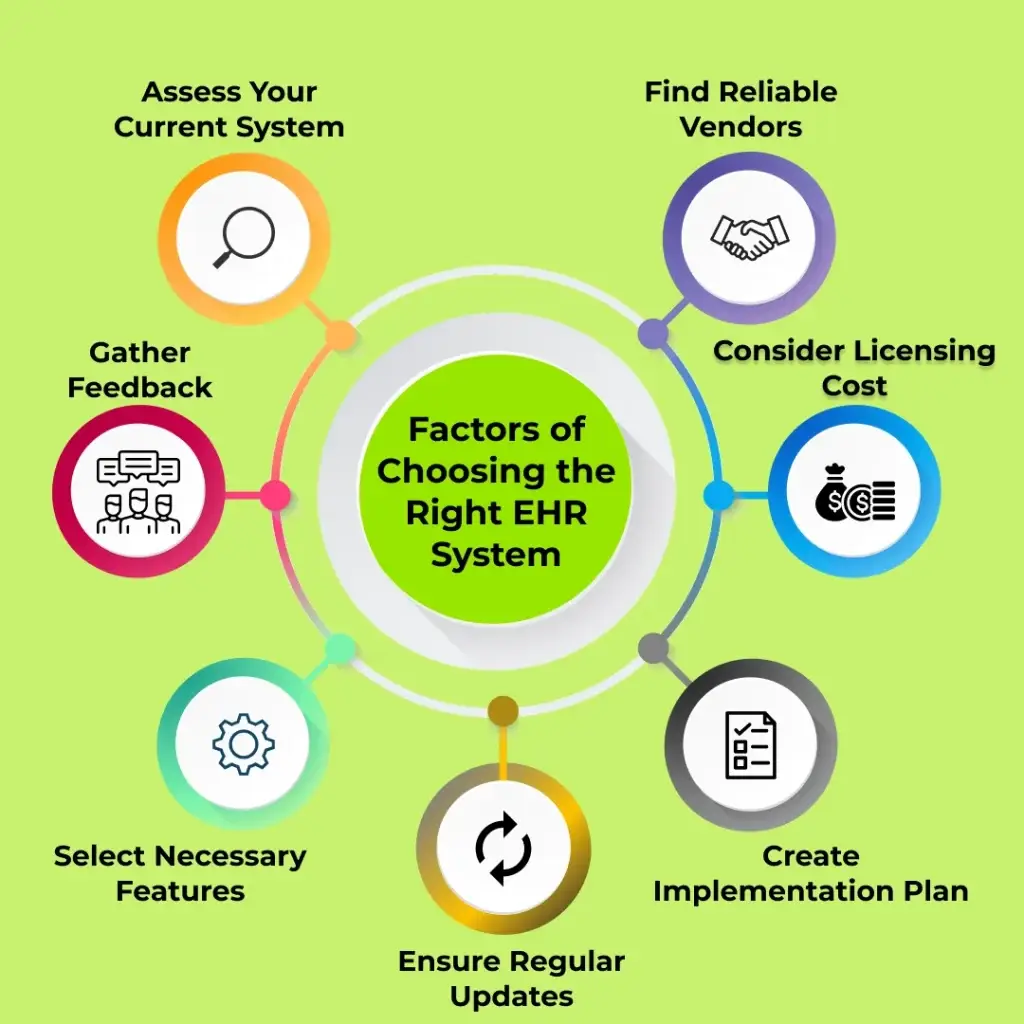
Choosing the right Electronic Health Record (EHR) system is a big decision. It matters for any healthcare organization. Cerner and Epic are two of the largest players in the EHR market. Both offer full solutions. But they differ in features, setup, and cost. The right choice depends on a few key factors.
Assess Your Current System
Start by reviewing your current system before you sit through demos and vendor pitches. Note its strengths and weak points. Which features do you truly need? Where does the system fall short? Understanding your setup, workflows, and pain points helps you define your needs. It also leads to a better Cerner vs Epic comparison. This review shows where a new EHR can help the most.
Find Reliable Vendors
Look beyond Cerner and Epic and explore other trusted EHR vendors. Research each one’s track record, market share, and customer reviews. Look for vendors with experience in organizations like yours in size and specialty. Ask for references and case studies. A good vendor gives you a strong system plus solid support and training during setup and after.
Consider Licensing Cost
An EHR system is a big investment. Review the licensing costs for both, since Cerner vs Epic pricing can differ a lot. Costs change based on your organization’s size, the modules you pick, and the deployment model (cloud or on-premise). Don’t focus only on upfront costs. Also weigh ongoing maintenance fees, upgrade costs, and customization. Build a full budget that covers every part of EHR ownership.
Create an Implementation Plan
A good EHR rollout needs a clear plan. Set the timeline, key milestones, and who owns each task. Plan for data migration, staff training, and workflow disruptions. A strong plan lowers risk and makes the switch smoother. Also budget time and resources for testing and go-live support. Related: mobile app development services.
Select Necessary Features
Both Cerner and Epic offer many features. Don’t try to select every module. Instead, focus on the features your organization truly needs. Pick tools that improve patient care, speed up workflows, and boost efficiency. Think about your long-term goals. Choose features that support your growth and changing needs.
Gather Feedback
Bring key people into the EHR selection process. Include physicians, nurses, admin staff, and IT. Ask about their experience with current systems and what they want next. Their input helps you spot usability issues early. It also makes sure the system fits every user. This shared approach builds buy-in and makes adoption smoother.
Ensure Regular Updates
Healthcare IT changes fast. Pick a vendor that updates and improves the system often. Updates keep you compliant with rules, fix security gaps, and add new features. Ask about the vendor’s update policy and their focus on ongoing improvement. This keeps your EHR current and useful over time.
What is Epic
Epic Systems was founded in 1979 by Judith Faulkner. It is a private healthcare software company based in Verona, Wisconsin. Unlike some rivals, Epic has stayed independent. It focuses only on building and rolling out EHR solutions. That single focus gave Epic a name for tightly integrated, full systems. It mainly serves large hospital systems and academic medical centers.
Key Features of Epic EHR Systems
Epic offers a full suite of apps built around one central patient database. Its systems often include these key features: Related: cross-platform app development.
- Comprehensive Clinical Documentation: Strong tools for charting, order entry, and medication management. They are often customizable for specific specialties.
- Integrated Practice Management: Tools for scheduling, billing, and patient registration. They are tightly linked to the clinical side of the system.
- Patient Portal (MyChart): A widely used portal. Patients can view their records, message providers, book appointments, and manage their health info.
- Population Health Management: Tools to track patient groups, find at-risk people, and run care management programs.
- Analytics and Reporting: Tools to build reports and analyze data. They help you track performance, spot trends, and support decisions.
- Interoperability: Epic has improved here. Still, the level of smooth data exchange with outside systems can vary.
- Specialty-Specific Modules: Epic offers many modules built for specific specialties. They improve workflow in different clinical settings.
Pros of Using Epic
- Highly Integrated System: Epic’s tightly linked platform can speed up workflows. It also cuts the need for multiple vendors.
- Robust Functionality: Epic offers a full set of features. It often goes beyond what other EHR systems can do.
- Customization Options: Epic systems are highly customizable. Organizations can tailor the software to their own needs.
- Strong Reputation for Quality: Epic is known for building reliable, high-performing software.
- Large User Community: A large user base gives you access to resources, support, and best practices.
Cons of Using Epic
- High Cost: Epic is one of the most expensive EHR systems. It has high upfront costs and ongoing maintenance fees.
- Complexity: Setting up and customizing Epic can be complex and slow. It needs significant IT resources and expertise.
- Limited Interoperability: Epic has worked to improve interoperability. Even so, sharing data with outside systems can still be hard, especially non-Epic ones.
- Vendor Lock-in: Moving away from Epic can be hard and costly. The system is tightly integrated and heavily customized.
- Focus on Large Organizations: Epic aims at large health systems. That focus can make it a poor fit for small practices or clinics.
Head-to-Head Comparison: Cerner vs Epic
Choosing the right EHR system is a big decision for any healthcare organization. Cerner and Epic are both major players. But they differ in several key ways. Here’s a side-by-side comparison of the factors that matter most:
Cerner vs. Epic Interoperability:
Interoperability is the ability of different systems to share information. It is a key part of any EHR. Both Cerner and Epic have worked to improve it. Yet challenges remain. Cerner, now part of Oracle, is boosting its interoperability using Oracle’s cloud and integration tools. Epic was once known for a closed system. It has made progress too, mainly through its Care Everywhere network. Still, the level of smooth data exchange can vary. It depends on the setup and the other systems involved. Both vendors keep improving here, pushed by industry demand and regulations.
Cerner vs. Epic Implementation:
Implementation is a major project for any EHR system. Cerner rollouts can be complex, especially for large organizations. They often need heavy IT resources and customization. The move to Oracle’s infrastructure may add complexity but also long-term gains. Epic rollouts are also known for being complex. They can be even harder due to deep customization and a tightly linked design. Both vendors need strong upfront planning, training, and ongoing support. Because of their scale, both Cerner and Epic rollouts can be long and costly.
Cerner vs. Epic Usability:
Usability drives clinician satisfaction and efficient workflows. Cerner’s interface has drawn criticism in the past. Some users found it less intuitive than other systems. Cerner has worked to improve the experience in newer versions. Epic is often praised for a user-friendly interface, especially its specialty-specific modules. Those modules streamline work for different clinical settings. But with so much customization, the experience varies by how the system is set up. In the end, usability is subjective. What suits one user may not suit another. Related: hire cross-platform developers.
Cerner vs. Epic Customer Satisfaction:
Customer satisfaction is complex, and experiences vary widely. Both Cerner and Epic have faced criticism over support and responsiveness. Cerner has a large, diverse customer base. At times it has struggled to give consistent support. Epic is generally known for better service. But it can face challenges too, given its large client base. Many things shape satisfaction. These include setup complexity, the training provided, and ongoing support.
Cerner vs. Epic System Architecture:
Cerner’s architecture has changed over time. With the Oracle acquisition, it is shifting further to integrate with Oracle’s cloud. This shift should bring more scalability and performance in the long run. Epic’s architecture uses a tightly linked, centralized database. This gives strong data consistency and smooth workflows. But it can create challenges for interoperability and scalability. Both vendors keep evolving their architecture to meet changing healthcare needs.
Cerner vs. Epic Support:
Support is critical for any EHR system. Cerner is a large company and offers many support options. But experiences can be inconsistent. The Oracle acquisition may change its support structure. Epic is generally known for strong support. Still, its resources can stretch thin due to a large client base. Both vendors offer several channels: online resources, phone support, and on-site help. The support you need depends on system complexity and your IT team’s expertise.
Cerner vs. Epic Scalability:
Scalability is the ability to handle more data and user traffic. It matters for growing healthcare organizations. Cerner is well placed to offer strong scalability, thanks to its Oracle cloud integration. Epic is generally scalable too. But it can face challenges in very large or complex organizations. Both vendors offer ways to scale. Yet the approach and costs vary. Match your EHR choice to your current and future scalability needs.
Conclusion
Cerner and Epic are both strong EHR systems. But they serve different needs and priorities. Epic stands out for its tightly linked platform, deep features, and user-friendly interface. That makes it a solid pick for large, complex organizations ready to invest in a full solution. Choosing the right EHR system is one of the most important decisions a healthcare organization can make. Related: custom software development.
It directly affects patient care, efficiency, and finances. A poor choice can cause workflow disruptions, data silos, and higher costs. A good choice does the opposite. It supports clinicians, improves patient outcomes, and streamlines admin work.
Selecting and rolling out an EHR system is complex and strategic. It helps to partner with experienced professionals. They can guide you through the process and help you succeed. At EchoInnovate IT, we know the challenges of EHR selection and rollout. As a software development company, we offer services that help healthcare organizations manage this complex work.
Frequently Asked Questions
What are the key differences between Cerner and Epic in managing patient data?
Cerner and Epic are both leading Electronic Health Record (EHR) systems, but Cerner offers more flexibility in integration and customization, while Epic is known for its user-friendly interface and widespread adoption across large healthcare systems.
Which EHR system, Cerner or Epic, is better for small to medium-sized healthcare facilities?
Cerner is often considered more adaptable for smaller to medium-sized healthcare facilities, as it offers more cost-effective solutions and easier scalability compared to Epic, which is typically better suited for larger hospitals and organizations.
Does Epic or Cerner offer better patient engagement features?
Epic generally excels in patient engagement tools, offering robust patient portals and mobile apps. Cerner also provides similar features but is often seen as having a more complex user interface, which may affect patient engagement ease.
HIPAA-compliant healthcare apps that ship without a 9-month audit.
We build telemedicine consultations, EHR/EMR integrations (FHIR, HL7), patient portals, e-prescriptions, fitness wearables, and remote monitoring. Our healthcare engineers bake in compliance from day one, not at the end. We’ve passed BAA reviews with Epic, Cerner, and Athenahealth. Stop scoping with generic agencies that don’t understand PHI.