

IoT in healthcare means connected devices that collect health data and send it to the people who need it. Think glucose sensors, smart inhalers, connected infusion pumps and hospital asset tags. This guide covers the benefits, the real challenges and the trends worth watching in 2026.
Healthcare teams call these devices the Internet of Medical Things (IoMT). Hospitals, clinics, home-care providers and elder-care homes all use them. The goal is simple: spot problems sooner, cut manual work and give patients more care at home.
Why IoT in Healthcare Is Reshaping Care Delivery in 2026
Connected care has moved from pilot projects to everyday practice. In the US, Medicare pays for remote patient monitoring (RPM) and remote therapeutic monitoring (RTM), and new 2026 codes cover shorter monitoring periods of 2 to 15 days. That gives new IoT health products a clearer path to revenue.
Most healthcare IoT products fall into five groups:
- Remote patient monitoring: glucose monitors, blood-pressure cuffs and pulse oximeters.
- Connected hospital assets: asset tags, smart beds, and fridge or room sensors.
- Wearables: smartwatches and rings. Apple Watch, for example, has FDA-cleared ECG and hypertension alerts.
- Connected medical devices: smart inhalers, insulin pens and infusion pumps.
- At-home diagnostics: home test kits that send results to the care team.
Each group needs the same core parts: a device, a mobile app, a secure cloud and a dashboard for clinicians. Below we look at what that buys you, and what makes it hard.
Advantages of IoT in Healthcare
7 min read
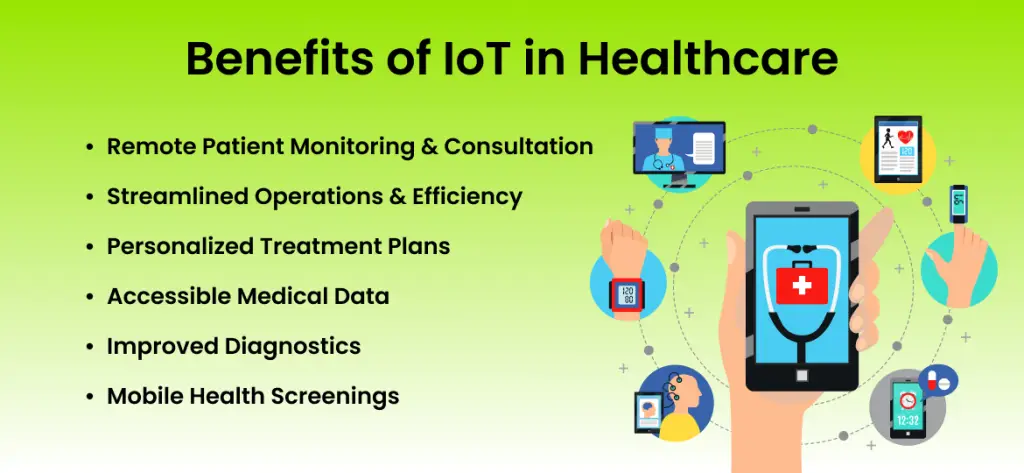
Remote Patient Monitoring & Consultation
Wearables and home sensors track heart rate, blood pressure, oxygen and activity. The data reaches the care team in near real time, so they can catch a problem early and step in. Add video visits and secure chat, and patients in rural areas or with limited mobility get care without the trip.
Streamlined Operations & Efficiency
Connected devices take over routine jobs like tracking equipment, logging fridge temperatures and updating records. That means fewer manual errors and more time for patients. Live data also shows managers where beds, staff and pumps are needed, which helps cut wait times.
Personalized Treatment Plans
Devices build a running picture of each patient: readings, habits and how they respond to treatment. Doctors can use it to adjust doses, therapy and lifestyle advice for that one person. Patients who can see their own progress often stick to their plan better.
Accessible Medical Data
Cloud platforms store device data so approved staff can reach it from anywhere. Care teams share one view of the patient, and patients can check their own numbers in an app. Pooled, de-identified data can also support research.
Improved Diagnostics
Wearable sensors can pick up small changes in vital signs before symptoms show. Connected lab and imaging equipment sends results straight to the record, so diagnosis is faster. Earlier detection usually means simpler treatment and better outcomes.
Mobile Health Screenings
Portable devices let nurses run basic checks at home, at work or in a community center. That brings screening to people who live far from a clinic. Catching risks early supports preventive care for whole communities.
Challenges of IoT in Healthcare
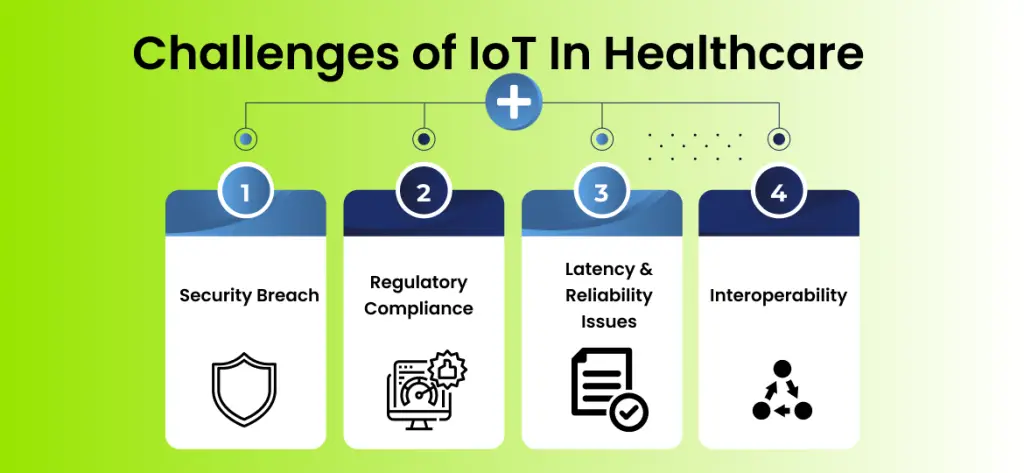
Connectivity brings risk as well as value. Before you launch, plan for four hurdles: security, regulation, reliability and interoperability.
Security Breach
Connected devices carry sensitive patient data, which makes them a target for attackers. A breach can lead to:
- Data theft: stolen health records used for fraud or extortion.
- Device tampering: changed settings on a pump or implant that put a patient at risk.
- System outages: ransomware that shuts down hospital services.
- What helps: encryption in transit and at rest, signed firmware updates and a software bill of materials (SBOM).
Regulatory Compliance
Rules depend on what the product does and where you sell it. The same app can be a wellness tool in one version and a regulated medical device in the next. These are the main frameworks:
- FDA (US): software that diagnoses, treats or monitors a disease is usually a medical device. It may need 510(k), De Novo or PMA review.
- FDA cybersecurity: since 2023, submissions for connected “cyber devices” must include a security plan and an SBOM.
- FDA wellness guidance: January 2026 updates give wearables more room for wellness claims. Disease claims still make the product a device.
- FDA quality rules: since 2 February 2026, the Quality Management System Regulation lines US rules up with ISO 13485.
- HIPAA (US): providers, insurers and the vendors that handle their patient data must protect it, sign business associate agreements and keep audit logs.
- EU MDR and GDPR: devices sold in the EU need a CE mark under the Medical Device Regulation. Legacy devices have transition deadlines in 2027 or 2028, by risk class. GDPR covers the personal data.
Latency & Reliability Issues
Monitoring and emergency alerts need fast, steady connections. When the network lags or drops, things go wrong:
- Late alerts: a delayed warning can mean a missed emergency.
- Broken treatment: a lost link can interrupt remote dosing or therapy.
- Bad data: gaps and duplicates make readings hard to trust.
- What helps: local buffering on the device, retry logic and clear alerts when a sensor goes quiet.
Interoperability
Devices come from many makers and speak different protocols. Getting them to share data with each other and with the hospital record is often the hardest part of the build. Common problems:
- Data silos: each device keeps its own data, so no one sees the full picture.
- Hard integrations: every EHR, such as Epic or Oracle Health, has its own setup and approval steps.
- Uneven standards: HL7 FHIR is now the common API for US EHRs, but many devices still don’t support it.
Future Trends of IoT in Healthcare
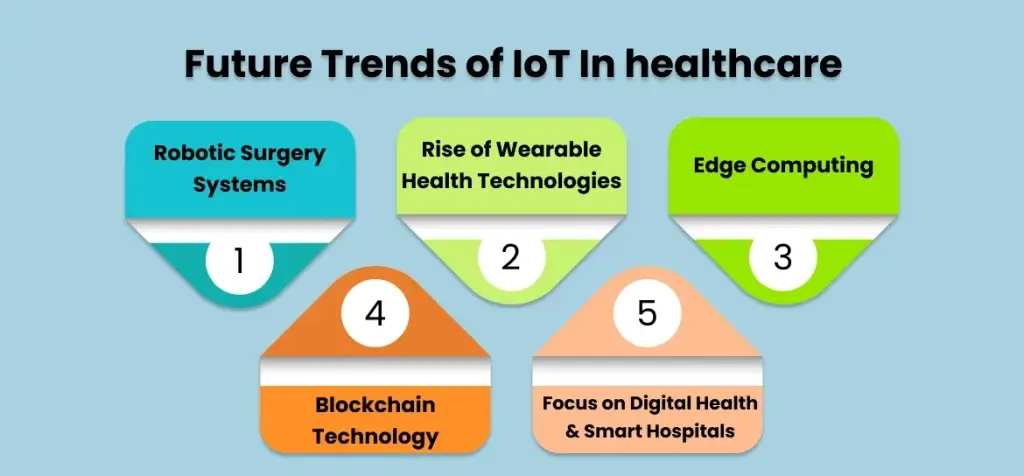
Here are the trends shaping connected care over the next few years.
Robotic Surgery Systems
Surgical robots give surgeons finer control for less invasive operations, which can mean faster recovery. Newer systems add better touch feedback and live data from connected tools. AI support in the operating room is growing, but the surgeon stays in charge.
Rise of Wearable Health Tech
Smartwatches, rings and patches now track heart rhythm, sleep, oxygen and more. Some features have FDA clearance, such as Apple Watch hypertension notifications, cleared in September 2025. Next come more sensors and AI that turns raw readings into clear advice inside wearable health apps.
Edge Computing
Edge computing processes data on or near the device instead of in a distant cloud. That cuts delay for urgent alerts and keeps working when the connection drops. It also sends less patient data over the network, which lowers privacy risk.
Blockchain Technology
Blockchain can keep a tamper-proof log of who accessed or changed a record. It is being tested for drug supply chains, consent tracking and clinical trial data. Adoption is still early, so treat it as an option, not a must.
Digital Health and Smart Hospitals
Smart hospitals link beds, pumps, badges and rooms into one system. AI then helps predict admissions, flag patients at risk and plan staffing. Patient-facing tools like AI-powered chatbots handle bookings and simple questions, so staff can focus on care.
Building an IoMT App? How EchoInnovate IT Helps
We build the whole connected-health product: device links over Bluetooth or Wi-Fi, the patient app, a HIPAA-aware cloud and the clinician dashboard, plus FHIR-based EHR integration. Our healthcare app development and wearable device app development teams have shipped 500+ products in 12+ years.
The first step is a short scoping call. We map your device, your users and your regulatory path, then send a fixed quote. Builds fall into an entry, mid or upper tier, depending on the number of devices and integrations.
Conclusion
IoT is already part of everyday care, from home monitoring to smart hospital wards. The value is real: earlier warnings, less manual work and care that reaches patients at home. Success depends on getting security, regulation and integration right from the first sprint.
Frequently Asked Questions
What are the main benefits of IoT in healthcare?
Connected devices let care teams watch patients at home, spot warning signs earlier and act faster. They also automate routine hospital tasks like asset tracking and record updates. The result is fewer avoidable visits, less manual work and treatment plans tuned to each patient’s real data.
What are the biggest challenges of IoT in healthcare?
The four hardest are security, regulation, reliability and interoperability. Devices must protect patient data and resist tampering. Many products need FDA or EU MDR review. Connections must stay steady for alerts. And data has to flow into hospital records, usually through HL7 FHIR, which takes careful work.
Does a healthcare IoT app need FDA clearance?
It depends on what the product claims to do. Apps that diagnose, treat or monitor a disease are usually medical devices and may need 510(k), De Novo or PMA review. Pure wellness features often don’t, and FDA’s January 2026 guidance widened that space. Check your intended use early with a regulatory adviser.
How much does it cost to build a healthcare IoT platform?
Cost depends on the number of devices, the apps you need, EHR integration and any FDA work. A focused RPM app with one device sits in the entry tier. Multi-device platforms with analytics and EHR links move into the mid or upper tier. We give a fixed quote after a short scoping call.
How is IoT shaping the future of healthcare?
Expect more care at home, more clinical-grade wearables and more AI that turns readings into clear actions. Edge computing will make alerts faster and more private. Smart hospitals will use connected assets to plan beds and staff. Robotic surgery will keep improving, with surgeons firmly in control.
Build a Healthcare App That Scales
HIPAA-aware, secure healthcare apps — telemedicine, EHR, fitness, and patient experience platforms built for regulated environments.
