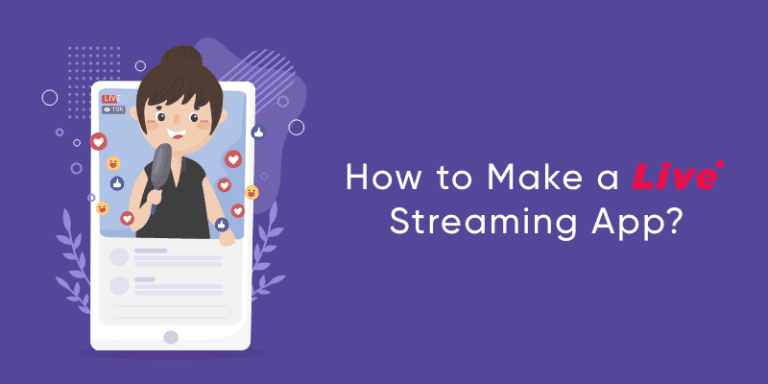
Building a live streaming app in 2026 can range from a focused MVP to a full-scale platform with low-latency broadcasting, chat, monetization, and content moderation. Streaming is more expensive than most app categories because real-time video is technically demanding and because the infrastructure that carries the video costs money every month you run it.
This guide leads with the cost tiers, then covers the features viewers and creators expect, the streaming tech stack, a realistic timeline, and the factors that move both your build budget and your ongoing bill, so you can plan a platform that performs under load without overspending. Whether you are launching a creator platform, adding live shopping to a marketplace, building live classes, or bringing streaming into an on-demand product, the decisions below shape your cost more than any single tool. The ranges reflect real 2026 market conditions for offshore and blended teams; you get a firm number after a short scoping call.
Key takeaways
- A live streaming MVP is an entry-level build; a full platform with low-latency streaming, chat, and monetization is an enterprise-scale one.
- Latency is the defining choice: standard HLS is cheaper, while sub-second interactive streaming (WebRTC) costs more to build and run.
- Streaming carries ongoing costs (video infrastructure, bandwidth, transcoding, storage) that can rival or exceed the build cost, so plan for them from day one.
- An MVP takes roughly 4–6 months; a full platform takes 8–14 months.
- Use a managed streaming provider for the MVP to reach the market faster, then optimize cost once you know your traffic patterns.
In this article
How much does it cost to build a live streaming app?
Live streaming apps sit at the higher end of app budgets because real-time video is hard to do well and because the infrastructure has an ongoing monthly cost. The three tiers below reflect what we see most often in 2026, with relative investment levels for offshore and blended teams. They are planning ranges, not fixed quotes; latency requirements, scale, and monetization move the figure significantly, which is why we quote after a short scoping call rather than publishing a flat price.
There is also a cost most first-time builders miss: your run-rate. Video ingest, transcoding, delivery bandwidth, and storage are billed by usage, so a popular stream can cost real money to serve. Design your business model and your technical choices around that from the start, not after launch.
| Tier | Investment level | What it includes | Best for |
|---|---|---|---|
| MVP | Entry-level | Broadcast and watch, live chat, user profiles, and a managed streaming provider for delivery. | Validating a creator or live-content idea with real audiences. |
| Growth | Mid-range | Low-latency streaming, monetization (subscriptions, tips, ads), recordings, notifications, and moderation tools. | Platforms scaling creators and turning on revenue. |
| Scale | Enterprise-scale | Sub-second interactive streaming, multi-host, live shopping, AI moderation, and cost-optimized custom infrastructure. | High-concurrency platforms and interactive live commerce. |
Ranges reflect 2026 market rates for offshore and blended teams and exclude ongoing infrastructure costs; onshore-only rates run higher. Final pricing depends on scope, and we provide a transparent quote after a short scoping call. See our mobile app development cost guide for the wider picture.
Must-have features of a live streaming app
A live streaming app serves two audiences: creators who broadcast and viewers who watch and interact. The features that matter are the ones that make broadcasting reliable and watching engaging, plus the tools that keep the platform safe and paid for. Here is what earns its place in most 2026 builds.
Broadcasting. Creators need to go live from a phone camera with adjustable quality, a stable connection that adapts to changing bandwidth, and basic controls (mute, switch camera, end stream). Adaptive bitrate is essential so a viewer on a weak connection still gets a watchable stream rather than a frozen one. For pro creators, support external encoders and screen sharing.
Watching and interaction. Viewers expect a fast-starting player, live chat, reactions or likes, and a viewer count. Interaction is what separates live streaming from recorded video, so low-latency chat and reactions are core, not optional. Multi-host or guest features (bringing a viewer on stream) drive engagement for many formats.
Monetization. Depending on your model, this means subscriptions, tips or virtual gifts, pay-per-view, or ads. Virtual gifting is one of the most common revenue engines in creator streaming, and it needs careful handling of payments, payouts to creators, and fraud prevention.
Safety and operations. Content moderation is not optional for a platform hosting live user content. You need reporting, the ability to end or ban a stream instantly, chat moderation, and increasingly AI-assisted screening for prohibited content. Add recordings and replays, notifications when a followed creator goes live, discovery and search, and analytics for creators. Underpinning all of it: secure authentication, role-based permissions, and privacy-conscious data handling.
Tech stack and streaming infrastructure
The stack for a streaming app is dominated by one decision: how you carry the video. Everything else (apps, backend, chat) is standard mobile engineering by comparison. Here is a dependable 2026 setup.
The latency decision. Standard HLS or DASH delivery has a few seconds of delay, is inexpensive, and scales easily through any CDN, which suits one-to-many broadcasts where a small delay is fine. WebRTC delivers sub-second latency for true interaction (live shopping, auctions, two-way video) but is more complex and more expensive to run at scale. Many platforms use HLS for large audiences and WebRTC only where real interactivity is required. Choosing the wrong one is the most expensive mistake in a streaming build, so decide it first.
Streaming provider versus custom. For an MVP, a managed provider (such as a video API platform) handles ingest, transcoding, and delivery so your team ships in months, not quarters. As volume grows, some platforms move parts of the pipeline in-house to cut per-stream cost. Start managed, optimize later.
Apps and backend. A cross-platform framework such as Flutter or React Native builds the iOS and Android apps from one codebase, with native modules for the camera and player where needed. A Node.js or Go backend handles users, streams, and payments; a real-time layer (WebSockets) powers chat and reactions; PostgreSQL and Redis store and cache data; and a CDN delivers video and static assets. See our mobile app development services for how we assemble this, and our React Native vs Flutter comparison for the client choice.
Moderation and payments. Payment and payout providers handle subscriptions, gifts, and creator payouts; moderation combines user reporting, human review tools, and AI screening. If your team lacks streaming or real-time specialists, our IT staff augmentation services can add them for the phases that need deep expertise.
For a sense of the competitive landscape, see our roundup of the top live streaming apps.
How long it takes to build a live streaming app
Streaming timelines run longer than most app categories because real-time video needs extensive testing under real network conditions. An MVP with broadcast, watch, chat, and a managed streaming provider usually takes 4 to 6 months from kickoff to store submission. Adding low-latency streaming, monetization, recordings, and moderation brings it to 6 to 9 months. A full platform with sub-second interactive streaming, live shopping, multi-host, and cost-optimized custom infrastructure takes 8 to 14 months.
These assume a dedicated team working in parallel: a product manager, a designer, three to five engineers spanning mobile, backend, and streaming, and QA. Discovery and the latency decision come first, then broadcast and watch, then chat and monetization, then the long tail of testing across devices, networks, and concurrency levels. Load and concurrency testing is a large part of the schedule, because a stream that works for ten viewers can fail for ten thousand.
The fastest route to launch is to build the MVP on a managed provider and go live with a small creator group. Real streams reveal the network, moderation, and cost realities that no plan fully predicts, and you optimize infrastructure once you understand your actual traffic.
What drives the cost of a live streaming app
Five factors explain most of the gap between an entry-level streaming MVP and an enterprise-scale platform, and they affect both your build cost and your monthly run-rate.
1. Latency requirement. Standard HLS delivery is affordable and scales through a CDN. Sub-second WebRTC interactivity is far more complex to build and more expensive to run per concurrent viewer. This single choice moves the budget more than any feature.
2. Concurrency and scale. Serving hundreds of viewers is straightforward; serving hundreds of thousands with smooth playback demands serious infrastructure, load testing, and optimization work, and drives ongoing bandwidth and transcoding costs.
3. Monetization complexity. A single subscription is simple. Virtual gifts with real-money payouts, revenue splits, ads, and pay-per-view multiply the payment logic, fraud handling, and financial reporting you must build correctly.
4. Moderation depth. Basic reporting is cheap. Real-time human review tooling plus AI screening for live content is a substantial investment, but for a public platform it is a requirement, not a luxury.
5. Team model and location. Streaming specialists are in demand and expensive onshore. An offshore or blended team with real-time video experience is the usual way to control cost. Our guides on offshore rates by country and hiring offshore developers cover how to do it well.
How EchoInnovate IT builds streaming apps
EchoInnovate IT is an India-based custom and white-label software development company with 12 years of experience, a team of 50+ employees, and 500+ products shipped, most under our clients’ own brands. We hold a 5.0 rating across 6 verified client reviews on Clutch. Streaming is unforgiving of inexperience: the hard parts are latency, adaptive bitrate, concurrency, and moderation, and knowing how to get them right, and when to use a managed provider versus custom infrastructure, is the difference between a platform that scales and one that burns cash.
We start with a short discovery to pin down your latency needs, audience scale, and monetization model, then propose a phased plan that ships a working broadcast-and-watch MVP on a managed provider first. You get a dedicated team, transparent weekly progress, and a fixed scope per phase so the budget stays predictable. We build the full product (apps, backend, chat, payments, and moderation), handle store submission, and provide ongoing maintenance, and we help you optimize infrastructure cost as you scale. As a software development company, our goal is a platform that performs under real load, not a demo that only works for a handful of viewers.
Because we build cross-platform by default and staff blended teams, we deliver production-grade mobile app development at a cost onshore-only shops struggle to match. For adjacent live products such as entertainment app development, or when you need extra streaming specialists on an existing team, we can support both.