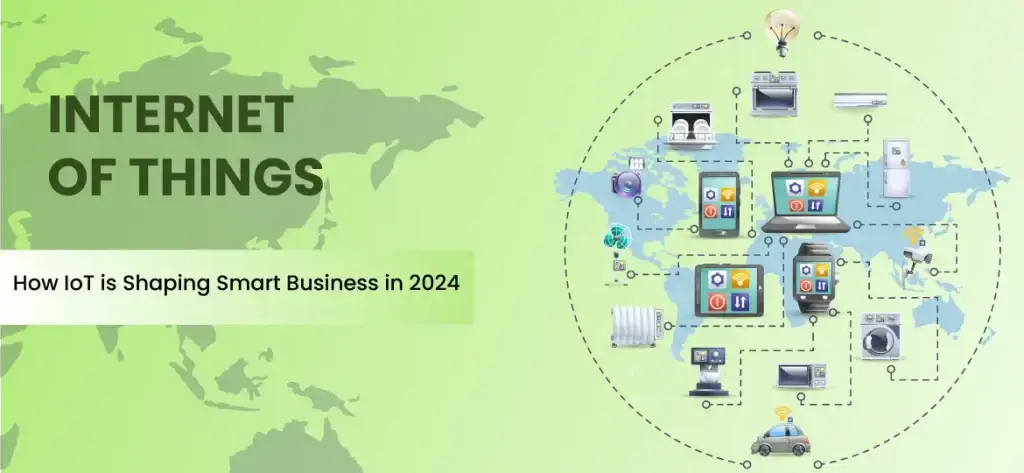
The Internet of Things (IoT) is a network of everyday objects that can sense, share data and connect to the internet. These connected devices carry sensors and software, so they collect and exchange data on their own.
You’ll find IoT in phones, smartwatches, thermostats, lights, cars and fitness trackers. It also runs on factory floors, in warehouses and across power grids.
Kevin Ashton coined the term “Internet of Things” in 1999. Today, IoT solutions shape how firms in healthcare, transport, energy and industry work.
The numbers keep growing. IoT Analytics expected about 21.1 billion connected IoT devices by the end of 2025, up 14% in a year, and around 39 billion by 2030.
In short: IoT links devices, data and software so a business can see what’s happening and act faster. The biggest wins often come from industrial IoT: fewer breakdowns, less waste and safer sites. This guide covers the main types, key industries, benefits, 2026 trends and how to build an IoT app.
Types of IoT Solutions
8 min read
Consumer Internet of Things (CIoT)
Consumer IoT covers devices people use every day, like smart speakers, smartwatches, fitness bands and smart TVs. Most connect over Wi-Fi or Bluetooth, which suits short ranges in homes and offices.
Many new smart-home products also support Matter, a shared standard that lets devices from different brands work together. Users judge the product by its phone or watch app, so wearable and companion app development matters as much as the hardware.
Commercial Internet of Things
Commercial IoT brings the same ideas to shops, hotels, clinics and offices. It monitors room conditions, controls building access and cuts energy use in large venues. Most projects aim to improve the customer experience and lower running costs.
Industrial Internet of Things (IIoT)
Industrial IoT (IIoT) connects machines, sensors and control systems in factories, plants, mines and warehouses. Its goal is simple: more output, less downtime and safer work. We cover it in depth in its own section below.
Infrastructure Internet of Things
Infrastructure IoT makes city and rural systems smarter. Examples include smart street lighting, traffic control, smart parking, waste collection and emergency response. Sensors help councils and utilities spot problems early and plan repairs.
IoT Solutions Across Industries
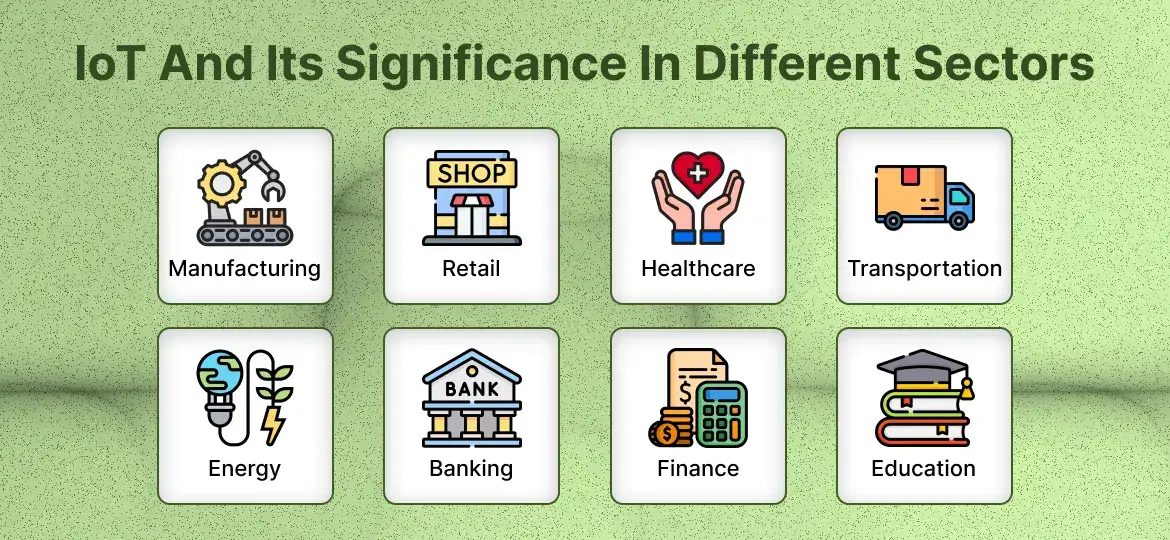
IoT is already changing how whole sectors work. Patients wear health monitors, factories spot faults before they happen, and fleets plan better routes.
For any sector that wants to stay competitive, connected technology now drives productivity, safety and sustainability. Here’s how it plays out across seven industrial IoT and business sectors.
Manufacturing
Factories use IIoT to watch equipment health and fix machines before they fail. Real-time sensor data shows when a part is wearing out, so teams plan repairs for a quiet shift. That cuts unplanned downtime and extends machine life.
For example, vibration sensors on an industrial robot may pick up a rise in vibration. That often points to bearing wear. The system alerts the team, who swap the part before the robot stops the line.
Retail
Retailers use IoT for smart shelves that flag low stock, GPS shipment tracking and insight into what shoppers want. Self-checkout and digital payments cut queues and reveal buying patterns. The shopper side usually runs through an app, which our mobile app development services cover.
Healthcare
In healthcare, IoT helps care teams watch patients more closely and use equipment better. Smart hospitals connect beds, pumps and medical devices so staff see their status at a glance.
Wearable devices support remote patient monitoring and early warnings, and telemedicine apps link them to doctors. See our healthcare app development work for examples.
Transportation
IoT makes transport safer and more efficient. GPS trackers show where each vehicle is, and smart traffic signals adapt to live traffic. Fleet software uses engine and driver data to plan routes, cut fuel use and speed up deliveries.
Energy
Energy firms use IoT to measure and manage power use in real time. Smart meters, microgrids and smart grids balance supply and demand and respond faster to outages. The result is a grid that is more efficient, more reliable and ready for renewables.
Banking & Finance
In banking, IoT shows up in smart ATMs, payment wearables and card terminals. Paired with AI and ML, device data can help banks spot fraud and tailor services.
Biometric devices, such as fingerprint scanners and face recognition cameras, confirm who a user is. They compare a fresh scan with a stored template, which adds a strong layer of IoT security.
Education
Schools and colleges use IoT for smart classrooms, attendance tracking and campus safety. Connected boards and devices make lessons more hands-on, and sensors help staff keep buildings safe.
Industrial IoT in Practice: Where to Start
Industrial IoT pays off fastest when it solves one costly problem first. Common starting points are predictive maintenance, energy monitoring, asset tracking and quality checks on the line.
Most plants run older machines, so projects often begin with retrofit sensors. Edge gateways read machine data over OPC UA, Modbus or MQTT and send only useful data to the cloud, which keeps costs and delays low.
From there, dashboards show live machine status and overall equipment effectiveness (OEE). Some teams build a digital twin, a virtual model of a line, to test changes before touching real equipment.
Security has to be planned from day one. Keep plant networks apart from office IT, sign firmware updates and follow standards such as IEC 62443.
A small pilot on one line proves the value before you scale. Our custom software team builds the gateway software, dashboards and apps for it.
Top IoT Benefits for Businesses
Automated And Streamlined Process
IoT devices can run assembly lines, robots, printers and other machines with little manual work. Software assigns tasks, tracks progress and shares data between systems. That frees staff for higher-value work and keeps sites safer.
Smart Transformation
Real-time monitoring turns guesswork into data. Managers see what each machine or vehicle is doing now and act on facts.
Advanced Security System
Modern IoT platforms use strong encryption, regular over-the-air updates and safer ways to verify users and devices. Layered security protects the network and keeps customer trust.
Higher Efficiency And Productivity
Machines talk to each other and log data day and night without human input. This gives teams precise information to fix slow steps and improve services.
Need extra hands for the app side? You can hire cross-platform developers to build it.
Reduced Cost
Better data cuts waste. Firms carry less spare stock, use less energy and spend less on emergency repairs. Smarter routes and loads also lower transport costs.
Predictive Analytics
Over time, IoT data reveals patterns in demand, stock movement and customer behaviour. Good analysis helps you forecast needs and spot new business openings.
IoT Trends to Watch in 2026
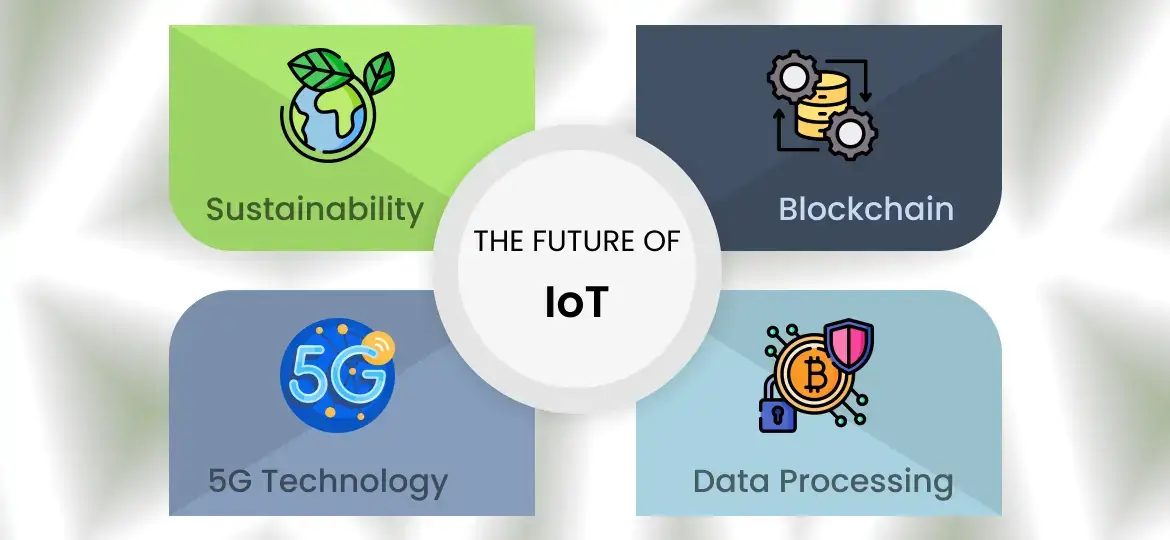
AI, faster networks and new rules are shaping where IoT goes next. These four IoT trends matter most for businesses planning a project in 2026.
IoT And Sustainability
IoT helps firms use less energy, water and raw material. Smart grids balance power, and smart farming cuts water and fertiliser use. Sensors also track air and water quality, so teams can act fast on pollution.
Stricter IoT Security Rules
Regulators now expect connected products to be secure by design. In the EU, the Cyber Resilience Act’s reporting duties have applied since 11 September 2026, and its main design rules apply from 11 December 2027.
Makers must report actively exploited flaws fast and keep shipping security updates. If you sell connected products in Europe, plan for this from the first sprint.
IoT And 5G Technology
5G brings higher speeds, lower delay and room for far more devices in one area. Lighter versions, such as 5G RedCap, suit wearables and sensors that need long battery life.
This matters most for smart cities and industrial sites, where thousands of devices must talk at once. Some factories now run private 5G networks for robots and guided vehicles. Our custom software development team builds the apps that sit on top.
Edge AI and Data Processing
More devices now run AI models on the device or a nearby gateway, instead of sending everything to the cloud. That means faster responses, lower data costs and better privacy. Cameras can spot defects on a line, and sensors can flag odd readings as they happen.
Building an IoT App? How EchoInnovate IT Helps
Most IoT products need three parts: device firmware or gateways, a cloud back end, and the apps people use. We build all three as one team. That covers mobile app development for iOS and Android, wearable device apps, dashboards and links to your ERP or CRM.
The first step is a short scoping call. We map your devices, data and users, then give you a fixed quote with entry, mid and upper tier options. Our custom software development team works under your brand and you own the code, so book a scoping call to start.
Frequently Asked Questions
What is the Internet of Things (IoT), and how does it help businesses?
IoT is a network of connected devices that collect and share data in real time. Businesses use it to automate tasks, cut costs and make faster decisions. For example, factory sensors predict machine faults, and retail systems track stock as it moves. The same data also helps firms improve customer service.
What is the difference between IoT and industrial IoT (IIoT)?
IoT is the broad idea of connected devices, from smart speakers to fitness bands. Industrial IoT applies it to factories, plants, energy and logistics. IIoT needs higher reliability, has to work with older machines and industrial protocols, and must meet strict safety and security rules, because downtime there costs far more.
Which industries use IoT solutions the most in 2026?
Manufacturing, energy, logistics, healthcare and retail lead the way. Factories use IoT for predictive maintenance, utilities for smart grids and meters, and fleets for tracking and routing. Hospitals use connected devices and remote patient monitoring, while farms use soil and weather sensors for precision farming.
What technologies drive IoT in 2026?
The main drivers are 5G (including low-power RedCap), edge computing, on-device AI and better sensors. Standards such as MQTT, OPC UA and Matter help devices talk to each other. Cloud platforms store and analyse the data, while dashboards and mobile apps put it in front of people.
How do I start building an IoT app?
Start with one clear problem, such as machine downtime or lost assets. Pick the devices and connectivity, then plan the back end and the app. A small pilot proves the value before you scale. EchoInnovate IT starts with a short scoping call and a fixed quote for the build.
Wearable and IoT apps that don’t drain the battery in 3 hours.
watchOS, Wear OS, custom firmware, BLE, MQTT and Zigbee, edge ML and real-time sensor data. We plan the battery-vs-features tradeoffs early, so your device lasts. Bring us your hardware, sensors and use case, and we’ll show you what’s possible.